Según un nuevo informe , el conglomerado publicitario británico WPP ha ayudado a las petroleras ExxonMobil, Chevron, Shell y BP a gastar aproximadamente mil millones de dólares en anuncios en Estados Unidos desde el Acuerdo de París de 2015 para combatir el cambio climático .
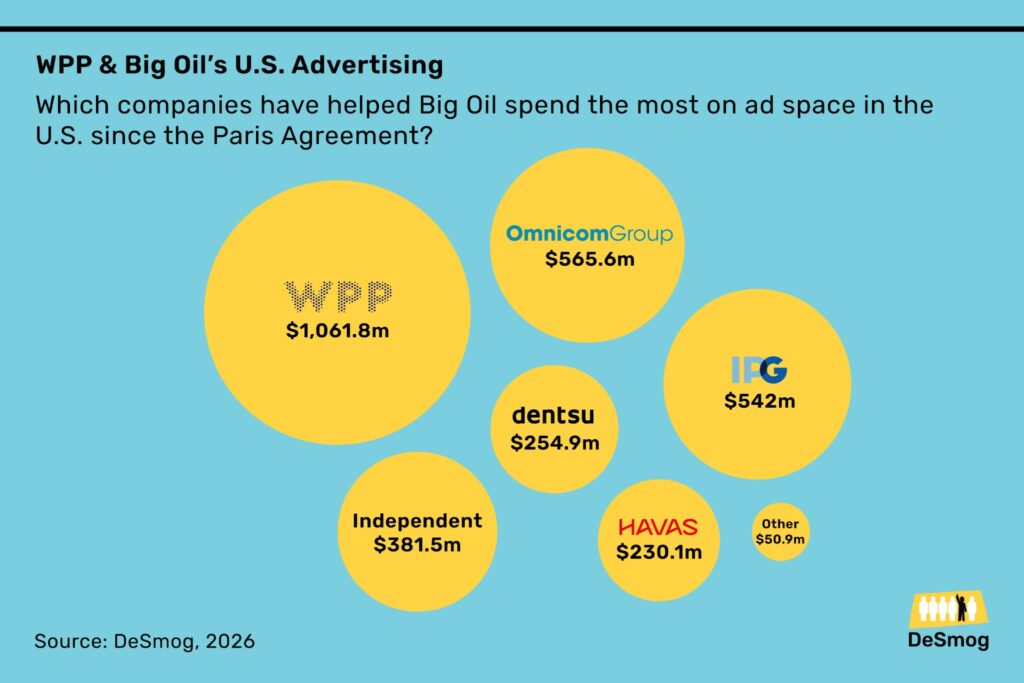
La cifra es casi el doble de las cantidades respectivas vinculadas a sus rivales estadounidenses Omnicom e Interpublic Group (IPG), que se fusionaron en noviembre. Según el análisis de DeSmog, WPP, con sede en Londres, fue el principal grupo publicitario al servicio de la industria petrolera estadounidense durante la última década.
Durante este período, ExxonMobil, Chevron, Shell y BP emplearon estrategias de comunicación "engañosas y confusas" diseñadas para frustrar las políticas destinadas a abordar la crisis climática mediante la reducción del uso de combustibles fósiles, según concluyó una investigación del Congreso en abril de 2024.
Los servicios de WPP —desde el desarrollo de ideas para anuncios y el diseño de logotipos hasta la obtención de espacios publicitarios y el análisis del público objetivo— fueron cruciales para mantener la imagen pública de la industria petrolera, según afirmaron empleados actuales y exempleados de WPP. Se estima que WPP ganaba millones de dólares al año gracias a este trabajo.
«El Reino Unido se enorgullece de su liderazgo en materia climática y, sin embargo, WPP, la supuesta joya de la industria publicitaria británica, está facilitando publicidad peligrosamente engañosa en Estados Unidos», declaró Victoria Harvey , doctora en la respuesta de la industria publicitaria a la crisis climática por la Universidad de East Anglia, quien revisó la metodología de DeSmog.
“Al exponer de forma creativa el engaño de las grandes petroleras y gasísticas, WPP ha hecho retroceder la agenda climática y sigue haciéndolo”, dijo Harvey.
Según el análisis , ExxonMobil, Chevron, Shell y BP gastaron un total combinado estimado de 1.5 millones de dólares en la compra de espacios publicitarios en Estados Unidos, como anuncios de televisión y presencia en redes sociales, desde la firma del Acuerdo de París . Esto equivale aproximadamente a publicar anuncios en todas las vallas publicitarias de Times Square, el epicentro de la publicidad en Nueva York, todos los días durante la última década.
Según el análisis , la red global de agencias de publicidad subsidiarias de WPP generó aproximadamente dos tercios del valor de esos anuncios . WPP, una de las mayores empresas británicas por ingresos, que también trabaja con clientes como Coca-Cola y Unilever, fue la única gran agencia de publicidad que colaboró con los cuatro gigantes petroleros en proyectos publicitarios durante ese período.
Este trabajo podría haber infringido una política que WPP adoptó en 2022 de no aceptar proyectos que pudieran "frustrar" los objetivos del Acuerdo de París, según declararon empleados actuales y antiguos, dado que las grandes petroleras estaban comprometidas con el aumento de la producción de petróleo y gas y la promoción de soluciones climáticas especulativas.

El periódico The Guardian ha publicado una versión de este artículo.
Las agencias Ogilvy y Wavemaker , pertenecientes a WPP, trabajaron en campañas estadounidenses para BP y Chevron, respectivamente, las cuales recibieron quejas por publicidad engañosa debido a eslóganes como "Vemos posibilidades en aviones que vuelan sobre basura". Ninguna de las quejas prosperó, aunque BP retiró voluntariamente sus anuncios.
Un informe del comité del Congreso de Estados Unidos de 2022 citó varios anuncios de ExxonMobil realizados por el Grupo SJR de WPP como ejemplos de ecoblanqueo, incluyendo uno que comparaba el gas fósil combinado con energía renovable con "un sándwich de mantequilla de cacahuete y mermelada".

Los empleados de WPP comentaron que a quienes expresaron su preocupación por este trabajo, sus superiores les dijeron que estaban ayudando a los clientes a comunicar su transición hacia modelos de negocio más limpios. Sin embargo, muchos de los que han trabajado en estos proyectos temen que sirvan principalmente para desviar las críticas de las empresas contaminantes.
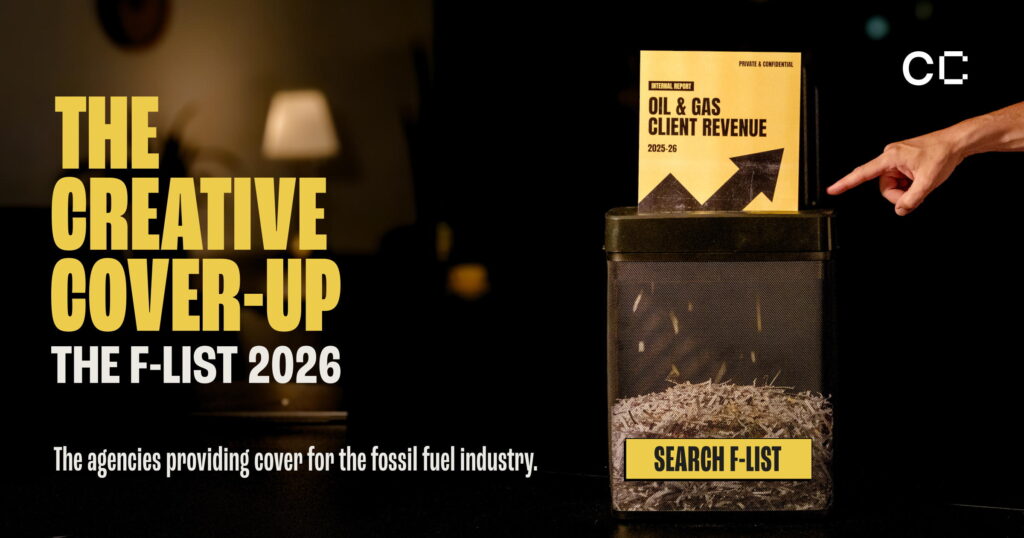
Los clientes de WPP, BP y Shell, han debilitado sus propios objetivos climáticos en los últimos tres años. Al mismo tiempo, su publicidad se ha centrado en promover la necesidad de los combustibles fósiles, según un informe publicado en marzo por el grupo de defensa del sector Clean Creatives.
La campaña de BP de 2023, «Y, no o», sugería que las energías renovables debían coexistir con el petróleo y el gas, en lugar de sustituirlos. La campaña incluía anuncios que afirmaban que BP estaba reduciendo el impacto climático del petróleo al operar pozos con electricidad en la cuenca Pérmica de Texas.
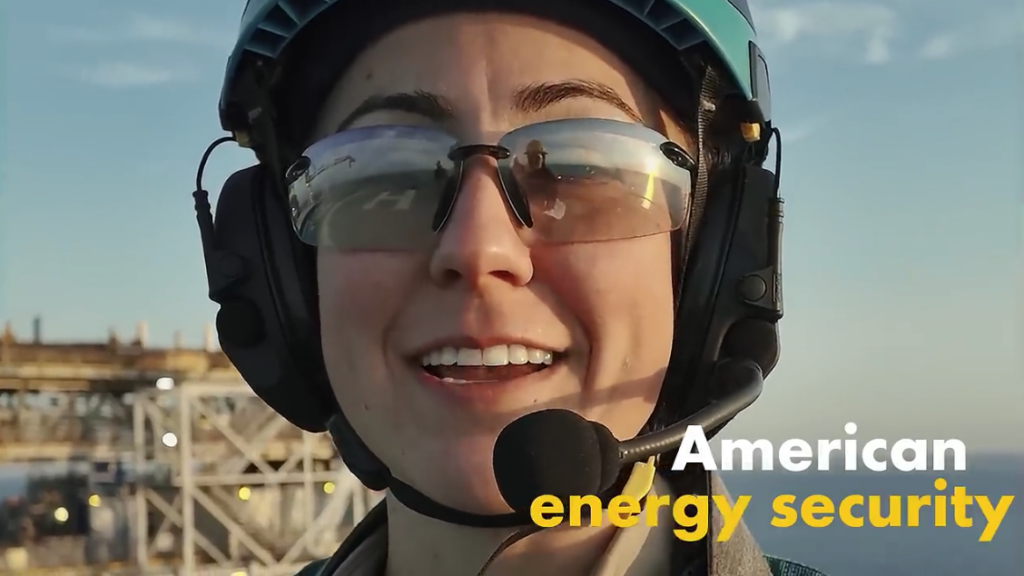
En un anuncio de Shell publicado en YouTube en octubre, una inspectora de drones identificada como Tori describe cómo está "ayudando a proporcionar seguridad energética a Estados Unidos" al realizar controles de seguridad en una plataforma de perforación.
«Internamente, escuchábamos mucho que los estábamos influyendo en la dirección correcta», dijo un exempleado que trabajó en proyectos para BP en Landor, la agencia de branding de WPP. «En realidad, independientemente de lo que BP decidiera hacer, nosotros simplemente lo implementábamos».
WPP y las demás agencias de publicidad mencionadas no respondieron a las solicitudes de comentarios.
Shell declinó hacer comentarios. BP, ExxonMobil y Chevron no respondieron a la solicitud de comentarios.
Pedazo del pastel
Las empresas de publicidad no publican detalles sobre cuánto gastan sus clientes en espacios publicitarios y, cada vez más, evitan hacer públicos sus contratos con empresas de combustibles fósiles.
Para generar sus estimaciones , DeSmog analizó las decenas de agencias de publicidad que han trabajado para las cuatro petroleras, utilizando fuentes públicas como los perfiles de redes sociales del personal y las listas de premios del sector, información confidencial compartida por los empleados e investigaciones previas de DeSmog y Clean Creatives. Estos contratos se contrastaron con las estimaciones de gasto publicitario obtenidas de la plataforma de investigación de mercado MediaRadar por el Climate Litigation Lab de la Universidad de Oxford.
La mayor parte del gasto publicitario de las grandes petroleras en Estados Unidos se canalizó a través de filiales de los pocos grupos publicitarios que dominan el sector a nivel mundial. Tras WPP, Omnicom e IPG, el grupo Dentsu , con sede en Tokio, ocupó el cuarto lugar en cuanto a su exposición a este gasto publicitario (255 millones de dólares), mientras que su rival Havas, con sede en París, se situó en quinto lugar (230 millones de dólares).
El análisis no pretendía captar los millones de dólares que la industria de los combustibles fósiles gasta cada año en publicidad en países fuera de los EE. UU., así como en actividades de cabildeo, creación de marcas, relaciones públicas y otras actividades de marketing.
Según fuentes internas del sector publicitario , el impulso en torno a las iniciativas climáticas se ha ralentizado en los últimos años, ya que la competencia de las grandes empresas tecnológicas y la inteligencia artificial (IA) ha reducido los márgenes de beneficio.
La nueva consejera delegada de WPP, Cindy Rose, presentará su estrategia para revertir la caída de los beneficios en la junta general anual de la compañía, que se celebrará el 8 de mayo. En un adelanto publicado en febrero, no se mencionó la sostenibilidad.
Bajo la dirección del anterior CEO, Mark Read, WPP se comprometió a reducir las emisiones de carbono y a prevenir el ecoblanqueo, incluso mediante la política adoptada en 2022 de "no aceptar ningún trabajo de clientes... diseñado para frustrar los objetivos del Acuerdo de París".
Pero los empleados afirman que estas medidas han cambiado poco.
Existe preocupación de que el trabajo que WPP está realizando actualmente con Shell, BP y Chevron pueda infringir la política, ya que muchos de los anuncios de estos clientes han desviado la atención de la expansión de los combustibles fósiles o la han justificado, según seis empleados actuales y exempleados que hablaron con DeSmog de forma anónima por temor a represalias profesionales.
Las evaluaciones científicas han concluido que los nuevos proyectos de combustibles fósiles planeados por las empresas son incompatibles con el objetivo de París de limitar el aumento de la temperatura global a 1.5 grados y prevenir un cambio climático catastrófico .
“No creo que haya nada que WPP pueda decir en nombre de BP o Shell que se ajuste a la política”, dijo un exdirector de dos agencias de WPP en Nueva York.
En total, WPP ha mantenido al menos 82 contratos con la industria de los combustibles fósiles en todo el mundo desde principios de 2025, según el grupo de defensa del sector Clean Creatives. Más de una cuarta parte de esos contratos están relacionados con trabajos dirigidos total o parcialmente al público estadounidense.
Los expertos afirman que el impacto de las medidas adoptadas por WPP para reducir las emisiones de carbono mediante la disminución de los viajes de sus empleados y el suministro de energía verde a sus edificios se ve contrarrestado por su labor en beneficio de las empresas contaminantes.
“Al moldear la narrativa pública, aumentar el consumo y normalizar el uso de combustibles fósiles, agencias como WPP pueden influir significativamente en las emisiones mucho más allá de su huella operativa”, dijo Alexis McGivern, investigadora sobre política climática corporativa en Oxford Net Zero, un grupo de investigación de la Universidad de Oxford.
Según ha podido saber DeSmog , las agencias de publicidad de WPP, Ogilvy y VML, han liderado las respectivas estrategias publicitarias de BP y Shell desde al menos el año 2000.
Ogilvy ideó la campaña "Beyond Petroleum" de BP en el año 2000. También popularizó el concepto de "huella de carbono" a través de una serie de anuncios de BP en 2004 que buscaban enfatizar la responsabilidad individual en la reducción de emisiones.
Hoy en día, agencias de WPP como Ogilvy siguen estando "profundamente integradas" en el proceso publicitario de BP y cuentan con personal dedicado exclusivamente a trabajar en proyectos de BP, según un antiguo empleado de Landor.
En 2020, BP encargó a siete agencias de WPP —entre ellas Ogilvy, Landor y VML— la creación de una nueva estrategia de marca para abordar la imagen de la empresa como "los malos", según un documento de WPP obtenido por el medio de investigación Drilled.
Las posteriores campañas publicitarias estadounidenses lanzadas por BP promovieron repetidamente los objetivos de la compañía de alcanzar el objetivo de "cero emisiones netas" (#netzero) y afirmaron que apoyaba la regulación para limitar las emisiones de metano, a pesar de que BP había presionado con éxito al gobierno estadounidense para que derogara dichas normas, según reveló una investigación de Unearthed.
“WPP ha tenido clientes petroleros durante décadas, independientemente de si prometían ser ecológicos o no”, dijo un antiguo socio de una agencia de WPP que trabajó en campañas de Shell. “Eso lo dice todo sobre si realmente estamos intentando cambiar las cosas”.
Aumentan los riesgos para quienes protegen a los contaminadores.
Cada vez hay más presión sobre las empresas de publicidad para que reconozcan su papel en el retraso de la acción climática al proteger la reputación de las empresas contaminantes.
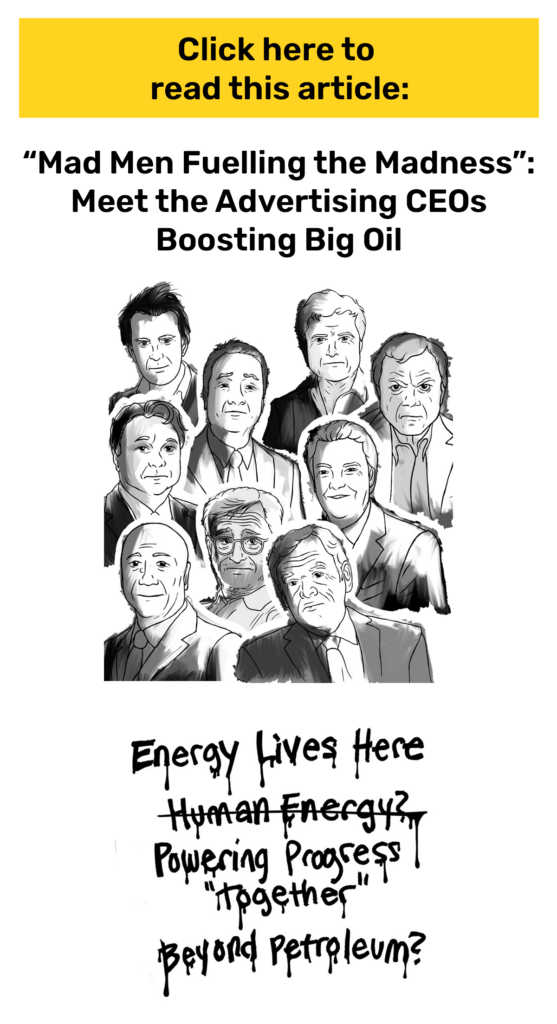
El secretario general de la ONU, António Guterres, ha instado a las agencias de publicidad a que abandonen a sus clientes del sector de los combustibles fósiles, calificando a los ejecutivos publicitarios de "locos por las convenciones" que alimentan la locura.
La OCDE, organización económica intergubernamental, está examinando una denuncia contra WPP presentada en febrero del año pasado por activistas climáticos y de derechos humanos. En aquel momento, un portavoz de WPP declaró : «Contrariamente a lo que se afirma, cumplimos con los más altos estándares regulatorios en nuestro trabajo para nuestros clientes». Desde entonces, manifestantes han colocado pancartas frente a las oficinas de WPP en Londres, a orillas del Támesis, con el lema «criminales climáticos».
El “mayor riesgo para la reputación asociado a trabajar en proyectos de clientes que se perciben como perjudiciales para el medio ambiente” podría afectar a los ingresos, según indicó WPP en su informe de sostenibilidad de 2025.

Los riesgos legales también están aumentando.
En un fallo sin precedentes emitido en octubre, un tribunal de París dictaminó que el gigante petrolero francés TotalEnergies engañó a los consumidores al afirmar que había puesto "el clima en el centro de su estrategia" durante un cambio de marca en 2021, a pesar de seguir invirtiendo fuertemente en nuevos proyectos de petróleo y gas.
La agencia Wavemaker, perteneciente a WPP, asesoró a TotalEnergies sobre dónde comprar espacio publicitario para la campaña de cambio de marca , pero no fue mencionada como parte implicada en el caso.
En enero, el estado de Michigan presentó la más reciente de docenas de demandas presentadas en Estados Unidos por gobiernos locales y federales contra ExxonMobil, Chevron, Shell, BP y otras compañías petroleras, acusándolas de engaño y desinformación sobre el cambio climático.
Hasta el momento, ningún tribunal estadounidense se ha pronunciado en contra de una petrolera en un caso similar. Las compañías niegan haber cometido irregularidad alguna, argumentando que los tribunales no son el foro adecuado para determinar la política climática.
“En el contexto del creciente número de litigios para recuperar daños sustanciales por los crecientes costos del cambio climático, basados en las actividades engañosas de las grandes petroleras, realizar gran parte del trabajo publicitario de esas mismas empresas no parece legalmente aconsejable”, dijo Johnny White, abogado del bufete especializado en derecho ambiental Client Earth, que asesoró en el caso TotalEnergies.
Información adicional de Kathryn Clare y Ellen Ormesher.