
Criticism just keeps pouring in.
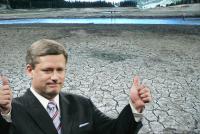
A United Nations report, native leaders, wildlife officials and the David Suzuki Foundation have all taken issue with Prime Minister Stephen Harper’s maneuver last weekend blocking agreement on binding greenhouse emissions targets. Pressure is mounting for Harper to atone when negotiations on a successor to Kyoto convene next month in Bali.
Developed countries have created global warming, but people in the world’s poorest countries are going to suffer the consequences, says the UN 2007 Human Development Report.
As a result, Canada and other developed countries must back their promises to combat climate change by not only slashing greenhouse gas emissions but also providing $86 billion by 2015 to help the world’s poor adapt to global warming.
Papa Seck of Senegal, one of the authors of the report, said although Canada has signed and ratified Kyoto it is “not living up to it … and it’s the world’s poor who are going to suffer the consequences.”
Another UN official, director Kate White of the UN Association in Canada, said if all countries emitted greenhouse gases at the same level as Canada the world would be nearly 800 per cent above levels considered sustainable.
The UN study wasn’t the only critic of Prime Minister Harper and Canada: Native leaders joined those from the South Pacific to press for firm targets for reducing emissions; The World Wildlife Federation criticized the “intensity-based” targets pushed by Canada, which would reduce the rate of emissions but allow for continued growth in absolute terms; and The David Suzuki Foundation warned of growing threats to the world’s polar bear population.
With a new PM at the helm in Australia and a lame-duck U.S. President Bush staging photo opportunities at the White House with arch-critic Al Gore , Harper is rapidly losing his former allies. That could leave him standing all alone at Bali, in the same political corner he painted himself into years ago.