Arctic Sea Ice: Brace Yourself for the Spin

authordefault
on

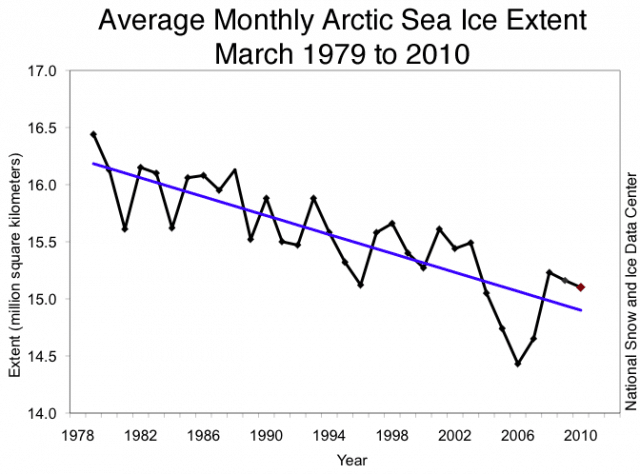
The extent of Arctic sea ice peaked on March 31, 2010, the latest date for the maximum Arctic sea ice extent since the start of the satellite record in 1979, according to the National Snow and Ice Data Center in Boulder, Co. The ice also reached an extent that was 670,000 square kilometers (260,000 square miles) above the record low for the month, which occurred in Marchย 2006.

From these two factoids, you may expect a round of stories in the DenierSphere trumpeting a return to global cooling – an end to the worrying decline of Arctic ice that hit a low point in 2006. Just as they have done with the unusually warm year in 1998, the campaigners for inaction will grasp onto the historic low as a new starting point for their graph – which will then show an actual increase in ice:ย hallelujah.

Of course, if you look at the graph to the left, youโ€™ll see the trend. If someone tries to take your attention away from that declining line, ask them to explain why.


Related Posts

on

The longtime Big Oil attorney has major ties to conservative legal groups.

The longtime Big Oil attorney has major ties to conservative legal groups.
Series: MAGA
on

CPAC GB partners with Bitcoin network as Reform leader comes under fire for industry connections.

CPAC GB partners with Bitcoin network as Reform leader comes under fire for industry connections.
on

More than a decade after Shell announced its Beaver County complex, new reports show the oil giantโ€™s promised economic revival failed, while pollution concerns now shape debates over proposed data centers.

More than a decade after Shell announced its Beaver County complex, new reports show the oil giantโ€™s promised economic revival failed, while pollution concerns now shape debates over proposed data centers.
on

Nearly two thirds of countryโ€™s pig and poultry farms leach polluting manure into lough that supplies half the region's drinking water, according to latest research.

Nearly two thirds of countryโ€™s pig and poultry farms leach polluting manure into lough that supplies half the region's drinking water, according to latest research.