
This is a guest post by Heather Libby.
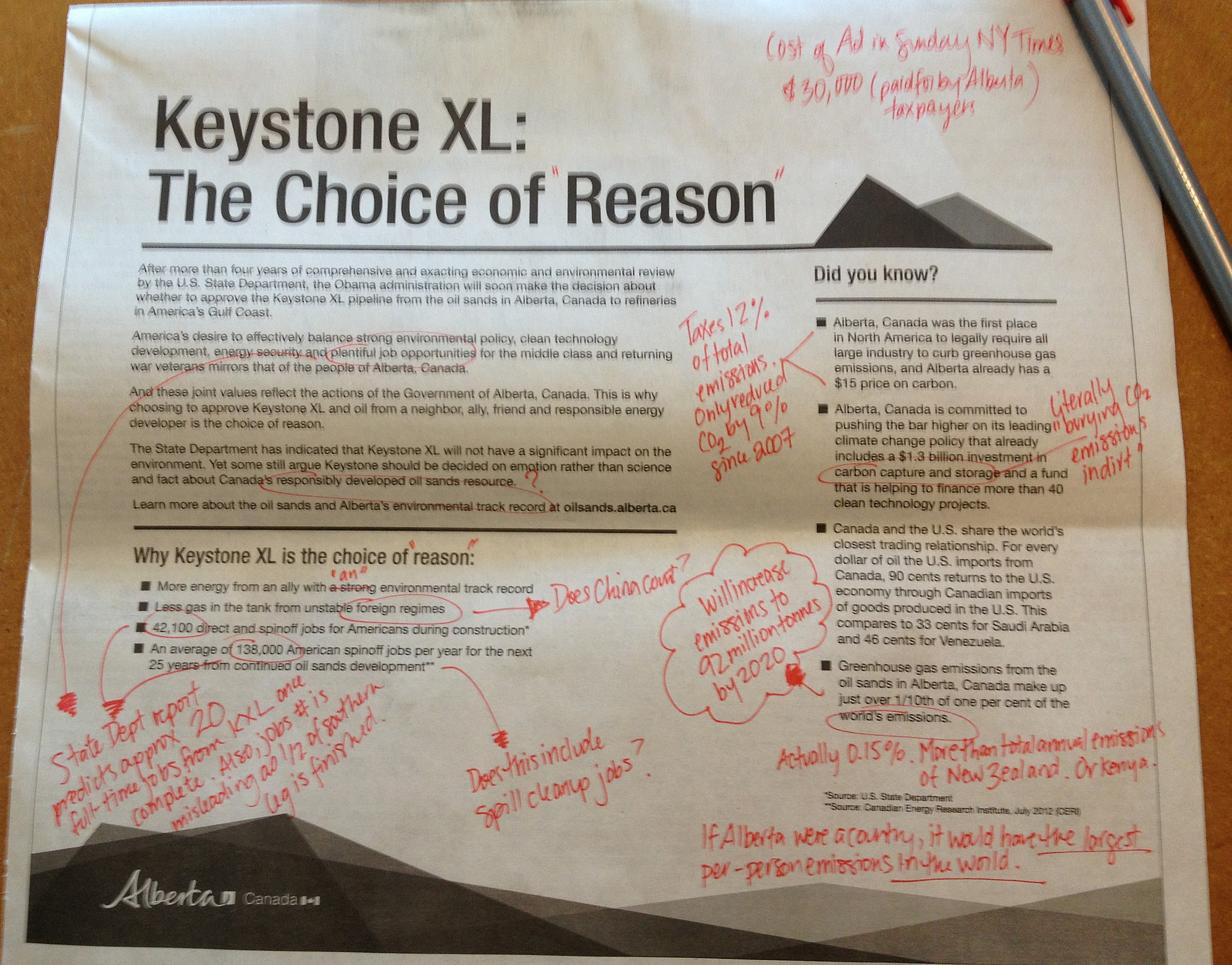
If you’re a regular reader of the Sunday New York Times, you might have noticed a half-page ad in the A section promoting the Keystone XL tar sands pipeline last weekend. Paid for by the Alberta government with $30,000 of taxpayer funds, the text-heavy ad asserted several reasons why President Obama should approve the project.
Their primary argument? This is “the choice of reason”.
Putting aside the fact that their word selection suggests those who oppose the pipeline are illogical or unreasonable; the ad says “some still argue Keystone should be decided on emotion rather than science and fact about Canada’s responsibly developed oil sands resource”.
We completely agree. Here are a few scientific facts it forgot to mention:
-
It’s true that Alberta’s oil sands emit a small portion of the world’s total CO2 emissions, about 0.15%. What the ad didn’t mention is that those emissions are rising, and with current levels of expansion, will top 92 million tonnes of greenhouse gases by 2020. Right now, the total direct emissions from the oil sands is larger than those emitted by the entire country of New Zealand.
-
Yes, Alberta has a $15 per tonne price on carbon for large-scale industrial polluters. This taxes approximately 12% of the emissions in the province. In the five years since its implementation, it has reduced emissions by approximately 32 million tonnes, or approximately 9% of total. Also, the Alberta carbon tax is one of the lowest in the world. Only China’s proposed carbon tax is lower.
-
Alberta’s $1.3 billion dollar investment in long-term carbon capture and storage is predicated on the hope that carbon emissions injected into pre-Cambrian sandstone will remain there for approximately 25 years.
-
Half of the southern leg of the Keystone XL pipeline is already complete, so a good portion of the 42,100 available temporary jobs estimated by the US State Department are likely finished. Once the pipeline is complete, the total number of full-time maintenance jobs available is considerably lower. The State Department estimates there will be approximately 20.
And the list goes on, full of reasonable concerns that the Alberta government would rather you not ponder.
Check out our copy of the ad below (click to embiggen) to see a few more suggested edits to Alberta’s assertions.