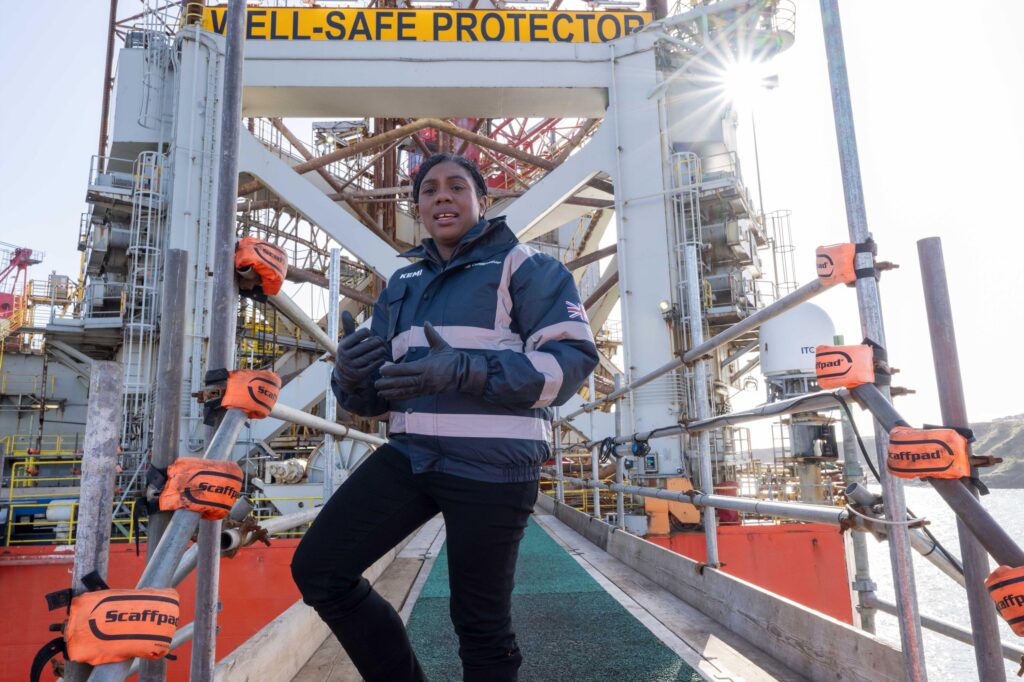


Jacqueline Lassetter wanted to see America’s biggest data center. So one day in July last year, at the age of 78, she jumped into a car with her daughter, Daphne, and headed west across the muddy Chattahoochee River, leaving their wooded Georgia home for the Nevada desert. A week later, she was standing in front of the Citadel Campus, owned by data center company Switch, which lies along a stretch of highway outside of Reno, Nevada more than 2,000 miles from her home.
Lassetter was finally able to imagine what might soon be coming to her doorstep in Coweta County, Georgia: a gigantic, windowless computing complex emitting a strange hum.
The mother-daughter duo had made the trip after learning about plans to build an enormous data center complex called Project Sail on roughly 830 acres of land outside of the town of Newnan, about 35 miles southwest of Atlanta. That’s the equivalent of about 600 football fields of industrial development in a landscape of rolling back roads lined with houses and farms. San Francisco-based Prologis, one of the world’s biggest real estate companies, is the main backer of the development. But Prologis kept its role in the project hidden for months while Atlas Development, LLC — a company based in nearby Carrollton, Georgia, with no known record of building data centers, and only a handful of employees — served as the project’s public face.
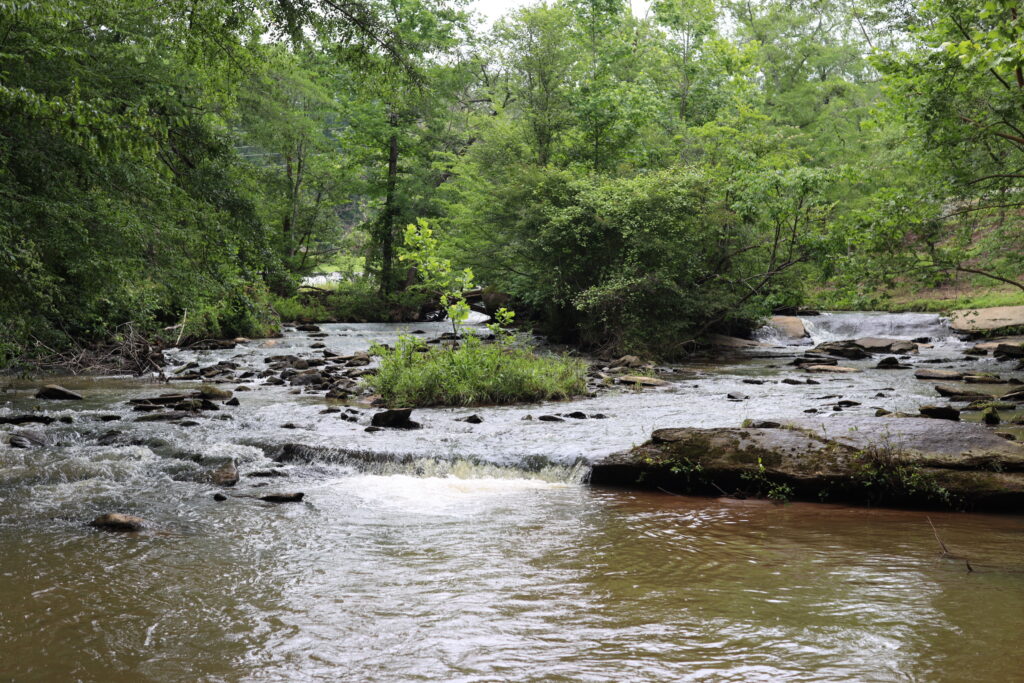
On Tuesday, Coweta County’s five commissioners will vote on whether to grant Atlas Development’s application to rezone the Project Sail tract from “rural conservation” to “industrial,” an essential step to allowing the development to go ahead. Many local residents fear that if approved, the project will erase the rural character of their area by ushering in 10 years of construction traffic, air, light, and noise pollution, along with the clear-cutting of woodlands along the Wahoo Creek that are home to deer, muskrats, and eagles.
“I won’t live to see it done probably at my age,” says Lassetter of Project Sail, “but this does not need to be [built] in a rural area.” Since learning about the data center mega-project, she’s barely missed a Coweta County Commission meeting, which are held every two weeks, to speak her mind. And every month Lassetter writes to the county commissioners expressing her opposition. “Mama sends them something in the middle of the night. At two o’clock in the morning, she will send them a message, if she’s up,” says Daphne, her daughter, who attends the meetings on the rare occasions when her mother can’t make it.
The partnership between Atlas Development and Prologis is emblematic of a pattern, playing out across the United States, of little-known advisory firms do the legwork of filing zoning applications for highly contested data center projects, while partnering with large tech and real estate companies and investment funds ready to invest billions of dollars once key local approvals are secured. While major real estate developments typically operate under a certain degree of confidentiality — particularly when land is being bought — the opacity surrounding data center projects provides cover for companies to lobby local officials for changes to zoning regulations, negotiate tax incentives, and drum up support to approve the projects before residents have time to organize in response.
In Coweta County, Atlas Development and various individuals affiliated with Project Sail worked to influence local officials as they wrote new data center regulations and considered the project’s rezoning application, DeSmog can report. Among those involved in seeking to shape the regulations in favor of the projects: Arthur “Skin” Edge IV, one of Georgia’s most influential lobbyists; Leigh Ann Green, a local real estate agent; and Mike Lash, a vice president of Dallas-based CBRE, one of the world’s largest real estate services companies.
“Our conversations with Coweta County followed standard, transparent processes that are open to all stakeholders,” a Prologis spokesperson said in a statement to DeSmog in December. “Prologis’s involvement was consistent with customary public engagement in land-use and policy discussions.” Prologis said that it did not hire any lobbyists in Coweta County.
“There was a never a meeting with developers to talk about the ordinance,” said Coweta County administrator Michael Fouts, who coordinated the county’s data center regulation drafting process last year, “If there was a meeting, it may have been with staff to talk about their proposed project, but they didn’t have access to just carte blanche, ‘write the ordinance.’”
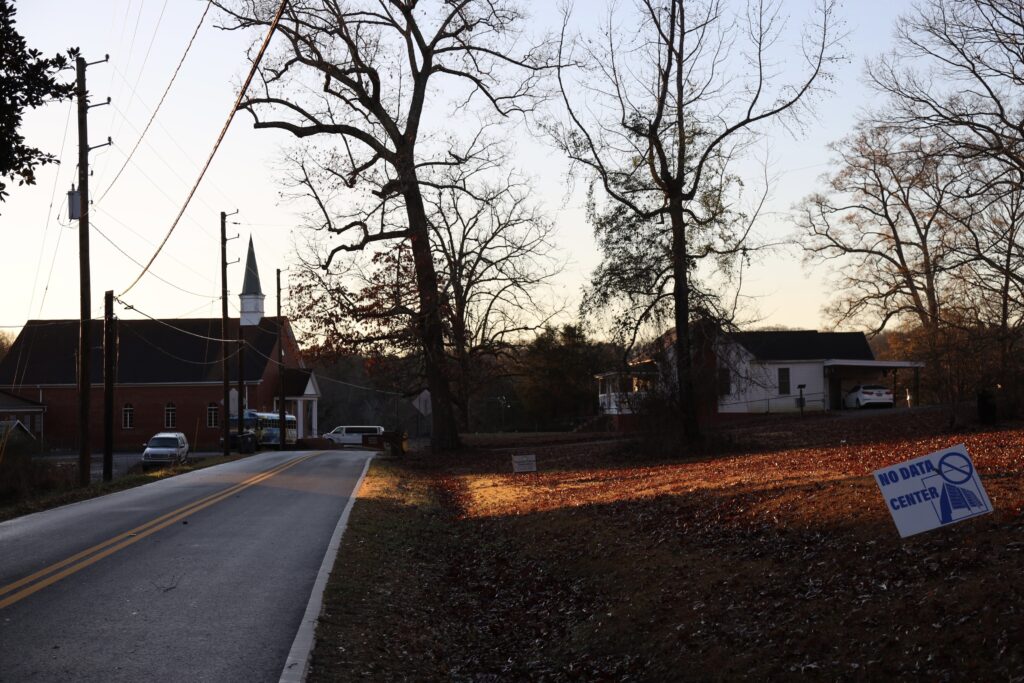
On a cold Monday night, Jan. 6, 2025, a week after Coweta County published Atlas Development’s Project Sail rezoning application online, local residents packed into Sargent Baptist Church, which is located next to the proposed site about six miles northwest of Newnan, to share what they’d managed to find out about the impacts of large-scale data centers on nearby communities. Shortly after, a group of local opponents formed the Citizens for Rural Coweta community group, which gradually swelled into hundreds of local residents challenging the plans, and thousands of members on a Facebook page aimed at stopping Project Sail.

“They [Prologis] haven’t been transparent from the get-go,” says Connie Lytten, one of the leaders of Citizens for Rural Coweta and the principal of a local school for children with learning disabilities. Lytten, who has shown up to Coweta County Commission meetings twice a month for more than a year to speak against the industrial plans, says that the fight against the data center has been “emotionally draining” — compounded by the difficulties in establishing exactly who is doing what to secure permission for the project to go ahead.
Project Timeline
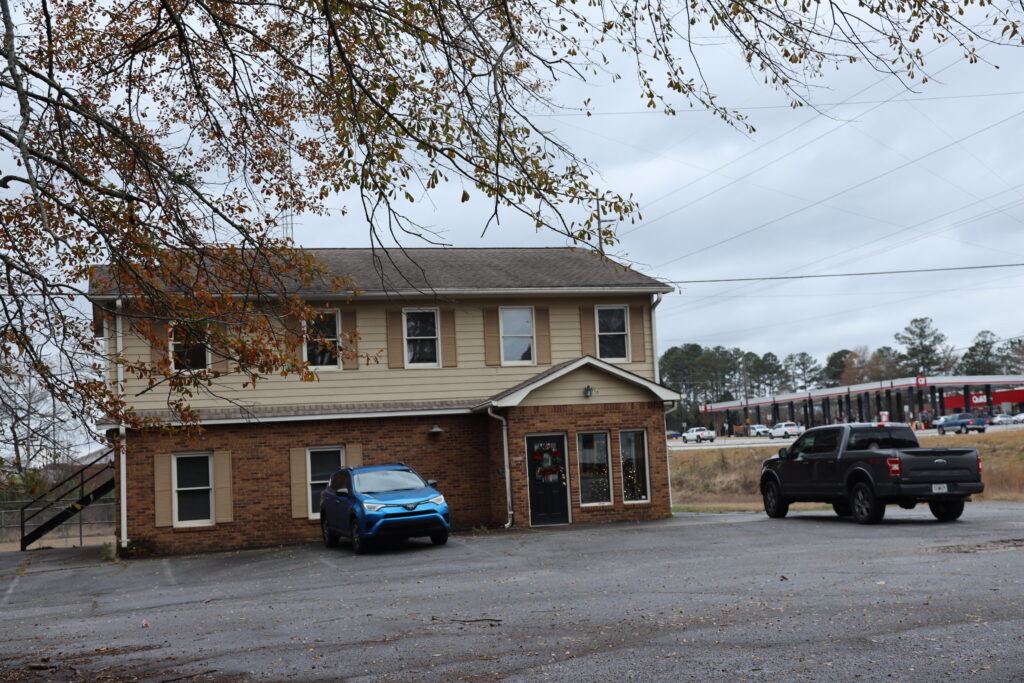
Atlas Development is situated in a two-story building on the side of the Bankhead Highway in Carrollton, Georgia, about 15 miles northwest from the proposed Project Sail site. Its website advertises the company’s “unique relationships with various utility providers and local municipalities” and ability to secure “zoning approvals in difficult municipal and social environments.”
Atlas Development lists seven employees on LinkedIn, the professional networking site. They include company president Jonathon Ward, a former employee of Atlanta area construction contractor United Grading.
Despite its modest headquarters and spartan staffing, Atlas Development says on its website that it is managing more than $40 billion of construction investments and has access to over 7.5 gigawatts of electrical power — a significant portion of the world’s demand for power capacity in 2025 of about 100 gigawatts.
Leading data center industry databases Baxtel and Data Center Map— which include details such as the location, power usage, and ownership of the computing facilities — contain no reference to Atlas Development completing or building a data center, according to a DeSmog review. However, the company has acquired land to build several large-scale data centers in Georgia since 2024, including in Bartow, Floyd, and Carroll counties, which are near Coweta County.
Despite the lack of a known portfolio of completed projects, Atlas Development has a highly prized resource in the race to build out data centers to feed the AI boom: local connections.
The company hired Leigh Ann Green, a prominent Coweta County real estate agent, as a consultant to coordinate the Project Sail rezoning application. Project Sail could also count on the support of Arthur “Skin” Edge IV, a Coweta County resident and Georgia’s “top lobbyist” in 2024, according to Atlanta’s James Magazine, who Atlas Development hired as an attorney to assist with its Project Sail application.
“It will bring in over a hundred million dollars a year in tax revenues to Coweta County,” Green told DeSmog in August. She said that the Project Sail site bordered industrial land and added that the county’s data center ordinance — then in the process of being written — was the most stringent that Atlas Development had seen.
“It’s a lot better than what we can do with the property today,” added Ward, Atlas’ president, who said that Project Sail would be less invasive to neighboring properties than building hundreds of homes on the site. “We moved several things to try to accommodate anyone’s concerns around there.”
Some local residents aren’t convinced by the developer’s promises. “Atlas Development has never built a doghouse,” said Coweta County county resident Steve Swope, one of the most vocal opponents of Project Sail, who has criticized the location of the project near surrounding homes.
Prologis became involved in Project Sail in September 2024, a company spokesperson told DeSmog. The following month — in October 2024 — Green met with the Coweta County Development Authority, which has a mandate to attract economic development to the county, to discuss the planned project, according to emails obtained via public records requests. Representatives from Georgia Power, the main electricity provider in the state, also attended. The Georgia Power employees were part of the utility’s Economic Development team, tasked with finding commercial partnerships and suitable sites for development. Local real estate agent Craig Jackson was also present.
In mid-November 2024, Green again met with Coweta County staff, Jackson, and Georgia Power representatives, according to the records. In early December, Green and county staff reconvened to discuss the planned rezoning of the Project Sail site from conservation-zoned land to “light industrial.”
Atlas Development subsequently submitted the rezoning application. Although Prologis had not yet announced its involvement in Project Sail, the application contained a clue: a Prologis logo visible on an illustration of the planned project. Nevertheless, as Citizens for Rural Coweta started to organize against the plan, Prologis’ role remained hidden. Grassroots opponents of Project Sail did not know who they were fighting.
Unbeknownst to locals, Prologis representatives had met with Coweta County staff on February 11, 2025, alongside Green and Mike Lash, a vice president of CBRE, according to emails received in response to public records requests. Prologis told DeSmog that Atlas Development had hired CBRE as a broker.
That month, Green also met with Coweta County Commissioner Jeff Fisher (R) at a local sports bar to discuss Project Sail, although the records contain no details of what was discussed. Green also emailed Coweta County staff asking them to expedite the rezoning process because “we are being asked by Georgia Power and Prologist [sic],” the records show.
Growing Backlash
As backers of Project Sail worked to push the approval process forward, a decision to green-light a similar project in Coweta County galvanized opponents of Project Sail. In mid-April 2025, the Coweta County commissioners voted 3-2 to approve a rezoning application for Project Peach, a large-scale data center being developed by Dallas-based CyrusOne in the town of Palmetto, about 15 miles northeast of the Project Sail site.
Although Microsoft was already building a data center on a part of Palmetto that lies in Fulton County, Palmetto Mayor Teresa Thomas-Smith opposed Project Peach, saying the town was looking for other ways to develop its economy.
“This is a whole community that will be impacted,” Thomas-Smith told DeSmog. “Who’s going to cover my city’s hundred-year-old infrastructure when [the construction traffic] starts cracking pipes and tearing up streets?”
Alarmed at the apparent ease with which Project Peach had won its rezoning request in Palmetto, hundreds of people living near the planned Project Sail site began writing to Coweta County commissioners to demand they adopt stricter limits.

The growing backlash prompted the commissioners to impose a six-month moratorium on new data center decisions in early May 2025. The plan was to use this period to work on new zoning laws to govern data center developments, including Project Sail.
Prologis broke cover about two weeks later — in mid-May 2025 — after months of remaining outside the public eye. Kent Mason, a Prologis vice president, wrote an opinion piece in the Newnan Times-Herald arguing in favor of Project Sail, saying that it would have a low impact on the environment and generate $1.3 billion dollars of tax revenue over 21 years.
Sarah Jacobs, president of the Coweta County Development Authority, emailed Mason to thank him for the article, and mentioned Project Sail’s “significance” for the local community, according to correspondence obtained with the public records request. Mason responded that it was “a great project that is next to the generating station, so not a pristine wilderness area” — a reference to Georgia Power’s Plant Yates, which has occupied a spot near the proposed Project Sail site since the 1950s. Jacobs did not respond to a request for comment.
In June, Atlas Development organized a data center tour for county officials. Prologis representatives also took part in a barbecue at the home of a local resident. In an email later that summer to county commissioner John Reidelbach (R), Prologis vice president JC Witt wrote that the company was incorporating feedback from three families in the area near the Project Sail site into its site plan.
On July 7, Edge, the lobbyist, wrote detailed recommendations for Coweta County’s draft data center regulations “on behalf of the Project Sail team,” according to the records, as DeSmog first reported in August. Edge’s submissions included a suggestion to delay an environmental report on the project until after the rezoning stage, contrary to calls from residents for such a study to be completed prior.
Fouts, the county administrator, said that staff worked to be as transparent as possible while processing a huge amount of feedback from residents as well as developers. “Just because they sent emails in, doesn’t mean they’re the ones writing the ordinance.”
With the Coweta County Commission’s proposed data center regulations up for a vote in mid-August, Fisher, the Coweta County Commissioner, met individually with Atlas Development and Prologis representatives on July 29 at the offices of a local real estate attorney, according to an email in the records. Fisher and Coweta County did not respond to questions about the subject of the meeting. Prologis said that its meetings with local officials were part of its standard engagement for real estate developments.
Some Project Sail opponents contend that one of the county commissioners worked to suppress criticism against the project. In mid-August, the Newnan Times-Herald reported that County Commissioner Reidelbach had written to the Georgia Department of Natural Resources to request it “reprimand” an agency employee due to his public stance opposing Project Sail and for writing his own independent environmental impact assessment. Reidelbach did not respond to a request for comment.
After months of deliberating over the new data center rules, it was time to put the measures to a vote. Coweta County Commissioners convened a meeting in the Commission Chambers in Newnan on August 19, the first day the data center ordinance was eligible for a vote. But given the strength of local opposition, commission president Bill McKenzie (R) proposed a motion to delay the decision on the new regulations to allow more time for deliberations.
“Given the overwhelming feedback regarding the draft data center ordinance, I’d like to make a motion that the Board continue the public hearing,” McKenzie told the meeting. His motion passed, and Coweta County scheduled a special meeting to receive public feedback about the data center ordinance, to be held at the County Fairgrounds on September 11.
Prologis, meanwhile, sought to rally support for Project Sail in Coweta County. Witt appeared on a local radio station in late August, and the company set up a website extolling the promised benefits of the development, such as skilled jobs and tax revenue to finance roads, schools, and emergency services.
After a well-attended September 11 meeting at the County Fairgrounds, county commissioners and staff continued to revise the new data center regulations throughout the fall. Jackson, the real estate agent, and Lash of CBRE sought the addition of further provisions to favor the projects at a commission meeting in mid-November. Both Jackson and Lash are affiliated with Project Sail in public records, but did not identify their involvement during the meeting.
At least some of Lash’s requests were incorporated into the final draft of the ordinance, including his request for allowable data center building heights, including rooftop equipment, to be raised from 60 feet to 70 feet, and his recommendation to allow data centers to face smaller roads than allowed in previous versions. Lash and Jackson did not respond to requests for comment.
After months of delays, requests for amendments by data center developers, and growing public outcry, the Coweta County Commission could defer a decision no longer: The new measures governing data centers would be put to a vote on December 16.
Why Coweta?
Last September, Prologis’ then-CEO Hamid Moghadam took the stage in Los Angeles at the company’s yearly Groundbreakers summit. The real estate giant billed the event as a spotlight on “a global supply chain revolution driven by relentless demand and accelerated breakthroughs in AI, infrastructure, and energy transformation.” Headlining the event and joining Moghadam by video call was U.S. Secretary of the Interior, Doug Burgum.
Moghadam said that Burgum and a fellow Trump administration cabinet member, Secretary of Energy Chris Wright, were very open to working with the company to develop public-private partnerships, and had a met with him personally. “But, unfortunately they [federal agencies] don’t control all of the conditions,” Moghadam added. “State and local entities have a lot of power in this country. And when it comes to land use and all these matters we’ve been talking about, you could have the fastest federal policy but it can run into a brick wall with the state issues.”
In common with any number of similar gatherings in the past year, the message from the podium was clear: The federal government was backing an ever-closer alliance between tech giants, real estate companies, and the energy industry to secure the land needed to satisfy the booming demand for data centers, and generate the colossal amounts of electricity needed to power them.
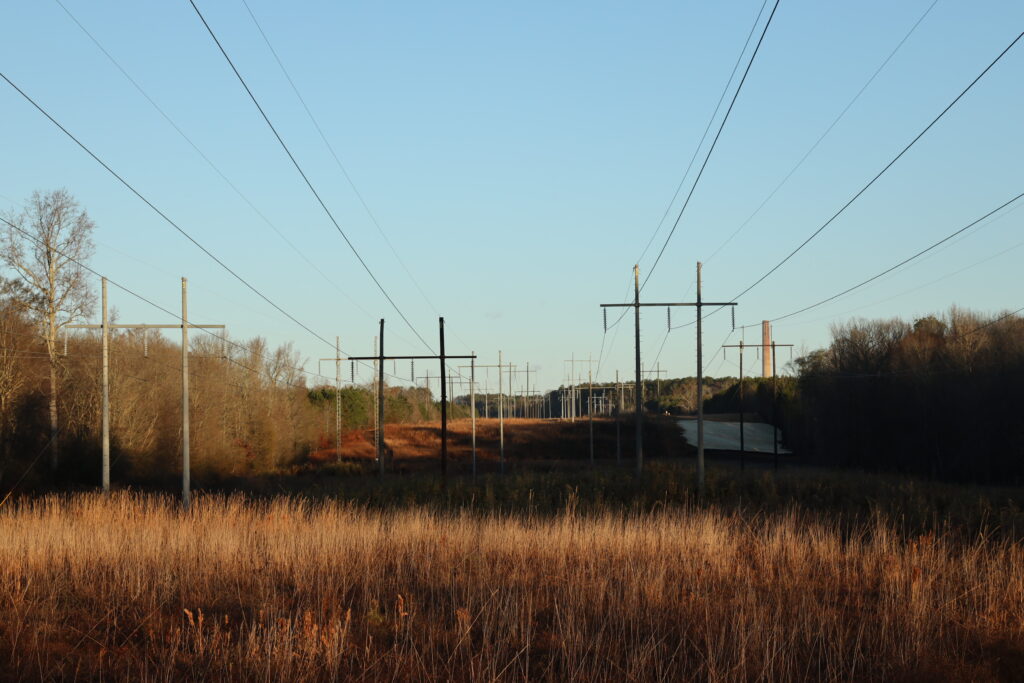
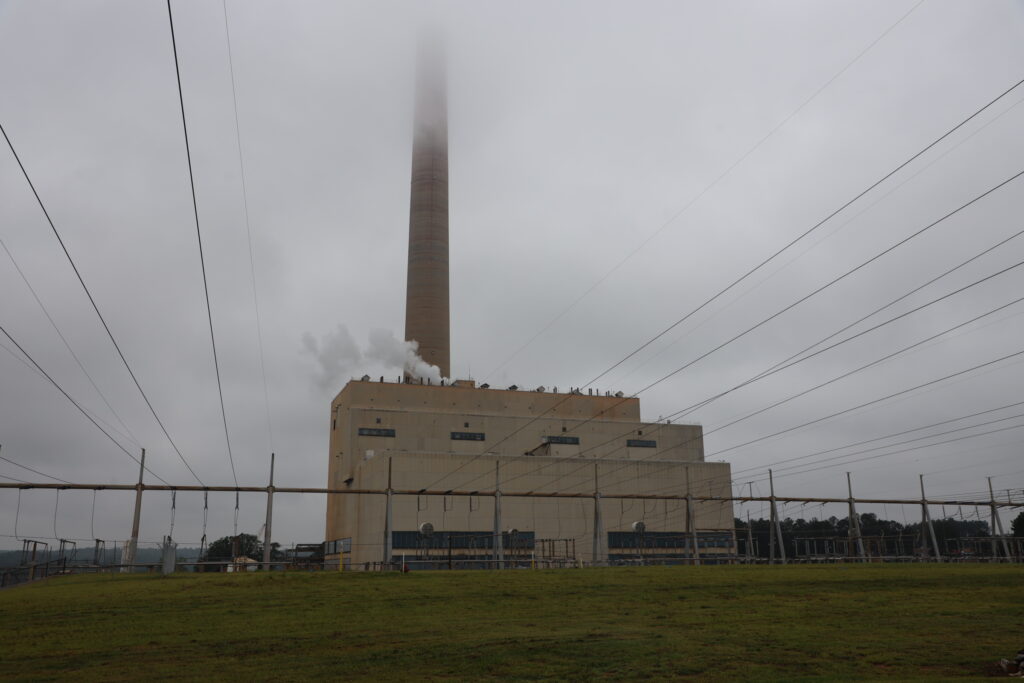
This confluence of forces is bearing down on Coweta County in large measure because Plant Yates — the more-than-half-century-old power plant — is adjacent to the site for Project Sail, and has become central to plans to source the more than 900 megawatts needed to run it. That’s enough generating capacity to power about 700,000 Georgia homes.
In December 2025 — a little more than a year after Prologis began pushing Project Sail — Georgia Power announced a $16 billion expansion plan to add 10 gigawatts of generating capacity by 2030, equivalent to 50 percent of its entire current fleet. Some 80 percent of this new capacity will be used to power data centers, a company spokesperson said.
The federal government lent its weight to the plan in February by extending a $26 billion loan to Southern Company, Georgia Power’s parent company and the nation’s second-largest utility.

While part of the plan hinges on extending the life of coal-fired power plants that had been due to retire, Georgia Power is also rolling out new high-voltage transmission lines, battery storage, and extending gas-fired power generation — including at Plant Yates, which switched from coal to gas in 2017 and is key to the company’s expansion plans.
With data centers on track to potentially consume more than a tenth of the nation’s electricity demand by 2028, according to a U.S. Department of Energy report — more than double the 4 percent registered in 2022 — the carbon emissions associated with the projects pose a threat to the climate. In Georgia and other states, however, people are often more focused on news reports showing how the costs of power utility upgrades for data centers are driving up the cost of electricity. These costs have become a matter of increased debate heading into the 2026 midterm elections.
For many local opponents of Project Sail, their most deeply felt fears relate not to their monthly bills, but to the threats the projects pose to the land they love.
Fears for Fate of Community
Jackie Lassetter grew up next to the then-newly-built Plant Yates in the 1950s, riding her horse in her family’s farmland along the Chattahoochee River. Coweta County only had about 30,000 residents then — about a fifth of today’s population of more than 160,000.
Lassetter’s father worked in a lumber mill, and she would clean off after a muddy horseback ride in piles of sawdust. Down the road, neighbors worked in the textile mills of Arnco and Sargent villages.
In 1971, Georgia Power told Lassetter, then a young woman, that she would need to move, because Plant Yates was expanding. The Lassetters were forced to sell the family land to make way for the power plant.
“I cry when I go by it now,” says Lassetter.
The Lassetters took their wooden house off its foundation and rebuilt it two miles down the road. Today, Lassetter, who still lives in the relocated family home, sees Project Sail as an even more threatening incursion into her corner of Coweta County, one that she fears could permanently ruin the rural landscape where she grew up.
“It breaks my heart,” says Lassetter. “I have a lot of family members over there [directly bordering the Project Sail]…and friends…[T]heir homes are going to be ruined because the noise, the property values are going to drop because no one’s going to want to live next to one this size.”

Down the road from Lassetter, local resident Laura Beth says she was among the community members who learned about the Project Sail plans on December 31, 2024, when Atlas Development LLC’s rezoning application appeared publicly online. Surveyors soon came unannounced to the edge of their 10-acre property, her husband Phil says, planting stakes in the woods where their children play by a stream and go mountain biking.
“They’re going to watch this community disintegrate,” says Beth, adding that the specter of a large industrial site next door is scaring away new homeowners. She and Phil are wary of investing more into their property — plans to change the old blue carpet in the living room and build a cabin in their woods are now on hold. Shortly after the announcement, Beth co-founded the Citizens for Rural Coweta Community group.
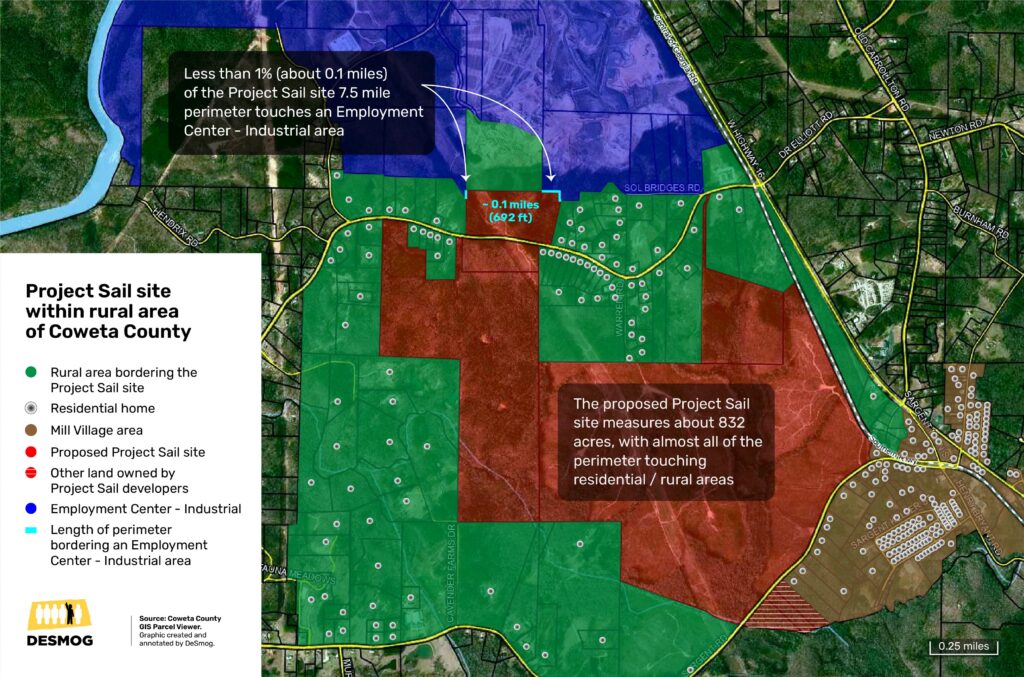
Beth, who moved with her family to Coweta County for its nature and quiet, points out that the county’s current 2021-2041 Comprehensive Plan, a document used to guide land development in parallel with zoning regulations, designates the proposed Project Sail site for rural uses, on top of its current “rural conservation” zoning. Although Project Sail developers have cited its proximity to Plant Yates as a core component of their argument for rezoning the site for industrial use, less than 1 percent of the project’s perimeter borders the power plant.
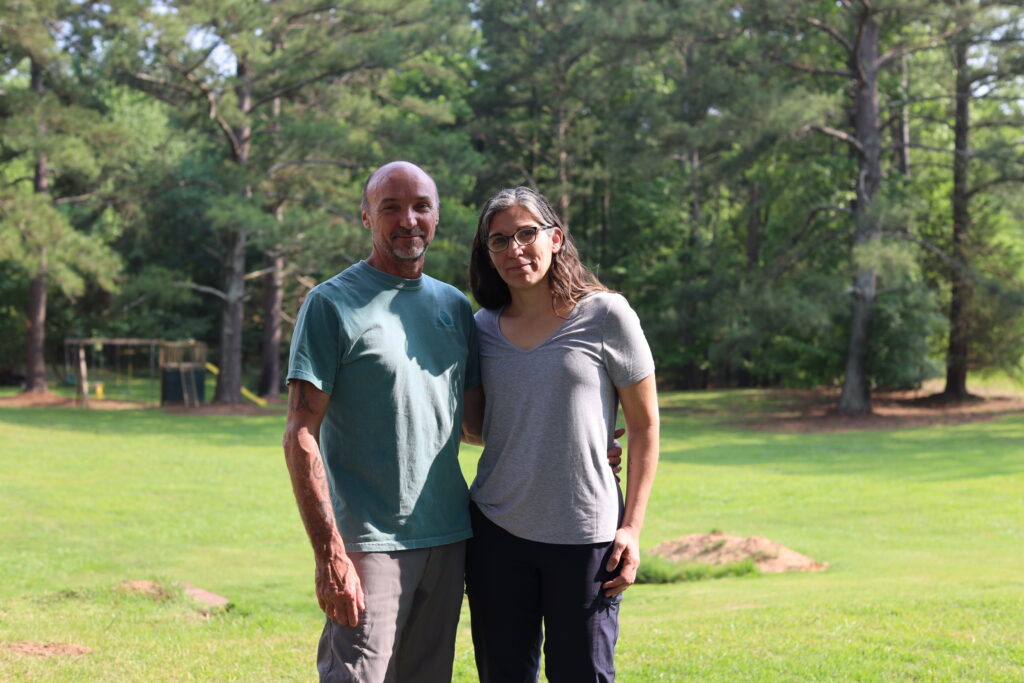
Ron Bockrath, an octogenarian and retired industrial chemist, lives with his wife on 50 acres bordered by a horse farm and the wooded tract slated for Project Sail. “What good is it going to do to kill ourselves?” says Bockrath, who has fears about the climate-heating impacts of the site, the potential destruction of nearby wildlife habitats, and the drain on local water resources to keep the data center cool.

Many of the local opponents to Project Sail acknowledge the role of data centers in supporting modern life, saying their campaign is primarily about the project’s location. But they want the facilities built in existing industrial areas, not on rural land, and fear the promised tax revenues may never fully materialize.
Prologis estimates that Project Sail could generate up to $100 million in yearly tax revenue at full build-out, according to figures in an economic impact analysis the company commissioned from a Georgia economic consultancy. The estimate is based on a total projected investment of $112 billion in buildings and computing infrastructure over the next 21 years. That would greatly surpass the state’s $35 billion Plant Vogtle in Burke County, the biggest nuclear power plant in the U.S., as the most expensive infrastructure project in Georgia. In the zoning application it filed to Coweta County in December 202, Atlas Development had put the cost of building Project Sail at $17 billion.
DeSmog could not establish the reason for the discrepancy between the various projections of the project’s cost. Prologis did not respond to a request for comment on how it intends to secure the funds to build Project Sail.
Prologis’ largest data center project under construction, a halfway-completed 600-megawatt facility in Hutto, Texas, is about two-thirds the size of Project Sail, and yielded about $2.4 million in local tax revenues last year, according to property tax records. Prologis did not answer a question about its current and future projected tax revenues for data center projects.
Rob Cole, a salesman at a Newnan roofing company and a vocal opponent of Project Sail, is skeptical of Prologis’ projected nine-figure tax estimate. Cole previously worked in the luxury pen industry, and once saw a pen formerly owned by American writer Mark Twain sell for $1.9 million. But in all his years in business, he has never observed anything quite like the astronomical promises of the data center industry, which he likens to “riverboat gamblers” who roll the dice but lose their bet “nine times out of ten.”
“Data centers are here to stay whether we like it or not. But the size, the scope, the location, and the protections to be put in place for the environment and for the people are the most important thing,” Cole says. “They’re looking at us like the knuckle-dragging rednecks that they assume that we are.”
“Here 4 Deer, Not 4 Data!”
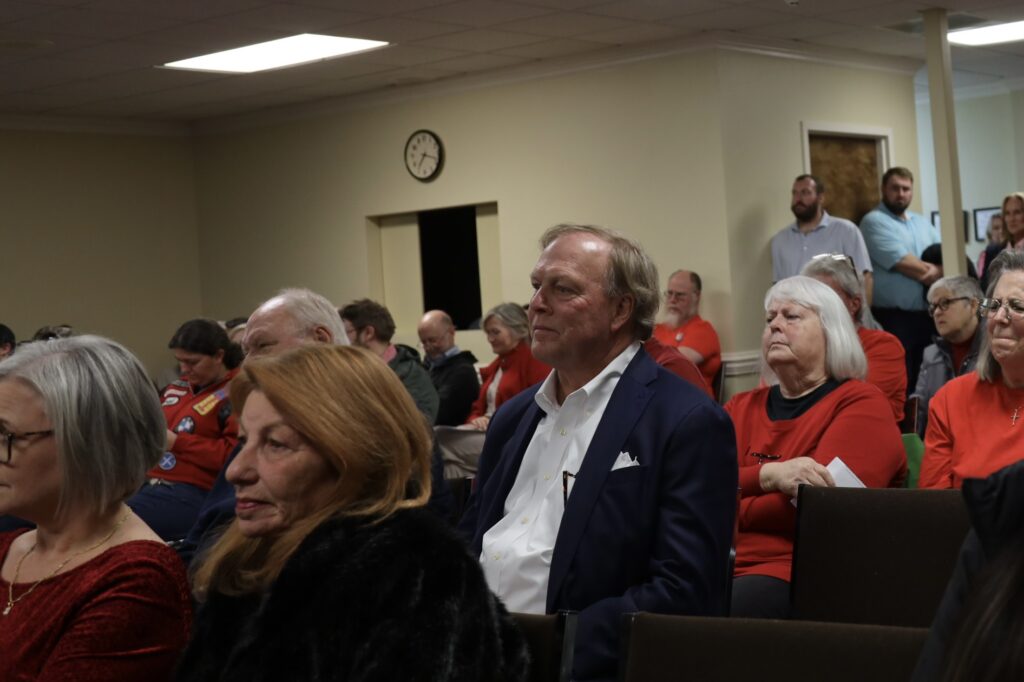
At about 5 p.m. on Tuesday, Dec. 17, Jacqueline Lassetter joined a crowd of residents gathering outside the Coweta County chambers in Newnan to attend the council vote on the new zoning rules for data centers.
Some toted hand-made signs that said, “Here 4 Deer, Not 4 Data!”, “Keep Coweta Rural!”, “Vote No or Out You Go.” Many wore red, the chosen color of Project Sail opponents. To the right of the front door, Atlas Development’s Jonathon Ward stood in line with a smaller group of blue-shirted Project Sail supporters. Local residents speculated that many of the supporters were not Coweta County residents, but had connections to the data center developers through the construction industry.

By 6 p.m., a crowd of more than 150 residents packed the county chambers, with some standing or spilling out into the vestibule. One of those standing was Maura Keller (D), a U.S. Congressional candidate, who carried a pink binder labeled “data centers.” Ahead of the mid-term elections, Keller was traveling to public meetings across Georgia’s 3rd Congressional District, which she is hoping to win, where a growing number of citizens from Fayetteville to Newnan are organizing across party lines to oppose the computing mega-projects. Seated toward the front was Tim Ryan (R), a candidate for Coweta County commissioner and a vocal critic of Project Sail, who would call that night for county officials to enact stricter regulations on data centers.
In the crowd, Lassetter sat — wearing a red shirt — among dozens of other Project Sail opponents, including Ron Bockrath, Laura Beth, Rob Cole and Connie Lytten. Toward the front sat Arthur “Skin” Edge IV, the prominent Georgia lobbyist and attorney for Atlas Development.
Commissioner Al Smith (D) led a prayer after the Pledge of Allegiance. “We pray tonight that You will allow us to disagree amicably,” Smith invoked, head bowed.
To start the meeting, the Coweta County administration presented the proposed data center ordinance, which included a detailed timeline of the steps taken to draft it.
Then the floor opened for public comments. Many residents spoke in opposition to the ordinance and data centers at large.
“It’s almost like in some of the changes [to the ordinance], you’re making them for Project Sail,” said Tim Ryan, speaking at the podium in front of the commissioners. “Fellas, please take a bit more time. This is a generational decision.”
“Data centers create very few permanent jobs compared to other developments, and the profits flow to corporations,” said county resident Misty Caballero. “It’s the same pattern which we could call ‘digital colonization’ where local communities pay the price for the global tech ambitions.”
“Over the past months I’ve watched my neighbors mount an extraordinary effort to stop this data center nonsense,” said county resident Spencer Lewis. “This isn’t a handful of loud voices. This is a broad, united, and unmistakable will of the people.”

In a 4-1 vote, county commissioners approved the new ordinance. McKenzie, the only one who voted against, banged his gavel to confirm the new law. “I think it’s a very good ordinance,” Edge, the lobbyist working for Atlas Development, told DeSmog after the meeting. “It took a lot of time and it received a lot of input from the citizens and everybody else. I think the final product is good and will help regulate these data centers.”
But many in the crowd filing out of the meeting room were angry and upset. Coweta County had instated its first-ever ordinance for data center development, and the moratorium on new data centers was lifted. Project Sail could now move forward to the rezoning hearing scheduled for April 7 — the last major hurdle for the project to go ahead.
New Regulations
Despite the progress it’s made in Coweta County, Prologis’ pitches to build large-scale data centers in rural areas haven’t always worked. Last April, JC Witt, the company vice president, stood in a courthouse in Warsaw, Indiana, before a crowd of worried Kosciusko County residents opposed to the company’s plans to build a data center complex on more than 500 acres of farmland. Kosciusko County commissioners voted down the plans 8-0.
Witt returned to Indiana in January this year, this time to the town of Shelbyville, where Prologis hopes to build Project Hackman, another planned data center complex. Joining him on the trip was the company’s recently appointed director for data center policy, Trae Westmoreland, who previously worked as director of the Coweta County Development Authority.
At a Jan. 6 public town meeting, Witt cited the potential millions in yearly tax revenues Project Hackman could earn, which he said would have minimal impacts on the town and surrounding farmland. He pointed to Prologis’ three decades of investing in Indiana real estate projects and the community charities the company supported. Westmoreland then presented a PowerPoint showing illustrations of other Prologis developments across the U.S., explaining that the data center buildings would have a visually pleasing exterior and would not use more water than an average office building.
“There’s a lot of land in the United States that’s got the electrical and the water,” Westmoreland told the crowd about the conditions needed to build data centers, “But we’re in Shelbyville because of you. The proven leadership and the pro-business attitude that ya’ll have is the reason why we are here and want to build in your community. We want to build in your community.”
After Westmoreland finished his presentation, the meeting opened for public comments, many Shelbyville residents were not convinced. “These developers and their minions, they’re ruthless and they’re soulless, and it’s your duty to protect the citizens of this community,” local resident Bill Collins, who lives near the proposed Project Hackman site, told the town council from the podium.
The next day, on Jan. 7, hundreds of residents packed a local planning commission meeting at Shelbyville High School to oppose the project, according to local news reports, citing environmental impacts and asking for more details about the Prologis project. Following public comments, the town’s planning commission recommended rejecting Project Hackman in a 12-0 vote. But on April 6, Shelbyville’s council — which has the final say on zoning requests — voted 4-2 to approve rezoning for the data center project.
Prologis also enjoyed recent rezoning success in neighboring Illinois. There, council members in the town of Yorkville voted 7-1 to approve its Project Steel data center project on March 23. A group of residents voiced opposition to the plans, but did little to sway local council members. Contingent upon the approval, Prologis agreed to write a $40 million check up front to the local school system according to reporting by the Shaw Local News. In Coweta County, Michael Fouts, the county administrator, said that staff only discuss economic agreements with developers after a rezoning process is complete.
On Jan. 28, at Newnan High School, Prologis and Atlas Development held a legally mandated information session to inform residents about Project Sail ahead of the rezoning vote due on April 7.
“The conversation was honest and straightforward. Residents asked thoughtful questions, and we worked to answer them openly and respectfully,” JC Witt, the Prologis vice president, wrote in an email to Fouts, the Coweta County administrator, the following week, according to public records. “To be sure,” Witt added, “there were some in attendance who simply were not open to our information and there was some confusion about what details are available at this early stage.”
Jacqueline Lassetter has heard and seen enough to make up her mind on Project Sail. “I’ve been getting out and getting petitions,” she says.
Knocking door to door, Lassetter had collected 240 signatures asking Coweta County commissioners to reject the project as of April 4, part of a larger group effort, before illness forced her to take a break.
Coweta County will vote on the rezoning for Project Sail at 6 p.m., Tuesday, April 7 at the County Commission Chambers in Newnan.
The reporting for this story was supported by the Fund for Investigative Journalism.