
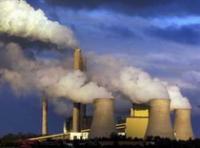
Power companies plan to build about 150 coal plants over the next few years to meet growing electricity demand, but almost none will be built to control carbon emissions despite expectations climate-change rules are coming.
Worried environmentalists put their faith in a technology that gasifies coal before burning, while utility officials say gasification is too expensive and unreliable, and their pulverized coal plants can be equipped later to trap emissions.
But technical experts are dubious of both. A Massachusetts Institute of Technology study, scheduled for release soon, concludes in a draft it isn’t clear which technology — the so-called ‘integrated gasification combined cycle or pulverized coal — will allow for the easiest carbon capture, because so much engineering work remains to be done.
“Other than recommending that new coal combustion units should be built with the highest efficiency that is economically justifiable, we do not believe that a clear preference for one technology or the other can be justified,” the draft concludes. The M.I.T. study said it was critical that government “not fall into the trap of picking a technology ‘winner.’ ”
Meanwhile, TXU Corporation of Dallas is planning a fleet of huge new coal plants of the pulverized variety. This week, a Texas District court judge blocked a plan by the governor to “fast track” TXU’s application.
In Austin, Tex., Tom Smith, a researcher at Public Citizen, who is helping lead the opposition, said, “It’s clear that coal gasification is by far preferable to building traditional pulverized coal plants.” Getting carbon out of the gas stream before combustion must be easier, Mr. Smith said, because post-combustion gases in a pulverized-coal plant are 160 times as great.
Some utility executives agree. David Crane, chief executive of NRG Energy, said at some point engineers might work out an economical way to capture carbon after combustion in a pulverized coal plant, but that does not exist now.
Because carbon regulation is coming, he said, gasification plants will be needed. “For the next generation, it’s clear to me that rather than build a bunch of pulverized coal plants, with their 50-year life, the country is much better off if we go to (gasification),” he said. The company is planning such a plant in Tonawanda, N.Y.
Subscribe to our newsletter
Stay up to date with DeSmog news and alerts