You Can't Spin Mother Nature

authordefault
on

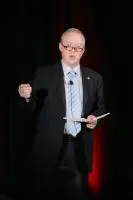
This is the speech that I delivered last month at the Canadian Public Relations Society’s National Conference in Edmonton,ย Alberta.

Given that it is a fairly direct assault on the manipulative tactics that are, increasingly, giving the public relations industry a bad name, I thought I might receive a defensive reaction from some of my professional colleagues. Instead, what I found, after a quick and convincing standing ovation, was a deep level of concern and tremendous willingness to deal with the issues that I raise in theย talk.

Putting aside the political debate over climate change – which continues unabated on its well-funded, but surrealistic trajectory – I am optimistic that in both Canada and the U.S., a significant majority of public relations professionals are determined to trim the spin out of what weย do.

Attached Documents

File Size
Jim Hoggans CPRS keynote address June 14 2007.pdf 910 KB

Related Posts

on

The longtime Big Oil attorney has major ties to conservative legal groups.

The longtime Big Oil attorney has major ties to conservative legal groups.
Series: MAGA
on

CPAC GB partners with Bitcoin network as Reform leader comes under fire for industry connections.

CPAC GB partners with Bitcoin network as Reform leader comes under fire for industry connections.
on

More than a decade after Shell announced its Beaver County complex, new reports show the oil giantโ€™s promised economic revival failed, while pollution concerns now shape debates over proposed data centers.

More than a decade after Shell announced its Beaver County complex, new reports show the oil giantโ€™s promised economic revival failed, while pollution concerns now shape debates over proposed data centers.
on

Nearly two thirds of countryโ€™s pig and poultry farms leach polluting manure into lough that supplies half the region's drinking water, according to latest research.

Nearly two thirds of countryโ€™s pig and poultry farms leach polluting manure into lough that supplies half the region's drinking water, according to latest research.