Hundreds of Migratory Ducks Trapped on Toxic Oil Sands Pond

authordefault
onApr 29, 2008 @ 23:31 PDT

If the fact that the Alberta Oil Sands are the largest point source of greenhouse gas emissions in Canada isn’t enough to get you to stand up and take notice, maybe the ducks trapped and dying in the toxic tailing pondsย will.

The oil sands are licensed to use more fresh water in a year than the entire City of Calgary (about the same size as Austin, Texas) and 90% of that fresh water ends up in massive tailing ponds, so large that that they are considered one of the largest human-made structures in theย world.

Bad news for our fresh water, the global climate and apparently,ย ducks.

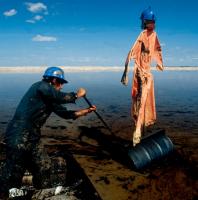
It is being reported today that โ€œhundreds of migrating birds are dying after landing on a tailings pond in northern Alberta owned by Syncrude,โ€ one of the largest players in the Alberta oilย patch.

Environment officials said the birds are โ€œclearly heavily oiledโ€ and are not able toย fly.

This all coming at the same time that the Alberta Government has launched a $25 million PR offensive to dispel the โ€œmythsโ€ surrounding the environmental impacts the Alberta Oil Sands are having on ourย planet.

authordefault
Admin's short bio, lorem ipsum dolor sit amet consectetur adipisicing elit. Voluptate maxime officiis sed aliquam! Lorem ipsum dolor sit amet consectetur adipisicing elit.

Related Posts

onNov 28, 2025 @ 03:02 PST

The Labour peer called for new coal power in the Global Warming Policy Foundationโ€™s annual lecture.

The Labour peer called for new coal power in the Global Warming Policy Foundationโ€™s annual lecture.
Opinion
onNov 27, 2025 @ 06:38 PST

Blunt communication is our firewall.

Blunt communication is our firewall.
onNov 25, 2025 @ 22:00 PST

The programme is โ€œyet another bung to industrial productionโ€, experts say.

The programme is โ€œyet another bung to industrial productionโ€, experts say.
Analysis
onNov 24, 2025 @ 09:00 PST

Critics say new LNG ventures in British Columbia saddle Indigenous communities with debt, opaque ownership structures, and financial risk that could leave them owing billions.

Critics say new LNG ventures in British Columbia saddle Indigenous communities with debt, opaque ownership structures, and financial risk that could leave them owing billions.