
Wondering whether weather indicates climate
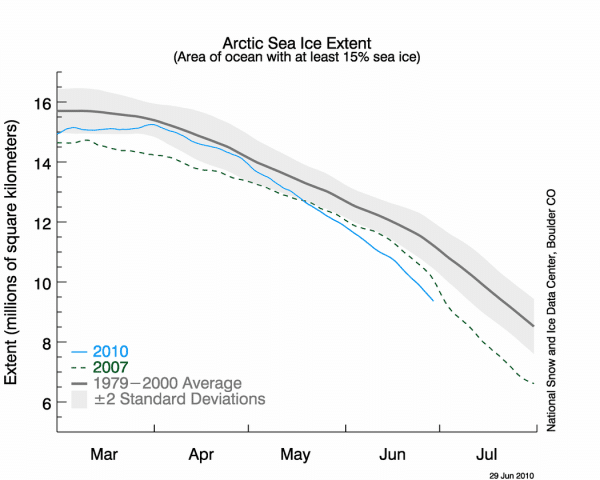
The latest graph tracking un unprecedented plunge in Arctic sea ice measurements raises once again the question of when you can look at a weather event – a dramatic and unprecedented weather event – and make a relevant and reasonable assumption about what is happening to the climate.
Given the enthusiasm that the denier community brings to challenging assumptions at the contestable edge of science, I’d be wary about saying, unequivally, that this graph shows climate change in action. It’s only part of one year’s data. Admittedly, it’s compared to an average over a much longer time, but it’s still just one year. That’s why you might want to look at the next graph:
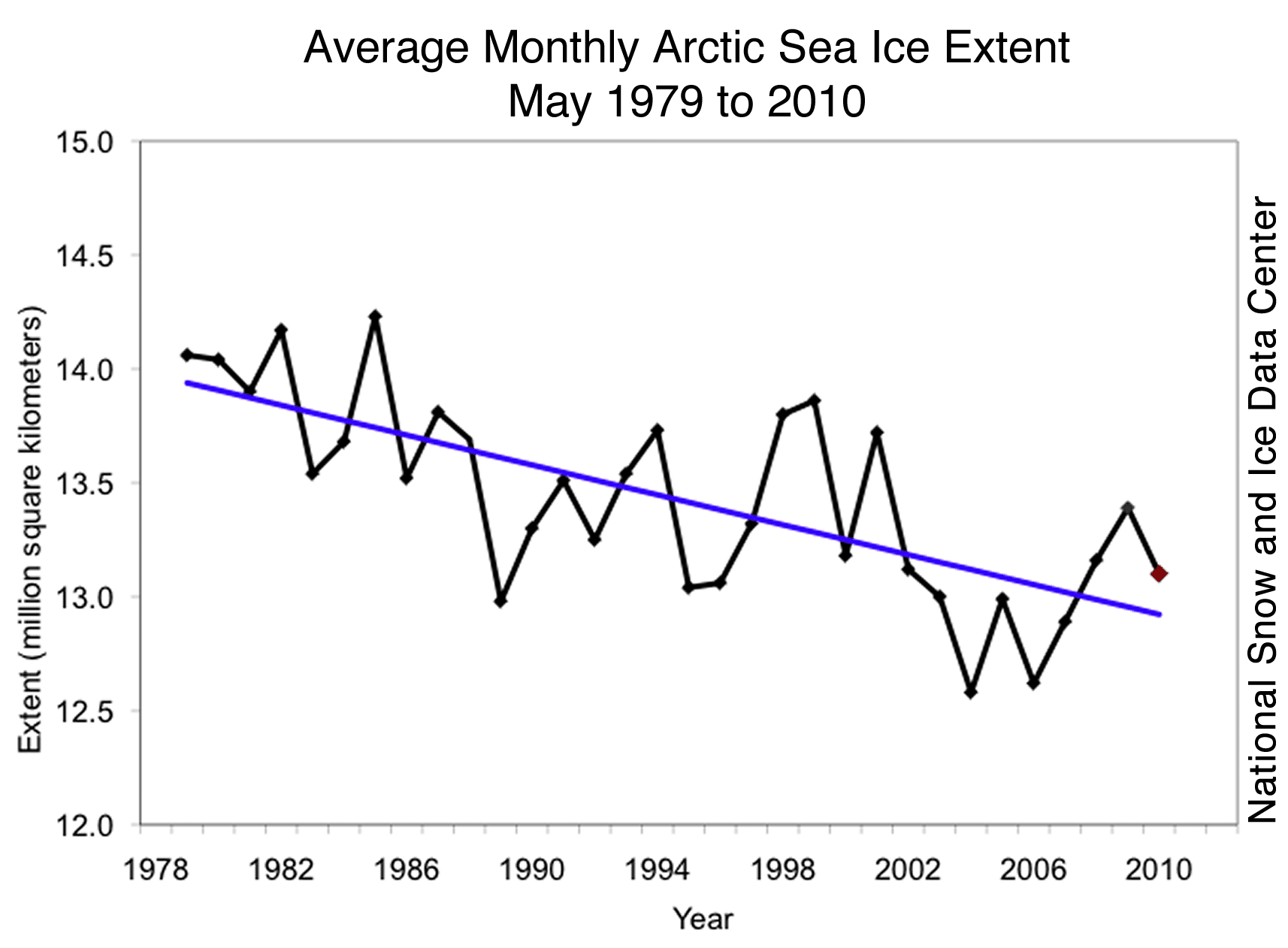
There’s a trend line, clear as day. Now, ideologically blinded polemicists like Lawrence Solomon may be able to look at a single month’s data and decide that trends are unhelpful by comparison – especially when that single month seems to make his point. But anyone who chooses to be both thoughtful and honest – and to bring even a touch of scientific rigor to his or her considerations – is going to look at these longer time-series graphs and say: you know, that looks like climate. In fact, that looks like climate CHANGE.
Given the obvious domination of ideologues in power (in Canada, at least), this also can be interpreted to suggest that we’re all in a lot of trouble. But hey, on the eve of Canada day, let’s join the deniers – for for 24 carefree hours – and pretend. I’m sure it will be fun, and the ice really won’t care whether we miss it or not – just for a day.