


This story is published in partnership with the Guardian.
When Christiaan van Woudenberg moved to Erie, Colorado in 2007, he never imagined he’d become an anti-fracking activist. He simply thought he was buying his dream home — a four-bedroom with a panoramic mountain view, 30 minutes north of downtown Denver.
Then, in 2014, the drilling started. Oil and gas rigs sprang up, some just 800 feet from his bedroom window. The dream turned to nightmare: Loud noises rumbled all night long, and the air stank like exhaust. Neighbors started getting headaches and nosebleeds, and van Woudenberg developed new respiratory issues. He kept his windows shut and worried about his daughters going outside.
“So I got mad,” he said. “Like, ‘Oh, if they can do this to me in my fancy house as an upper middle class white guy, they can do it to anybody.’”
van Woudenberg looked for ways to visualize the scale of the industry’s pollution. A software developer, he sorted through reams of data published by the Energy and Carbon Management Commission (ECMC), Colorado’s oil and gas regulator. What he discovered shocked him. Chemical spills were turning up daily in Weld County, where he lives — sometimes at new drilling projects, but more often at old, defunct sites where the contamination had gone undetected for years.
He started charting locations where wells, storage tanks, and underground flowlines had leaked toxic material into the environment, bringing his detailed maps to anti-fracking protests and community meetings.
“We’re trying to show the oil and gas infrastructure burden on this state,” he told The Denver Post in 2018, a year when more than 11 spills a week were uncovered on average in Colorado. “There’s heaps and heaps of it. It is everywhere.”
An investigation by DeSmog and the Guardian examined thousands of state documents to create an unprecedented picture of that invisible public toll, as an aging oil industry struggles to clean up — and pay for — its own decommissioning. Major reforms gave ECMC an opportunity to solve the problem in 2019. But rather than use those powers to hold the biggest companies accountable, the agency found new ways to let them off the hook.


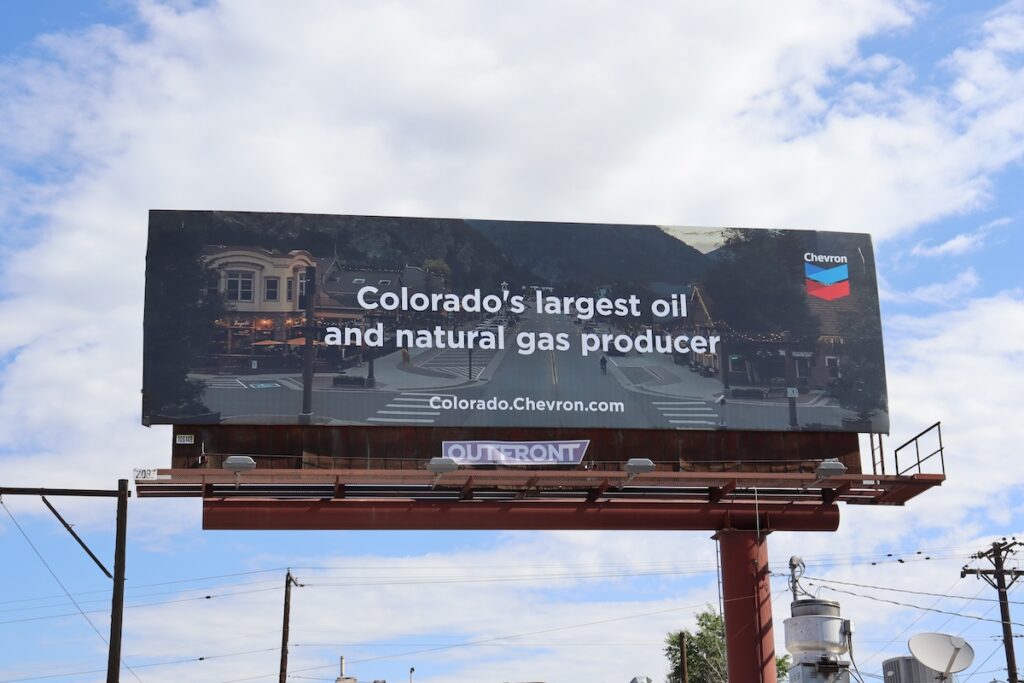
The damage stems in particular from Chevron, Oxy, and Civitas Resources, collectively the Big Three. Together, they produce the vast majority of Colorado’s oil and natural gas.
But, as this investigation found, they also own over 14,600 dead oil and gas sites, where production has ended but pollution or other impacts remain. These sites overlap heavily with their more than 6,000 open spills, locations where toxic chemicals may be contaminating soil and groundwater.
By law, the companies must remediate pollution and restore the land. But reports pulled from the Colorado Oil and Gas Information System database reveal that the Big Three have allowed many of these dirty and environmentally damaged sites to languish for years — or, in some cases, decades.
Since 2019, ECMC has had broad power to ensure compliance. Had the agency simply followed its own protocols, it could have forced Chevron, Oxy, and Civitas to hand over as much as $1.3 billion in financial collateral — funds in the form of bonds the state could hold in trust to incentivize cleanup, or deploy itself if necessary.
Instead, the agency quietly twisted its own rules, allowing all three companies to provide just a sliver of what they might have owed.
“It is unambiguous that these obligations are owed to the people of Colorado,” said Dwayne Purvis, a petroleum engineering consultant who has co-authored a report on Colorado’s looming fossil fuel liabilities. “I don’t see any reason that the work should not be done promptly, and I don’t see any reason that it shouldn’t be fully bonded.”
In 2024 the regulator said contractors for all three companies had falsified environmental paperwork at hundreds of sites including over pollution levels in water and soil — a situation the companies and the commission say they are investigating.
But even then ECMC still didn’t use its power to increase the Big Three’s financial assurance totals.
And it’s continued to forfeit that crucial source of leverage at a time when it needs every tool at its disposal. If the current pace of cleanup continues, this investigation found, it will take Chevron, Oxy, and Civitas decades to clean up their existing backlog of dead and dirty sites.
Meanwhile, rates of remediation and reclamation still lag far behind plugging — and as those final, costly steps drag out, the toll continues to rise.
This investigation’s revelations come as states are fending off a tidal wave of pollution from oil and gas extraction. Across the U.S. over two million oil wells will require plugging and cleanup in the coming years, an undertaking that could cost more than $150 billion, according to an analysis of state data by ProPublica and Capital and Main. But rather than foot the bill, industry has routinely found ways to avoid financial assurance, “orphan” their dead wells, and finally dump decommissioning expenses on the public — a tactic so widespread some experts call it “the playbook.”
In Colorado, where a Carbon Tracker report co-authored by Purvis estimates oil and gas decommissioning costs could exceed $8 billion, experts and politicians said new regulations offered a fresh model for reining in the problem. Instead, this investigation found that regulators took actions that allowed companies to pile up cleanup costs while the public wasn’t looking — undermining a cornerstone of its celebrated rules.
In a statement, ECMC acknowledged slow implementation of tightened rules but defended its performance as a regulator including its handling of financial assurances. It said there were “multiple layers” of financial protections for the public and that it used a “risk-based system” to determine the levels.
“ECMC stands behind the policy and practical considerations that underscore the development and implementation of its financial assurance protocol, which is one of the strongest financial assurance regulatory regimes in the nation,” John Brown, a commission spokesperson, told DeSmog and the Guardian, in an emailed statement. “We believe Colorado’s framework strikes an important balance between protecting communities today and reducing long-term environmental risk for the future.
“Our approach to financial assurance and site management is consistent with the options and processes established by regulators, which are designed to account for operational complexity and portfolio characteristics,” Allison Cook, a Chevron spokesperson, wrote by email. “Assertions that Chevron is out of compliance or avoiding its financial assurance responsibilities are false.”
Oxy and Civitas did not respond to multiple requests for comment on this investigation’s findings. (Civitas merged with SM Energy in January.)
A ‘Model for the Nation’
In 2019, the Colorado legislature passed SB-181, a sweeping law intended to forever change ECMC’s relationship with industry. Until then, the commission’s stated purpose had always been to “foster” oil and gas development, according to its formal charter. But the new rules flipped that dynamic on its head: By law, the commission would instead “regulate” industry while acting to ensure that the environment, public health, and the public purse would always be protected.
Phil Doe, a former U.S. Bureau of Reclamation policy specialist, says he helped make suggestions on the bill’s language in sessions convened by lawmakers.
“The requirement is simple,” he said. “You’re supposed to eliminate the cost to the public wherever possible.”
Media outlets hailed a “major shift.” Governor Jared Polis called SB-181 an opportunity to “uplift Colorado as a model for the nation.”
In 2020, ECMC — then the “Colorado Oil and Gas Conservation Commission” — began the epic process of translating SB-181’s broad mandate into nitty-gritty ground rules. In hearings stretching late into the night, community members, environmental groups, and industry representatives debated what oil and gas governance in the public interest should look like.
That included the state’s new approach to financial assurance, its process of requiring operators to provide up-front cleanup money — like a security deposit — in the form of bonds. According to state records, Colorado already held $132 million in bonding before the law’s passage, but that only averaged out to about $3,000 per well — nowhere near enough to cover liabilities that could exceed $8 billion.
Crucially, the new law mandated that ECMC collect enough bonding to nullify the public’s risk.
It was an opportunity to solve a huge structural dilemma faced by the oil and gas industry. As old wells run dry, dwindling profits can no longer cover the expense of their own cleanup. Based on its own data, ECMC found that $140,000 would cover the cost in most instances — a huge price tag for restoring an individual well. Unless companies are forced to set that money aside in advance, they have little incentive to do the work when that enormous bill comes due.
It’s critical that this work take place. Until their boreholes are stopped up with enormous concrete plugs, old wells can continue to leak methane, a potent, combustible greenhouse gas. They can also continue to leach dangerous chemicals like benzene, a component of crude oil with well-established links to blood cancers. Even after plugging, extensive remediation efforts are often needed before operators can begin reclamation, the final stage of land and habitat restoration.
But while plugging gets by far the most attention — thanks to acute climate impacts and dangerous accidents linked to unplugged wells — the work doesn’t stop there. Onsite remediation and reclamation are actually the most expensive, demanding part of the job.
“The restoration activities can be two times your plugging cost depending on the impact,” said Curtis Shuck, a long-time oil and gas industry veteran who today works on orphan well cleanup through his nonprofit, the Well Done Foundation. “It’s a whole other thing to remediate the site. If there’s contamination found, good grief.”
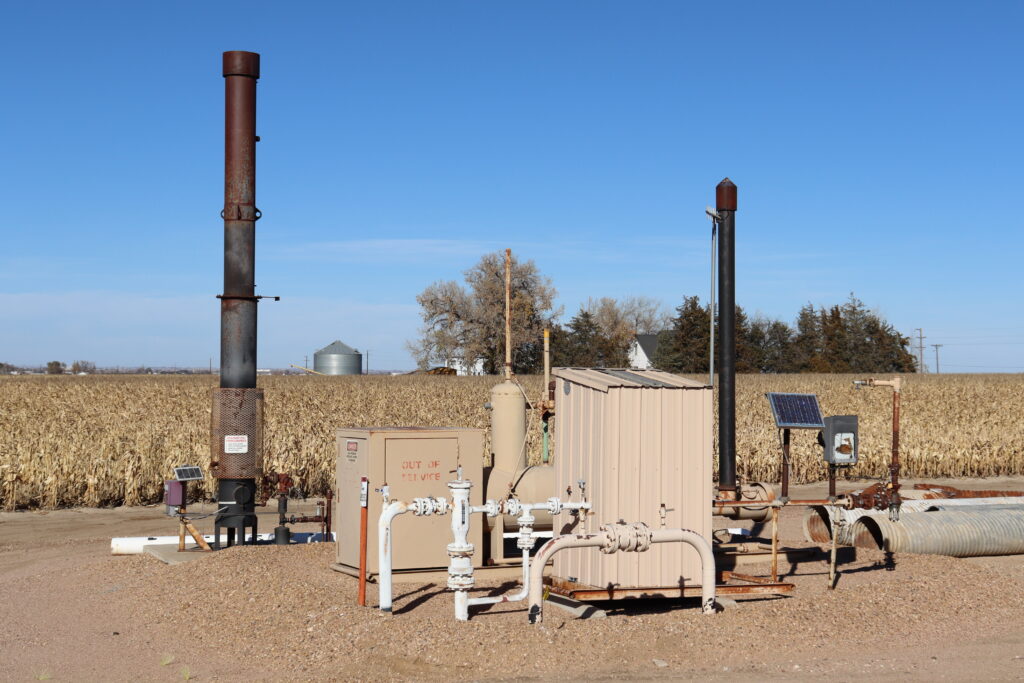
Historically, the biggest, most financially secure operators have found ways to offload these mounting liabilities at the last moment — reaping lucrative fossil profits for years, then dodging costs on the back end. Before SB-181, Colorado oil and gas companies now owned by Chevron, Oxy, and Civitas all transferred dying wells to smaller operators. While lawful transfers, those wells ended up in the hands of companies that declared bankruptcy or otherwise threatened to saddle taxpayers with the expense.
SB-181 gave ECMC an opportunity to make industry pay part of its bill up front. Susan Speece, a biologist and former Penn State chancellor who moved to Broomfield, Colorado in retirement — and whose home sits just feet from a Civitas well pad — was among those who advocated for strong financial protections during the rulemaking process.
“As a community surrounded by literally hundreds of wells…we are critically aware of the health risks we face,” she said in February 2022 testimony before the commission. “While the state currently has some bonded money from operators, there is significantly less than the estimated $8 billion it would cost to clean up all wells.”
ECMC’s initial draft rules attached a large bond to each and every well, which could have raised $3 billion in cleanup funding for the state. But industry fought that approach intensely.
“In our view, there is no real crisis,” an attorney representing the American Petroleum Institute (API) told commissioners in one 2021 hearing. “Virtually all operators in Colorado are acting responsibly.” API — which in 2019 ran misleading TV ads claiming SB-181 would “shut down energy production in Colorado” — represents Chevron and its subsidiary Noble Energy, as well as Oxy, according to its current members page. Chevron also employed a lobbyist specifically focused on well cleanup rules in July 2020, just as it was working to purchase Noble — an acquisition that would bring thousands of plugged wells with unfinished cleanup work onto its books.
ECMC’s Brown said the agency routinely consults with stakeholders, including corporations, who seek clarity on rule changes, though he said removing plugged wells from the financial assurance process “was not the result of special treatment provided to any individual operator or company.”
A Chevron spokesperson declined to say whether the company discussed bonding for its many plugged wells with ECMC.
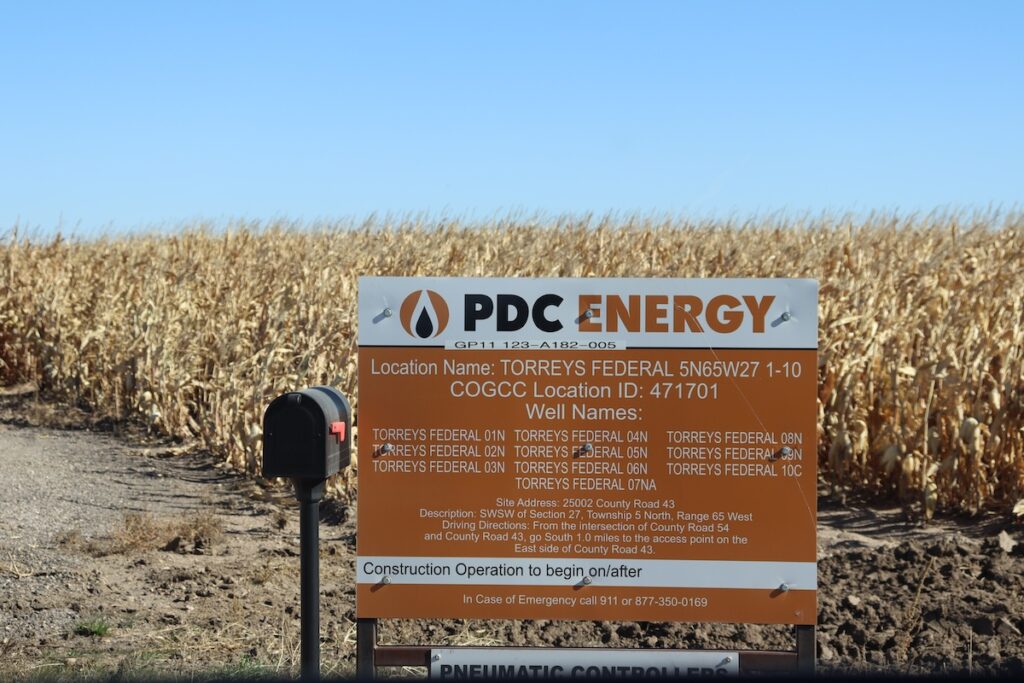
Ultimately, ECMC settled for an approach based on overall production levels. Companies with healthy, high-producing wells can skate by with generous bonding terms, securing their wells for as little as $1,500 apiece. But as production falls across an operator’s portfolio, the amount of bonding owed quickly rises. A company can only have so many low-producing wells before serious penalties kick in, and wells over the allowable threshold, state rules dictate, are bonded for as high as $140,000 each — enough, on average, to cover the entire cost of cleanup.
In theory, this prevents the public from ever needing to foot the bill. And some advocates were satisfied. “Colorado has pretty much solved its orphan well problem, and kudos to them,” Adam Peltz, an Environmental Defense Fund researcher, told The Washington Post in 2022. “The rest of the country needs to do it now, too.”
A Disappearing Act
In the wake of the hearings, Colorado’s hundreds of oil and gas operators began tallying their new financial assurance bills. Then, in a virtual meeting with industry on August 30, 2022, ECMC staff proposed something unusual: If a well had been plugged already, companies could simply remove it from their calculations, even though cleanup requirements still hadn’t been met.
This seemed to directly contradict ECMC’s final rules, which state that “all wells” — plugged or unplugged, without exceptions — must be covered by financial assurance until remediation and reclamation are complete.
In one fell swoop, ECMC removed a critical incentive to tackle the dirtiest, most expensive part of the process. And that primarily benefitted Chevron, Oxy, and Civitas. Factoring those companies’ 14,611 dead wells into the process could have resulted in bonds totaling over $1.3 billion, our analysis found.
Instead, ECMC has collected just $146 million in bonds to plug wells from the Big Three since SB-181’s 2022 enactment. That amount, which also covers the companies’ roughly 12,000 actively producing wells, only represents 7 percent of their total cleanup costs, according to our conservative estimate.
“No state requires operators to fully pre-fund every possible future cleanup cost all at once,” ECMC’s Brown said by email, emphasizing the need to maintain flexibility for operators. But this investigation arrived at the $1.3 billion figure simply by following ECMC’s own bonding rules for the riskiest sites, an approach that still includes numerous discounts and exceptions for industry.
“The people that are in charge of performing the law and seeing that it’s faithfully employed are breaking it. To me, that’s criminal.”
Phil Doe, former U.S. Bureau of Reclamation policy specialist
Brown wrote that at that 2022 meeting, agency staff were “not creating a separate exemption from reclamation obligations or ongoing regulatory oversight.”
Nearly four years later, however, that seems to be the practical effect of splitting cleanup from plugging. Purvis said Chevron especially used to “brag” about its pace of plugging, but the slow cleanup rate now is telling.
“They were doing that plugging because it was required in order to drill new horizontal wells in the vicinity,” he said, “and the fact that they’re not doing the cleanup work corroborates that the plugging efforts in the past are not strictly a matter of being a good citizen.”
When DeSmog and the Guardian shared these findings with Dan Leftwich, an environmental lawyer who helped draft the language in SB-181 and participated actively in the rulemaking process, he was outraged.
“Exempting plugged wells that haven’t passed final reclamation from full bonding requirements subverts the entire financial assurance process and explicitly violates the statute,” he said.
Phil Doe, too, expressed disbelief.
“The people that are in charge of performing the law and seeing that it’s faithfully employed are breaking it,” he said. “To me, that’s criminal.”
“Protecting the public is paramount in the ECMC’s mission, and it seems pretty clear that operators failing to remediate and reclaim thousands of well sites is not protecting the public,” said Mike Foote, an attorney and former Colorado state legislator who co-sponsored SB-181.
Chevron’s spokesperson maintained it was following cleanup processes and timelines according to state rules. “We continue to make measurable progress advancing remediation and closure activity,” Cook said.
At times, ECMC itself acknowledged that plugged wells and remediation projects needed additional bonding. Public documents reference a plan to factor those sites in as part of the director’s annual review — a critical, legally mandated assessment intended to act as a key check on the bonding process. According to state rules, the director may consider a variety of factors for every operator — including inflation and the pace of cleanup — and request more bonding if necessary to protect the public.
Chevron’s earliest approved financial assurance forms reference “a number of plugged wells that have not passed final reclamation that may require additional financial assurance.” The final total, the forms said, would be determined during the director’s annual review.
In other words, ECMC leadership set up the annual review to be a crucial check on the entire financial assurance process. Yet after three years of legally required reviews come and gone, ECMC director Julie Murphy still hasn’t completed her review for a single company. When I requested them through a public records inquiry, I instead received a call from then ECMC communications director Kristen Kemp. The reports, she acknowledged, didn’t exist.
Brown, the current ECMC spokesperson, cited a complex and “resource-intensive” overhaul of the agency as part of the reason for the slow implementation. “While a finalized annual review document has not yet been completed for every operator,” he said, “Operators remain subject to existing financial assurance obligations, plugging and reclamation requirements, inspections, enforcement authorities, and ongoing ECMC review under the adopted rules.”
SB-181 requires the commission to adequately fund itself to support operations.
‘Subterranean Toxic Spaghetti’
The vast majority of the sites awaiting cleanup are in Weld County, just 25 miles north of Denver. Weld is known for its jam-packed fossil fuel infrastructure; some locals call it “Welled County,” a nod to its thousands of pumpjacks. But more than 350,000 residents, including van Woudenberg, live there, too, some with open spills literally in their backyards. The unbonded, damaged, and dirty sites also spread west and south into a densely residential corridor along I-25, the highway connecting Denver and Fort Collins. Some sites lie feet from schools and homes. Others sit close to rivers, streams, and domestic water wells.
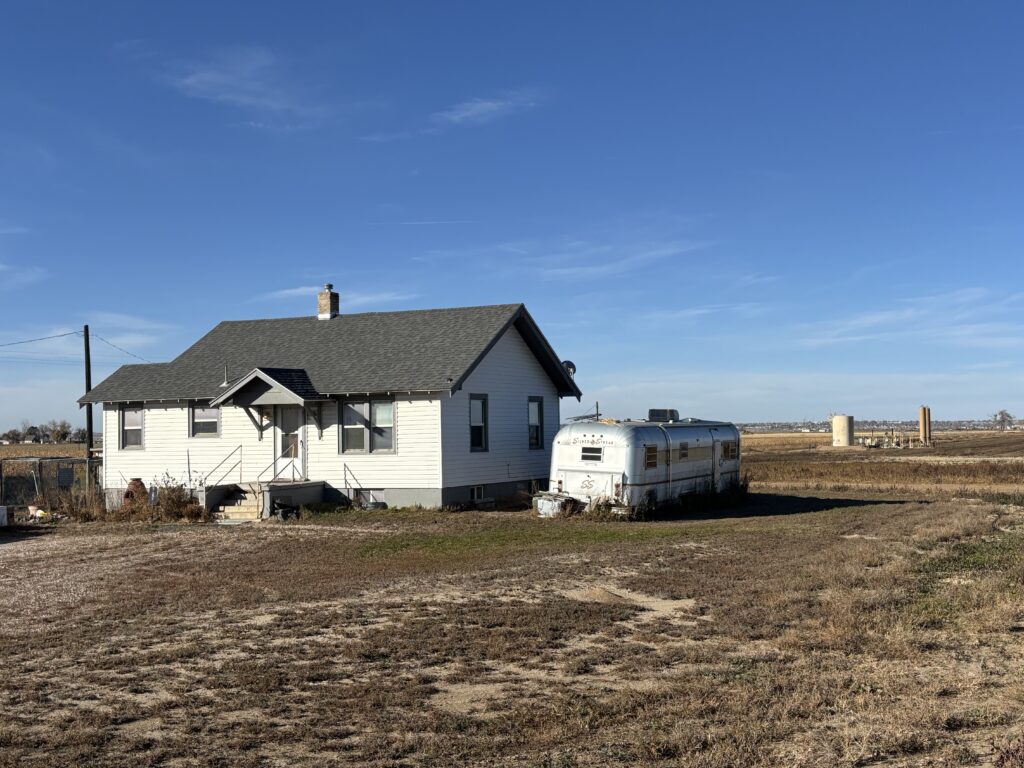
“Any of the contamination could potentially impact domestic water supplies and agricultural water supplies,” said Lisa McKenzie, a leading oil and gas pollution expert who recently retired from the Colorado School of Public Health. “If it’s in the soil, it has the potential to reach the groundwater.”
This pollution is the result of inadvertent spills, common in fossil fuel extraction. As oil and gas liquids bubble up from mile-deep well boreholes, they’re shunted into a maze of processing and storage equipment through a network of underground flowlines — what one lawyer calls “the subterranean toxic spaghetti.” Lines and storage tanks often breach, spewing carcinogens like benzene, toxic hydrocarbons, and industrial extraction fluids into the environment. Colorado oil and gas companies reported 6 spills a day on average in 2025 according to a DeSmog and Guardian analysis of ECMC data.
Chevron, Oxy, and Civitas are together responsible for over 6,000 spill sites that still need remediation, according to our review of state Incident Inspection reports. These sites overlap to a great degree with the dead wells that ECMC exempted from bonding: over 25 percent of those plugged wells also have confirmed, active spills at their locations. Many thousands more still appear to be awaiting chemical testing, suggesting the total number of spills could be much higher. ECMC’s spill log shows the vast majority of spills are discovered during the decommissioning process, not during active production.
“I’m struggling to see the discretion allowed by the director to not apply the rules.”
ECMC Commissioner John Messner
ECMC director Julie Murphy also has broad discretion to require additional bonding at spill sites — not just well locations. But those spills should have had bonds attached in the first place as part of each company’s initial plan. They didn’t because Scott Cuthbertson, ECMC’s then deputy director, shunted remediation-specific bonding into the annual review process instead in a move which prompted questions.
In a tense moment during an August 16, 2023 public hearing, then ECMC Commissioner Karin McGowan expressed disbelief that the agency hadn’t yet assigned any bonding for remediation projects.
“I’m trying to wrap my brain around how that can work or should work,” she said.
Cuthbertson said he’d had no choice but to leave remediation out of the process due to tight timelines and limited staff resources.
“Commissioner, I’m sorry to frustrate you,” he said to McGowan. “We compartmentalized it. We did not look at remediation, large issues of remediation, for any operator.”
“Mr. Deputy Director Cuthbertson, that’s different than what the rules anticipated,” a second commissioner, John Messner, followed up. “I’m struggling to see the discretion allowed by the director to not apply the rules.”
Cuthbertson insisted that the remediation bonds would be assessed at a later date by ECMC’s director. “We’re not not doing it,” he said, at one point.
Currently, Director Murphy still hasn’t assigned bonds for Chevron, Oxy, and Civitas’s 6,000 active spills. Former deputy director Cuthbertson retired shortly after completing his review of each company’s financial assurance.
Cuthbertson did not respond to requests for comment.
In an interview, Murphy acknowledged that the commission had failed to require bonding for thousands of wells with cleanup work outstanding.
“We want to be looking at how we can continue to improve our internal processes to accelerate review and approval of appropriate reclamation and remediation projects,” she said, citing the importance of returning clean land to surface owners. “It is top of mind for me.”
As a sign of progress, she pointed to the fact that Colorado’s oil and gas industry has plugged over 6,500 wells statewide since 2020. All those sites will still require additional cleanup.
“Can we do more? Should we do more?” she said. “These are questions I think we can continue to look at. I’m really proud of what we’ve done. Is it perfect? Nothing’s perfect.”
‘The Elephant in the Room’
In 2021, rules adopted thanks to SB-181 finally required Colorado oil and gas companies to test surrounding soil and groundwater for toxins each time they plugged a well — and then share those results with ECMC. But contractors for Chevron, Civitas, and Oxy began to falsify the lab testing submitted to the state, according to state regulators, as the Guardian has previously reported.
At times, these actions served to obscure egregious levels of pollution. One 2017 spill at a Chevron-owned site near LaSalle, Colorado released huge quantities of benzene — 4,000 times the safe drinking water limit — into nearby soil and groundwater. The breach was within a quarter mile of 12 different domestic water wells, meaning the chemicals could end up in a glass on a family’s dinner table. One home’s well was just 175 feet from the spill.
In the years that followed, Chevron contractors falsified required lab reports, the regulator said, to make the benzene levels look as though they met critical safety levels — in one case lowering the reading by 99.995 percent so that it appeared to fall just below the safety threshold. Between 2021 and 2024, ECMC unwittingly closed over 200 remediation projects under similar false pretenses. Cleanup at the site near LaSalle is still under way.
The falsification only came to light because legal representation for one of the contractors involved, Eagle Environmental Consulting, came forward to the Colorado Attorney General’s office. This forced ECMC to investigate further, an effort which has so far turned up thousands of instances of falsified data at over 400 sites.
Many of the tampered-with documents related to plugged well locations that quietly were exempted from bonding, despite their unmet obligations. After the data falsifications were identified, ECMC improved its policies and issued enforcement actions to Chevron, Oxy, and Civitas — but still didn’t fine them or raise their bonding totals. In 2024, ECMC’s Kemp told the Guardian that the Big Three were responsible for the false documents filed on their behalf, even if the data was forged by contractors without their knowledge.
DeSmog and the Guardian examined thousands of ECMC environmental filings for this story, both manually and through large-scale analysis of scraped public data. The results paint an alarming portrait. The two contractors implicated in the falsification scandal, Eagle Environmental and Tasman Geosciences, were the go-to environmental contractors for Chevron, Oxy, and Civitas between 2021 and 2024. Both contractors routinely filed lab reports using an approach that obscures the digital chain of custody and can be used to obscure signs of tampering.
That means much of what’s known about the safety of water and soil at Big Three sites throughout Colorado is based on insecure, unverified, and potentially manipulated data from contractors with a checkered track record. Even after ECMC alerted the public to the problem in 2024, all three oil companies have continued to file environmental reports with incomplete data or other methodological problems, our review of public documents found. Since August 2024, ECMC has rejected thousands of environmental filings that staff have deemed inadequate.
Now, it’s unclear how deep the problem goes. In comments during a July 2025 public hearing, ECMC compliance manager Mike Leonard floated a stark possibility: that the commission’s entire system of oversight can no longer be trusted. ECMC can’t rule out the possibility that other filings were manipulated beyond what has been confirmed so far.
“Frankly,” Leonard said, “that is the elephant in the room.”
Alex Busuttil, a spokesperson for Tasman, said by email that the company’s own investigation of data alterations pointed to a single, now former, employee. “Upon discovery, Tasman took immediate action to investigate and address the issue and have implemented comprehensive corrective measures,” Busuttil said, adding that “the number of remediation projects affected represent less than 25% of the sites referenced by the ECMC.”
Eagle Environmental did not respond to a request for comment.
A Hidden Cost
Tracie Crites, mayor of Frederick, Colorado, said the slow pace of oil and gas cleanup has hindered her town’s development.
“For many, plugging a well sounds like the final step,” she wrote by email. “In reality, the industry’s work does not end there.”
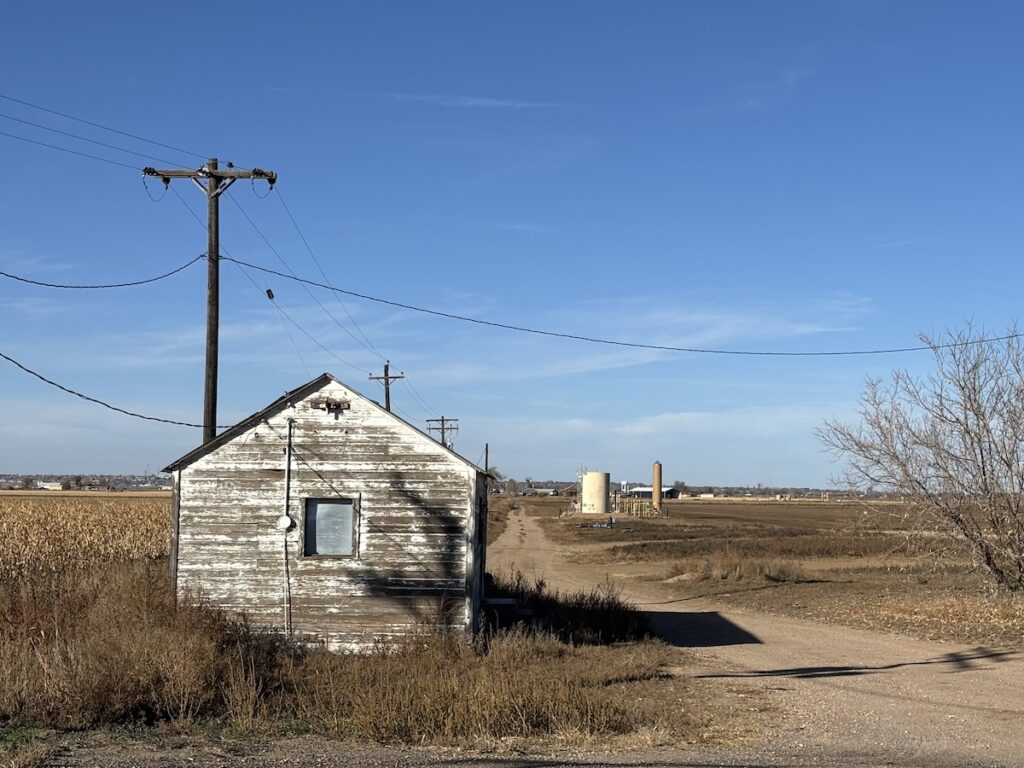
That contaminated land remains unusable for housing, business, and recreation until cleanup is finished. It’s a genuine cost to society, argued Cole Ruiz, a Texas-based water attorney working on remediation issues.
“What is the opportunity cost of not protecting the environment?” he said. “There is a business case to be made for protecting our water. There’s a business case to be made for protecting our soils. And we need to be taking that very seriously.”
But without bonds in place, companies lack a critical incentive to do the work — and it’s unclear who will ultimately foot the bill. Data shared with DeSmog and the Guardian by ECMC show that Chevron, Oxy, and Civitas have passed final environmental review on only about 2,500 drilled well sites in Colorado in nearly four decades.
Cleaning up the unbonded well sites would be “decades and decades of work,” said orphan well expert Shuck.
van Woudenberg, the software-engineer-turned-activist, expressed dismay at this investigation’s findings.
“More than any other industry, fossil fuels get away with doing far less than the bare minimum,” he said. “We all pay the consequences, and we suffer for them.”
After closely studying the fossil fuel industry and its liabilities, Purvis warned that the state’s oil and gas production had peaked years ago — and there would be less money to pay for cleanup with every passing year. Plus, today’s extremely high oil prices, he emphasized, means these companies have cash.
“The easiest time to pay for the cleanup of Colorado, for the benefit of future generations, is right now,” he said. “It only gets harder the longer you wait.”
The Guardian’s Will Craft and Andrew Witherspoon contributed data reporting.
Editing by Ashley Braun, DeSmog, and Mark Oliver, the Guardian.
Methodology
Total number of wells with environmental issues outstanding
ECMC’s Reclamation Status Inspection Page keeps track of the environmental status of every well in Colorado. This database lists a unique API number for every well, and is searchable by operator.
Using this master database, we generated a list of all the wells Chevron, Civitas, and Oxy (and their subsidiaries) have ever operated in Colorado. If the inspection page marked a well as having “passed” reclamation, we removed it from the list. We also removed wells that don’t require financial assurance, such as wells that have APIs but were never actually drilled.
As an additional layer of verification, we asked ECMC to provide its own list of all the Chevron, Civitas, and Oxy wells that have ever met cleanup obligations. The agency provided a list of roughly 2,550 drilled wells that it can confirm have ever met requirements. We removed any of those wells from our list, resulting in a master file of wells that still haven’t passed environmental muster.
14,611 plugged wells without bonding
For this number, we consulted each company’s Form 3 financial assurance application.
When applying for financial assurance, Colorado oil and gas companies must provide a list of all API numbers for wells that require bonding, to be approved by ECMC’s director. The bonding amount is then calculated using that list. If a well isn’t on a company’s Form 3 list, it cannot have been bonded under the state’s new rules.
The companies’ own filings provided a list of bonded wells by API number, which we then used to determine which wells had bonding attached and which didn’t. ECMC directed companies not to include plugged wells on their lists, even if they still needed remediation or reclamation — a move that disproportionately benefited Chevron, Civitas, and Oxy.
Some 4,000 of these wells are “Out of Service Wells,” where bond requirements are waived in return for timely plugging. But ECMC’s director can still issue bonds for these wells if work isn’t proceeding.
Over 6,200 open remediation projects
To arrive at a picture of the companies’ overall pollution footprint, we used ECMC’s Inspection/Incident Inquiry database, which lists all spills ever reported by a company — and notes whether or not they’ve been resolved. We searched by company and tallied the spills that had still not been marked “closed.” The 6,200 number is current as of February 2026.
$1.3 billion in bonding owed
To arrive at the total amount of bonding owed by Chevron, Civitas, and Oxy, we used the same process outlined by ECMC. The only difference was that we included all wells with cleanup work still outstanding, not just wells that are actively producing. Colorado’s 700 Series Financial Assurance rules say “all” wells should be included in the calculation, and in its own documents ECMC has acknowledged that plugged wells do require bonding until all requirements are met.
Today, Chevron, Civitas, and Oxy have provided just $146 million in bonding under the new rules. Adding the plugged — but not reclaimed — wells back into the process increased the bonding estimate in two ways.
First, it dramatically lowered each company’s estimate of average monthly production, which Colorado uses as a proxy for overall risk. Companies that have lots of healthy, producing wells can secure much more favorable bonding terms, since those locations can still generate enough cash to fund cleanup. By ignoring over 14,000 plugged wells where cleanup is still ongoing, ECMC helped Chevron, Civitas, and Oxy make their portfolios look much more productive on a per-site basis. In our calculation, all three fell under ECMC’s Financial Assurance Plan Option 2, a middle-of-the-road plan with fewer carveouts and a higher per-well bond.
Second, adding the plugged wells into the process also greatly increased the overall total of wells that needed bonding. Under an Option 2 plan, companies can only exempt 5 percent of their low-producing sites from bonding requirements (not including “Out of Service” wells). After that threshold is reached, every well that produces less than 2 barrels of oil equivalent per day must be bonded at $10,000, $30,000 or $40,000 per well, depending on depth, plus a $100,000 surface bond geared for remediation and reclamation. (We used a lower $30,000 figure in our calculation.) Some oil and gas locations have more than one well on site, so we reduced the $100,000 bond proportionately based on each company’s ratio of wells per location.
In April 2026, we calculated each company’s well totals using the real-time numbers from ECMC’s operator database. We then added in the many plugged wells that were removed from the bonding calculation at ECMC’s direction, and tallied the bond required for each company under the Option 2 plan as specified in ECMC’s 700 Series rules. The result was over $1.3 billion — roughly nine times what Chevron, Civitas, and Oxy have collectively posted today.
UPDATED 6/8/2026: This article was updated to include a comment from Tasman received after publication.