

Albertans have historically paid the highest electricity rates in the country and those costs may soon rise again as the province doubles down on gas-powered AI data centres. Case in point is Greenlight Electricity Centre, a 932 MW natural gas plant proposed to be built north of Edmonton to power the recently announced enormous new Meta data centre.
The Pembina Institute, a non-partisan environmental policy think tank, was unequivocal about the impact this could have on working families. “Adding a new power plant of this size — generating enough electricity to power a city two-thirds the size of Calgary — will massively increase demand for gas in the province,” David Pickup, director of Pembina Electricity program, explained in an analysis of the project. “This likely means household electricity costs for Albertans will keep rising in the years ahead.”
The story of gas-hungry data centres jacking up people’s utility bills is playing out around the world. US-based grid giant PJM will soon increase electricity costs in 13 states by $6.3 billion due to AI driven demand. In a statement PJM said “…electricity demand is growing faster than new generation can be built to supply it. The primary driver of that growth is data centers.”
Similar price shocks have hit Australian households after increased LNG exports inflated local gas prices used for electricity generation. Ratepayers in Louisiana are likewise worried that a huge new gas-fired Meta data centre will soon drive up their local electricity costs.
Alberta could potentially have avoided that fate by demanding that new data centres be powered by increasingly cheap wind, solar, and battery storage. But Premier Danielle Smith’s hostile policies towards the province’s once-booming renewable energy sector means Alberta remains largely dependent on relatively pricey gas generation instead.
Between 2018 and 2023, Albertans paid by far the highest electricity rates in the country, according to a recent report by the pro-business C.D. Howe Institute. During this period, almost every other province saw a decline in electricity costs while Alberta’s supposed “free market” system produced price increases of over fifty–five percent. These costs ballooned to $224 per megawatt hour in 2023, almost double those in neighbouring Saskatchewan. A single person in an Edmonton condo paid $115 per month in electricity that summer.
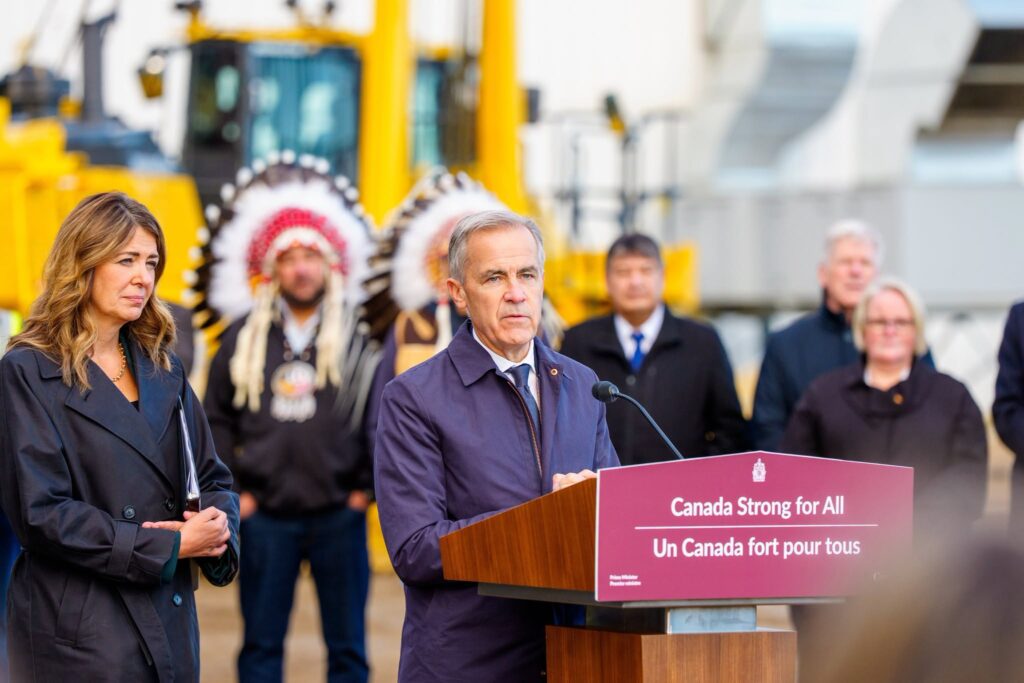
Premier Smith – with significant assistance from Ottawa – is now forcing gas-powered data centres into Alberta communities despite local concerns about water use and noise pollution. During the Greenlight announcement, Smith bragged that the project would not have been possible without the capitulation of Prime Minister Mark Carney in their memorandum of understanding around federal clean energy regulations. “The agreement will allow Alberta to increase oil and gas production, secure more energy projects and attract billions of dollars in investment that will grow and diversify our economy for years to come,” said Smith.
While many proposed server farms are technically required to build their own energy generation, Albertans have good reason to be skeptical. Under new draft rules from the Alberta Electric System Operator (AESO), proposed AI data centres will soon be allowed to access an additional 1.6 gigawatts of already-strained grid capacity for a period of three years until developers can build their own gas-fired energy supply. The AESO program manager for large load connections, Chris Connoly, recently admitted that a generous allocation of scarce grid capacity to multi-billion-dollar tech giants “will drive prices upwards”.
The new policy explicitly excludes renewable power generation and is “limited to gas-fired thermal generation only.” Consider the possibility that inevitable increases in Alberta gas prices are not a bug, but a feature in Smith’s fossil fuel friendly policies. Since the vast majority of electricity is generated by burning gas, consumers will pay for this profitable price bump for producers.
“As it stands, Alberta’s Bring Your Own Generation rules around data centres have a fundamental flaw”, warned Pembina’s Pickup. “They essentially exclude all options for generation other than gas-fired power.”
The once booming renewable energy industry in Alberta is being further hobbled by lack of transmission lines, also impacting Albertans’ pocketbooks. A recent report by the Pembina Institute details how vast amounts of wind and solar production are being wasted because the province has not invested in power lines to deliver cheap, low carbon energy to consumers.
Wind and solar producers are increasingly forced to throttle production due to growing transmission bottlenecks. AESO then charges consumers a “rebalancing” fee as renewable energy is intentionally dumped and replaced with more expensive gas generation. This money-wasting, climate-killing situation cost Albertans $17 million in 2025 and released an additional 1.3 megatonnes of emissions.
While the Smith government has already found a variety of ways to kneecap the Alberta renewable industry, new market restructuring rules being rolled out in 2028 will make matters even worse. Pembina calculated that the new pro-gas electricity market rules, had they been rolled out last year, would have cost Albertan ratepayers $261 million more in 2025 and driven up electricity costs by $5.4 per megawatt hour – an eye watering 13 percent increase.
A national energy grid could combine hydro-rich provinces like BC with some of the best renewable sites in Canada next door in Alberta, delivering lower costs and emissions. But by caving on clean energy regulations and allowing Alberta gas producers to gorge on government-driven AI demand, Carney may be undermining long-overdue efforts to decarbonize the economy and build connections between provinces.
And without a change in the fossil-fuel-fixated government of Danielle Smith, Albertans can expect higher costs for electricity and gas, accelerating emissions and additional unwanted AI data centres in their backyard.