Shrinking Arctic Ice May Cause Mercury Poisoning

authordefault
on

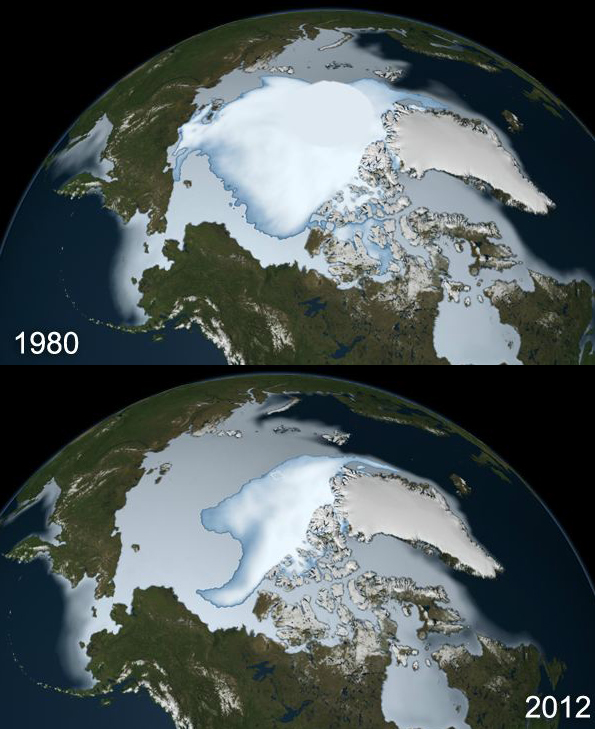
NASA has shown repeatedly that the Actic icecap is melting, and melting faster than climate models predict. This new visualization is stark and should be of obvious concern, simply because of the impact on sea levels. Now there is a potentially new threat. The process of shrinkage may cause a chemical reaction that could poison the Arctic ecosystem withย mercury.

The disappearance of old, thick ice in the Arctic means an increase in bromine released into the atmosphere. The new, thinner ice has more salt and this is where the bromine comes from. As it melts it interacts with relatively benign gaseous mercury causing it to solidify and fall in a toxic form to the ground and into ocean water. The old old ice has lessย salt.

Image source: NASA

it is currently popular in denier circles to tout the April 2012 ice sheet extension as a sign of slowing of Arctic ice melt. This grasping at straws is not supported by the overall data, which shows Acrtic ice disappearance increasing. The April extent is mainly thinner, new ice that will easily melt, potentially causing the โ€œbromine explosiionโ€ described by NASA. The old, thicker icecap is shrinking more rapidly as time passes, and with it, the benign melting of salt-depletedย ice.

Related Posts

Analysis
on

Investor call transcripts show that gas companies see the data centre build-out as their next growth sector, even as the energy transition accelerates.

Investor call transcripts show that gas companies see the data centre build-out as their next growth sector, even as the energy transition accelerates.
on

Sign up for our July 8 virtual conversation on combatting fossil fuels and fascism, keeping up with climate denial, and solving polluted information ecosystems.

Sign up for our July 8 virtual conversation on combatting fossil fuels and fascism, keeping up with climate denial, and solving polluted information ecosystems.
on

More farmed salmon will not necessarily bring better food security, say researchers.

More farmed salmon will not necessarily bring better food security, say researchers.
on

Clare Carlile's reporting was recognized under the โ€˜News Item of the Yearโ€™ award for revealing how UK government staffing shortages would harm the environment during a historic drought.

Clare Carlile's reporting was recognized under the โ€˜News Item of the Yearโ€™ award for revealing how UK government staffing shortages would harm the environment during a historic drought.