By Lorraine Chow, EcoWatch. Reposted with permission from EcoWatch.
Even though Interior Secretary Ryan Zinke insisted “this is not about energy,” environmentalists and public lands advocates have long suspected the Trump administration’s cuts to national monuments were driven by its push for more drilling, mining and other development.
Now, internal Interior Department documents obtained by the New York Times show that gaining access to the oil, natural gas and uranium deposits in Bears Ears and coal reserves in Grand Staircase-Escalante were indeed key reasons behind President Trump’s drastic cuts to the two monuments in Utah.
In March 2017, an aide to Senator Orrin Hatch (R-Utah) asked a senior Interior Department official to consider reduced boundaries for Bears Ears to remove land that contained oil and natural gas deposits. Hatch’s office sent a map depicting a boundary change for the southeast portion of the Bears Ears monument to “resolve all known mineral conflicts,” the email said, referring to oil and gas sites on the land that the state’s public schools wanted to lease out to increase state funds.
As the Times reported, the map that Hatch’s office provided—and notably sent about a month before Sec. Zinke publicly initiated his review of national monuments in April—was incorporated almost exactly into the much larger reductions President Trump would later announce.
In December, despite widespread public support to preserve protections for public lands, Trump announced he was gutting the 1.35 million-acre Bears Ears to only 201,397 acres and the 1.87 million-acre Grand Staircase-Escalante to just 997,490 acres. The move was the largest elimination of protected areas in U.S. history.
Rare Fossils Discovered on Lands Cut From Bears Ears National Monument https://t.co/21fa1isi4d @Sierra_Magazine @greenpeaceusa
— EcoWatch (@EcoWatch) February 22, 2018
The Interior Department documents also revealed concerns over gaining access to coal reserves in Grand Staircase-Escalante.
“The Kaiparowits plateau, located within the monument, contains one of the largest coal deposits in the United States,” an Interior Department memo issued in the spring of 2017 stated. Nearly 11.36 billion tons are “technologically recoverable,” it estimated.
Zinke has cited past presidential abuses of the Antiquities Act as the rationale behind his recommendations to Trump to shrink national monuments.
“No President should use the authority under the Antiquities Act to restrict public access, prevent hunting and fishing, burden private land, or eliminate traditional land uses, unless such action is needed to protect the object,” Zinke said in August.
He has also insisted that resource extraction was not a reason behind the reductions.
“This is not about energy. There is no oil and gas assets. There is no mine within the Bears Ears monument before or after, so the argument that President Trump stole land is false, nefarious and a lie,” Zinke told reporters in December.
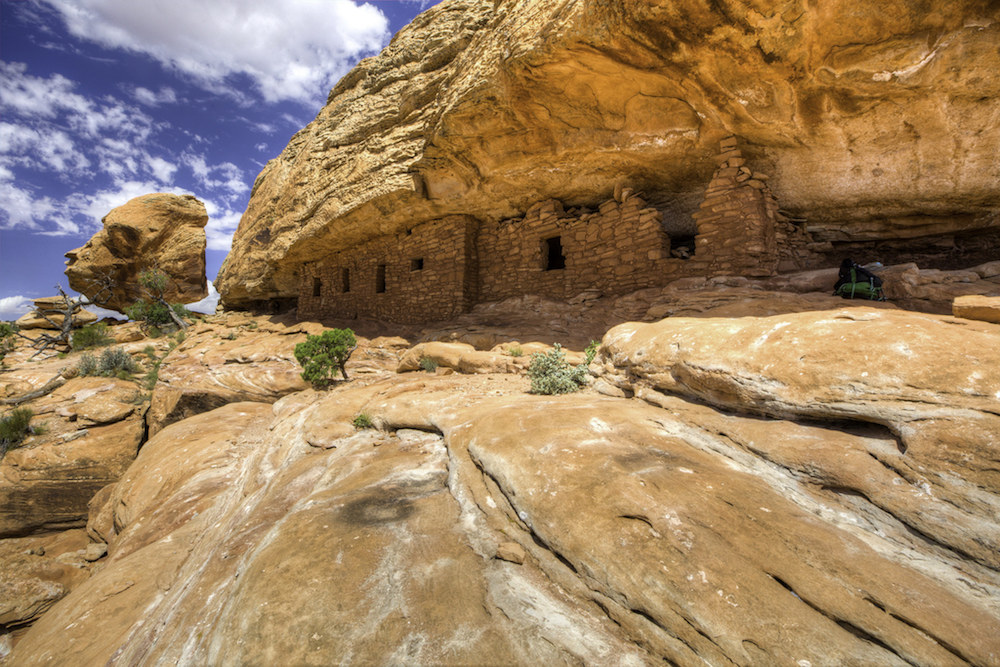
Main image: The Citadel Ruins at the Bears Ears National Monument in Utah. Credit: Bob Wick/U.S. Bureau of Land Management, public domain