
A major environmental justice case tying slavery’s legacy to Cancer Alley reached a new phase after a judge rejected defendants’ motion to dismiss last month.
The lawsuit centers on claims that St. James Parish in Louisiana’s Cancer Alley, where many industrial sites are located on former plantations where people were enslaved, violated the U.S. Constitution by pushing polluting industry into Black communities.
“In their complaint, Plaintiffs tell the story of how plantations gave way to industrial facilities that now endanger black residents’ health, negatively impact their quality of life, and desecrate the unmarked cemeteries of their ancestors,” District Judge Carl Barbier wrote in the February 9 order denying defendants’ motion to dismiss the case.
It’s unusual to see a federal court accept a 13th Amendment claim over environmental harms.
“You most often see courts weighing in on the badges of slavery question with respect to hate crimes and racial violence,” Santa Clara University School of Law professor Nicholas Serafin wrote by email. He added, while not unprecedented, an argument that doesn’t pertain to racial violence, especially under the federal law that lets individuals sue state and local officials, “is relatively uncommon.”
During the discovery phase, plaintiffs can take testimony and demand documents they have so far been unable to obtain, as they seek to prove their case in court.
“Public records requests for St. James Council meetings have proven to be incomplete or non-existent,” Inclusive Louisiana co-director Gail LeBoeuf said at a press conference before the case entered discovery. “We have watched St. James Parish officials make sweetheart deal after sweetheart deal that defies logic, which is why revenue is always needed and economic development is next to none.”
Attorneys for St. James Parish and its co-defendants did not respond to requests for comment from DeSmog.
In a legal filing last week, the defendants argued that location decisions are made by industry, not local authorities and pointed to factors other than race.
“The Parish was not ‘steering’ industry into any particular area of the Parish,” the defendants wrote. “Industry was selecting its locations by working with other entities or through private land transactions. Moreover, the Parish does not evaluate its districts or communities as ‘Black’ or ‘white,’ but focuses on areas where residential populations are growing or decreasing.”
The harmful impacts of petrochemical pollution on St. James Parish have already been established, based on the judge’s February ruling.
“Due in part to pollutants and toxic emissions from petrochemical and other industrial facilities, St. James Parish has the fifth highest cancer incidence rate among Louisiana parishes,” Judge Barbier wrote.
That pollution is deadly.
“I’ve been to so many funerals. Sometimes two or three funerals per week,” said Sharon Lavigne, founder and president of RISE St. James, one of the plaintiffs in the case. “Why do we have to be sacrificed for these chemical plants to make money?”
Inside St. James Parish, Black people’s homes are hit particularly hard by pollution. The lawsuit alleges that’s because parish officials used zoning laws in a racially discriminatory manner, violating a wide range of the plaintiffs’ Constitutional rights.
One of the lawsuit’s central claims is that St. James Parish used its zoning laws in ways that violate the 13th Amendment, which abolished slavery except as punishment for crime. The way the parish used its zoning authority was so steeped in the legacy of slavery and racial discrimination that it breached a bar on “badges and incidents” of slavery, the lawsuit claims.
“The Bible tells us to remember history — because what we forget, we repeat,” said Barbara Washington, who serves as co-director of Inclusive Louisiana alongside LeBoeuf. “The same communities once forced to labor this land are now being asked to sacrifice their health for profit.”
After years of fighting a multi-billion-dollar plastics complex and other proposed industrial developments one-by-one, the plaintiffs now are pushing a systemic solution. They are seeking to halt permits for new or expanded industrial projects in the historic Black communities, protection for the burial grounds of enslaved people on the former plantations, and the appointment of an independent monitor.
Trial is set for August 9, 2027, following a status conference in late February.
The lawsuit was first filed on behalf of Inclusive Louisiana, Mt. Triumph Baptist Church, and RISE St. James in March 2023. It has already survived one appeal to the U.S. Supreme Court, which declined to take the case this past October. In November 2023, Judge Barbier had dismissed the lawsuit’s racial and religious discrimination claims, finding they were barred by the statute of limitations. However, the Fifth Circuit court of appeals unanimously reversed that decision last April, sending the full case back to Judge Barbier for further consideration after the U.S. Supreme Court declined to review.
For petrochemical developers, former plantations like those along the Mississippi River have offered some major practical advantages. Former plantations are often large swaths of flat land that can be bought from a single land-owner, making a deal relatively simple and lowering construction costs.
But ignoring the history of slavery might ultimately prove to carry major costs — even in an era when the President and Congress are openly hostile to the concept of environmental justice. Some of the Trump administration’s first moves included abolishing the Department of Justice’s Environmental Justice unit, closing most of the Environmental Protection Agency’s Office of Environmental Justice and Civil rights, and attempting to claw back environmental justice grants.
The defendants have said in prior court filings that plaintiffs have offered no evidence that parish officials harbored any discriminatory intent. “There is no indication, other than Plaintiffs’ own musings, that these decisions are driven by racial discrimination,” they wrote in a November court filing.
The court found in February, however, that there was enough evidence to allow the case to move forward.
“The extensive history of land use decisions that Plaintiffs recount in their thoroughly researched complaint, when taken as true, may very well represent one of those rare cases in which ‘a clear pattern, unexplainable on grounds other than race,’ provides sufficient evidence of discriminatory intent,” Judge Barbier wrote. “If not, though, Plaintiffs have presented a long list of specific examples from which the Court could infer a discriminatory intent in Defendants’ zoning and siting decisions.”
Plantations to Petrochemical Sites
Some of the members of the organizations that brought the case are the descendants of people who were enslaved on plantations in St. James Parish, Louisiana, along the banks of the Mississippi River between Baton Rouge and New Orleans.
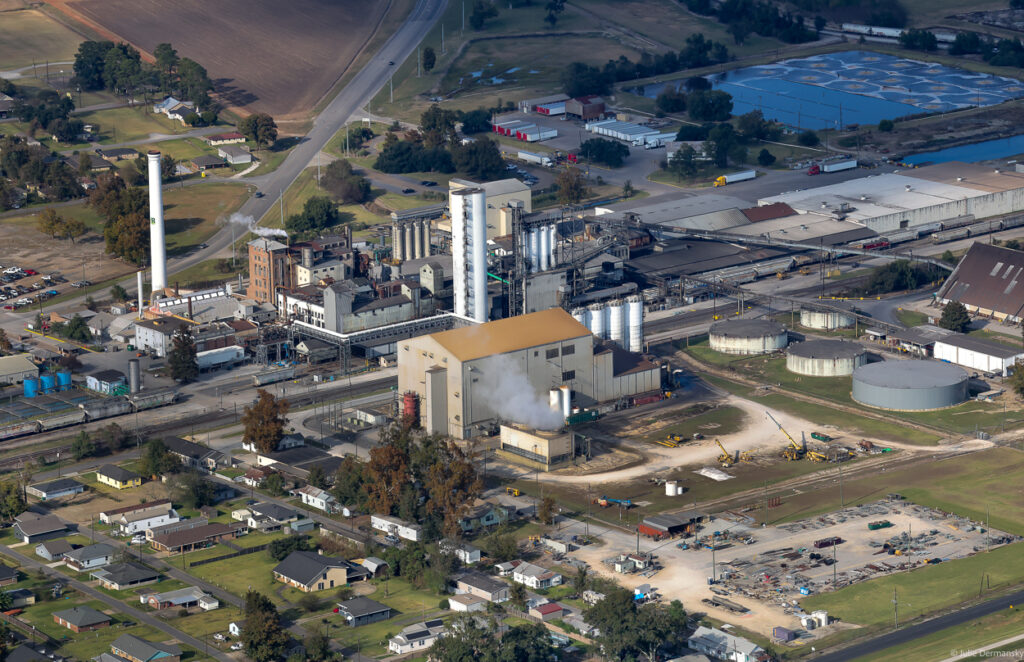
Conditions on the region’s sugarcane plantations were so horrific that in 1811, enslaved people organized a major uprising in neighboring St. John the Baptist Parish, the 174-page complaint recounts. Roughly 95 enslaved people were killed in subsequent battles with local militias and the military, and their heads “placed on spikes and displayed along the levee,” according to the plaintiffs, adding it “revealed what plantation owners and their political allies were capable of when it came to holding onto power and enforcing slavery.”
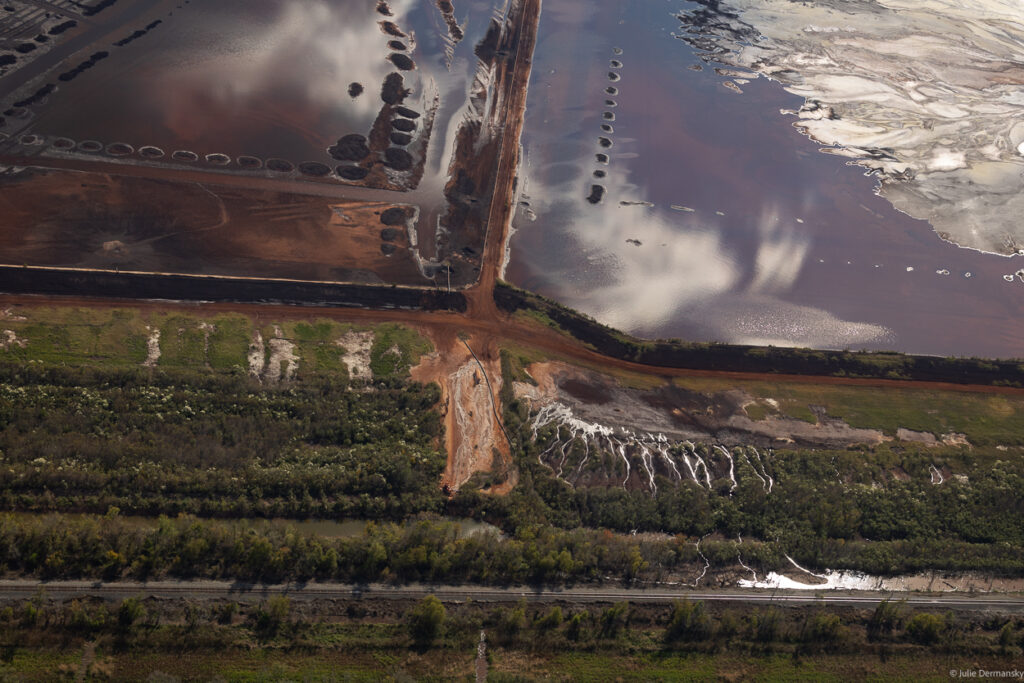
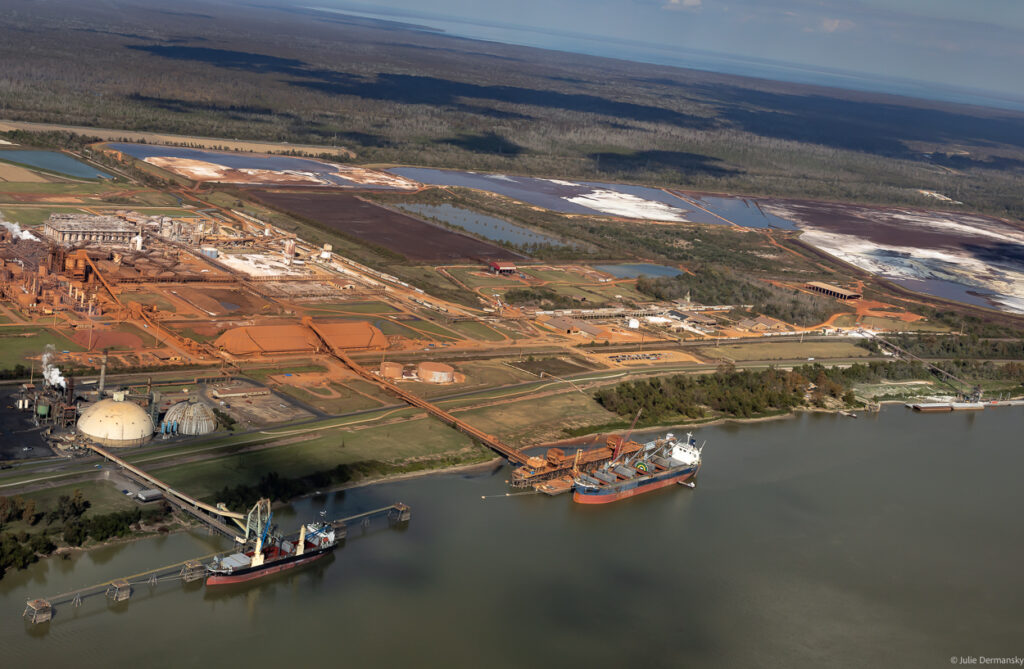
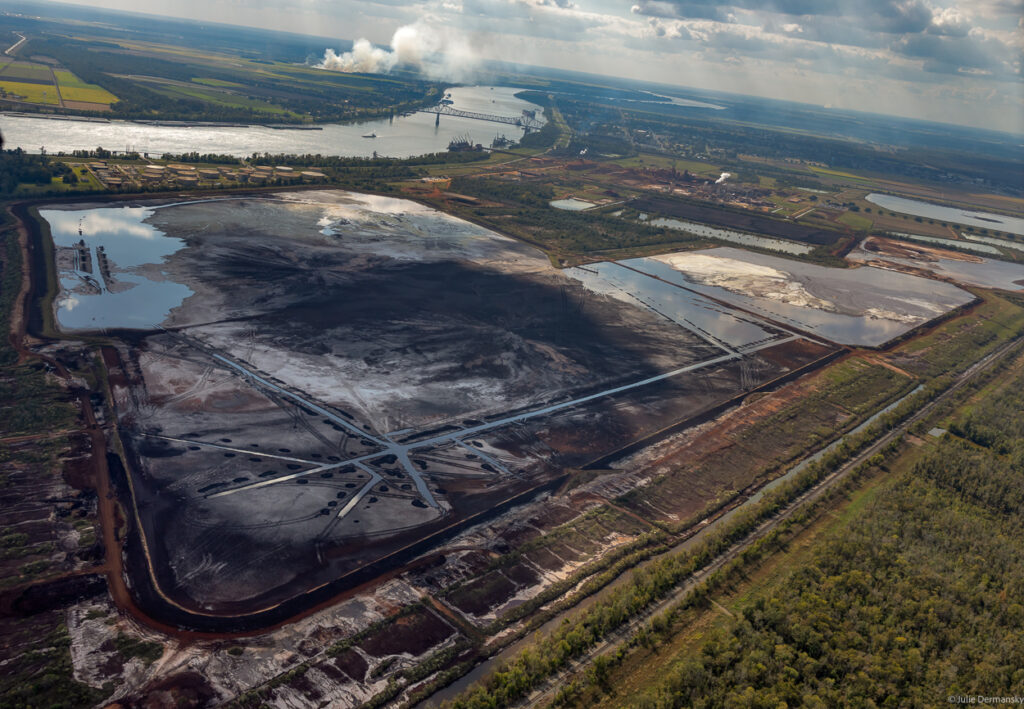
After the Civil War, their families endured the Black Codes, white supremacist violence that included six documented lynchings in St. James Parish from 1893 to 1914, and Jim Crow segregation, according to their pending complaint, filed in November 2025.
The lawsuit traces the rise of polluting industrial development in St. James Parish back to the era when segregation was enshrined in Louisiana law. Under the state’s 1921 Constitution, Black voters were disenfranchised — and local governments were handed zoning powers.
Those zoning powers, plaintiffs allege, were used to push heavy industry into Black neighborhoods and out of white ones, starting in 1958 — nearly a decade before St. James Parish began desegregating its schools under federal court order.
“In St. James Parish, most of these heavy industrial facilities are located in majority-black districts,” Judge Barbier wrote in his February 9 order, “specifically, 28 industrial facilities have been permitted to build in the 4th and 5th Districts, which are both home to majority-black populations, while there are only four such facilities in all of the other seven districts combined.”
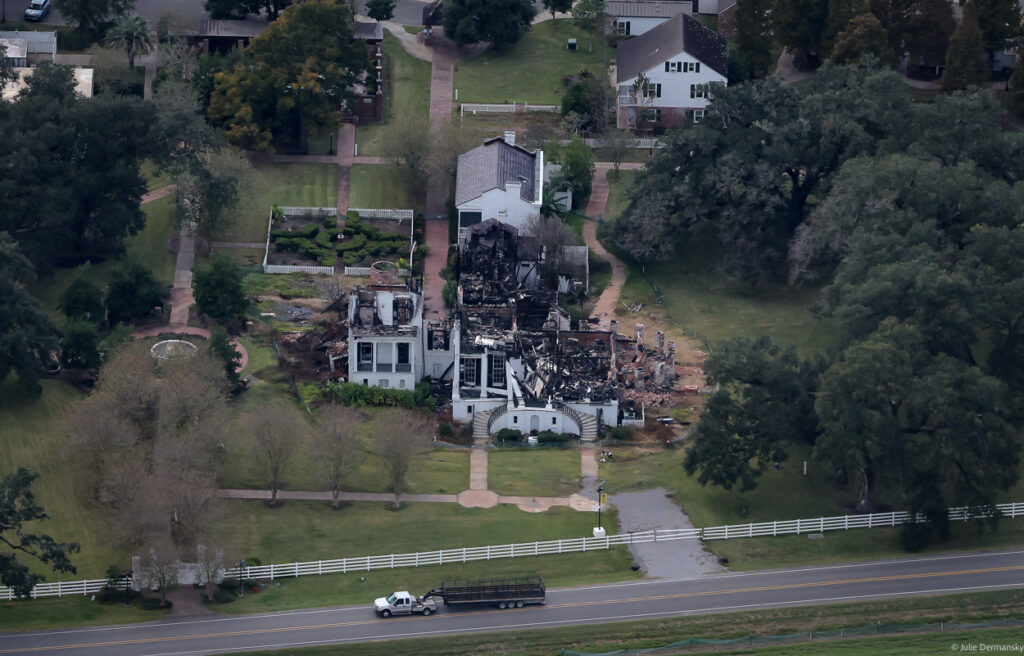
“Furthermore, Plaintiffs claim that the Parish Council has not permitted an industrial facility to locate in a majority-white part of the Parish for almost 50 years, while at the same time, the Council has allegedly granted every request from companies that sought to locate in majority-black districts,” Judge Barbier added.
“We have seven districts in St. James Parish. They chose only two to sacrifice, to make their billions of dollars,” said Lavigne.
The throughlines connecting slavery to today’s “Cancer Alley” are central to the lawsuit.
In 1874, for example, Harriet Jones, a formerly enslaved person, purchased a parcel of land in St. James Parish, plaintiffs wrote. Inclusive Louisiana’s Washington, Jones’ great-great-great granddaughter, now lives on that land — which today is “surrounded by a steel plant on one side and a chemical company on the other,” the complaint notes.
After slavery, the region’s plantations established sharecropping systems, where families lived on small plots of land near sugarcane and tobacco plantations. “Gail LeBoeuf, founding member of Plaintiff Inclusive Louisiana also grew up in Convent in one of these small communities near the larger plantations, on property her family managed to purchase,” the complaint says.
“We need a moratorium that’s going to stop any more industries that can come into our community, period,” said Shamyra Lavigne-Davey, RISE St. James executive assistant and the daughter of Sharon Lavigne. “That’s what we need. No more. Enough is enough.”
Lavigne-Davey described growing up next to the chemical plants and the impacts the pollution in St. James Parish has had on her family and her life. “I’ve had enough of learning about another person getting cancer,” she said. “I have had enough of people that I love being diagnosed with cancer. And I have had enough of St. James Parish Council continuing to side with the industries.”
“How many more of us have to die before you stop?”
“Badges and Incidents of Slavery”
The lawsuit alleges that the intent to racially discriminate is baked into the landscape of Cancer Alley, an 85-mile industrial corridor where roughly a quarter of the nation’s petrochemical products are processed.
The plaintiffs claim that “discriminatory intent undergirds the Parish’s land use decisions, which create a disparate impact on the Parish’s black residents,” Judge Barbier wrote as he allowed the case to go forward.
That disparate impact carries big impacts for people’s health, with Cancer Alley’s pollution showing up in Black and white neighborhoods in St. James Parish in very different ways, the lawsuit alleges. “Not coincidentally, according to Plaintiffs, 4th and 5th District residents ranked in the 95th–100th percentile in the nation for Air Toxic Cancer Risk,” Judge Barbier wrote, citing federal environmental data, “while the 3rd District, which is majority white and has ‘the lowest rate of industrialization,’ ranked in the 34th percentile.”
The lawsuit’s 13th Amendment claim centers on the legacy of slavery in America — and the case could break new ground for environmental justice litigation.
“Potential plaintiffs could have an easier pathway after this case; but that is not to say an easy pathway,” said Serafin, the Santa Clara law professor. “There are a lot of interlocking pieces here, and an appellate court might upset any one of them.”
In 1883, the U.S. Supreme Court recognized that the 13th Amendment allows for “the obliteration and prevention of slavery, with all its badges and incidents.”
In recent years, legal scholars have debated how exactly to define the phrase “badges and incidents.” Should that phrase be taken to mean only the literal metal badges worn by some enslaved people and forced laborers, as some have argued? Or can it be metaphorical?
Motions filed by St. James Parish argued that the plaintiffs “ignore the fact that ‘courts routinely reject Thirteenth Amendment claims that do not involve forced or coerced labor.’”
“St. James Parish’s land use actions may have an adverse impact on specific districts as a ‘routine burden of citizenship,’ but it does not rise to the level of a badge or incident of slavery,” the defendants argued.
But Judge Barbier’s February 9 order rejected that argument — allowing for a broader interpretation of the term that takes U.S. history into account.
“In other words, as states developed new ways to subjugate the people who had previously been enslaved, the meaning and scope of ‘badges and incidents of slavery’ necessarily expanded,” the court wrote.

“This historic decision recognizes what is at stake in this case: a discriminatory land use system and public health emergency that originated in slavery,” said Astha Sharma Pokharel, an attorney at the Center for Constitutional Rights representing Inclusive Louisiana and Mount Triumph Baptist Church. “We are ready to begin discovery, take testimony, and get the relief that our clients are entitled to — an end to the siting of toxic plants in their historic Black communities.”