The UK Green Party is pressing London mayor Sadiq Khan on why he is yet to ban fossil fuel advertising on the city’s transport network — despite mounting evidence of its harmful effects — six years after he pledged to make London a “zero carbon city” by 2030.
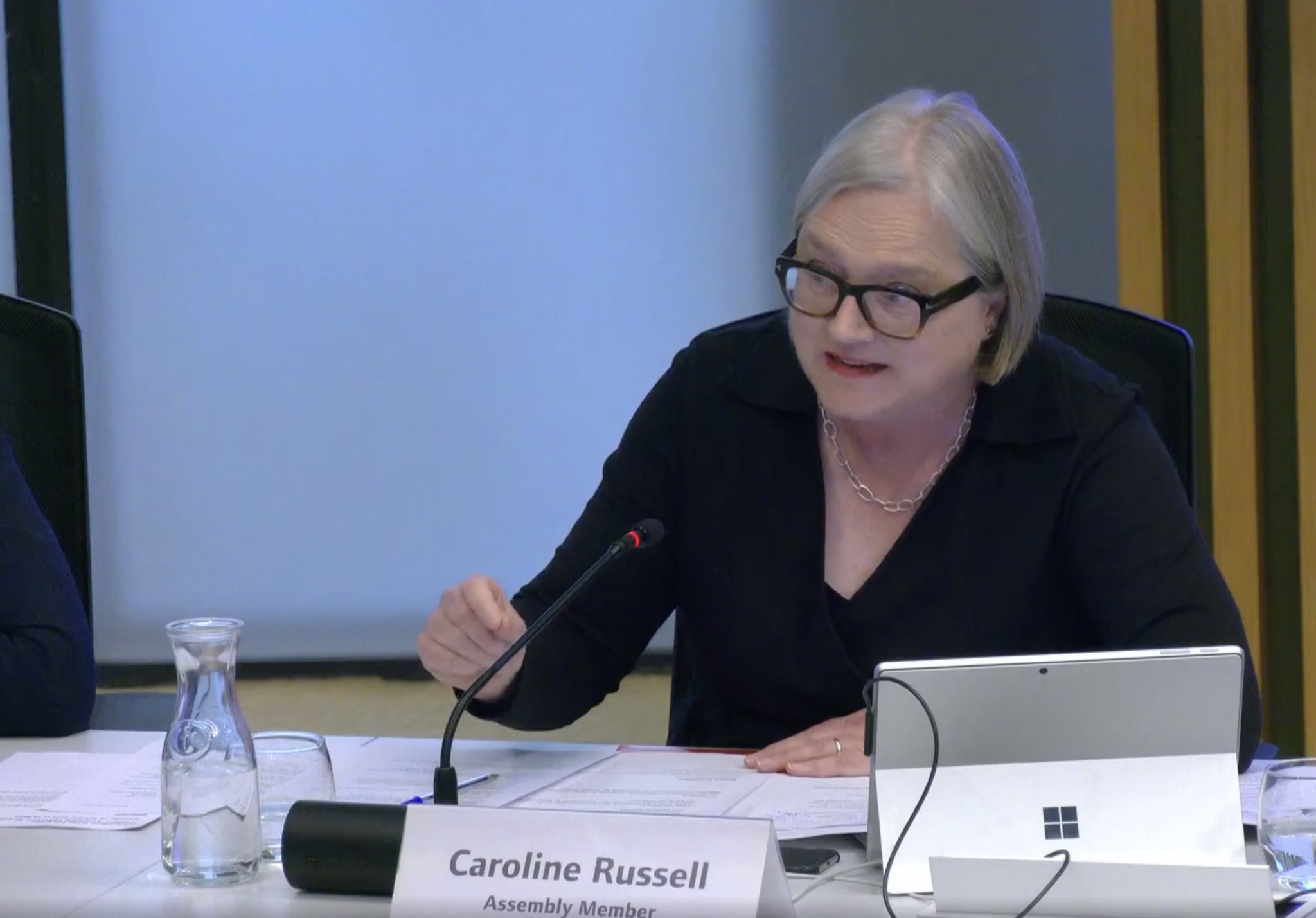
London Assembly member Caroline Russell, with the City Hall Greens, directly questioned Khan during the Mayor’s Question Time on 10 October about the advertising policies of Transport for London (TfL).
Russell cited a July DeSmog investigation which found that over 200 fossil fuel ads had been placed in London’s tube stations and trains since the mayor’s 2018 pledge.
“We all agree we shouldn’t be profiting from or promoting weapons, cigarettes, or authoritarian regimes on our public transport,” Russell said in a press release. “Why is the mayor treating deadly fossil fuels any differently?”
Russel termed the mayor’s inaction “an alarming decision,” and said that she hoped Khan would proceed with such a ban “in the immediate future.”
The London Assembly is an elected group of politicians that scrutinise the work of the mayor.
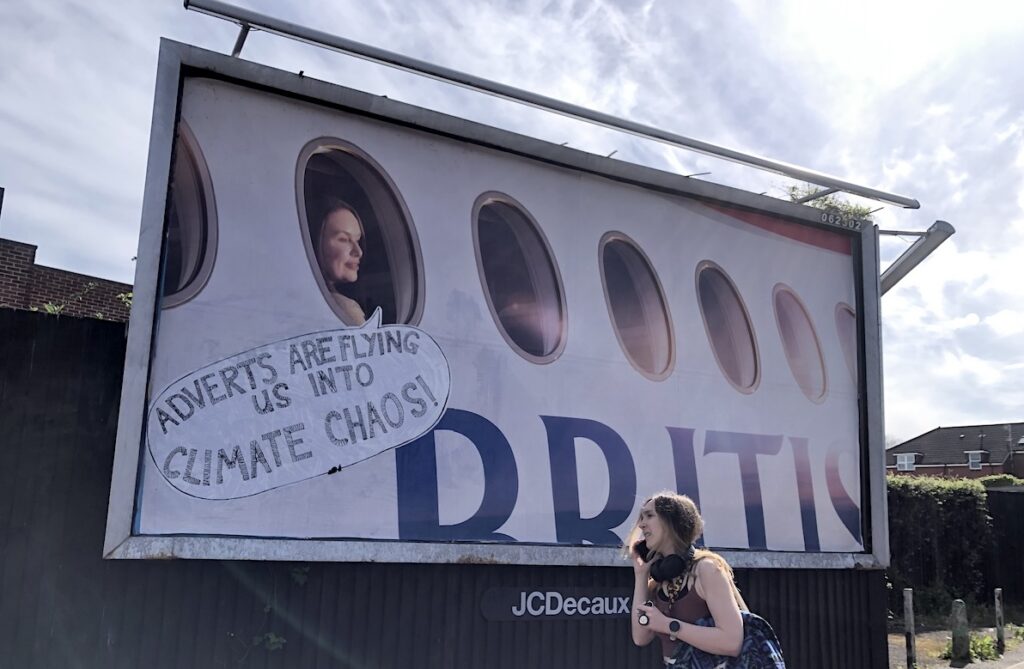
Other major cities, such as Amsterdam and Edinburgh, have banned advertisements on public transport that promote fossil fuels and other high-carbon products.
In December, East London borough Hackney’s council passed a motion to add restrictions on high carbon ads to its advertising policy, though this only applies to ad sites owned by the council.
Other jurisdictions outside of London, including the Coventry City, Cambridgeshire County, and Basingstoke and Deane councils, have also put in place similar restrictions.
To date, Khan has waved away calls for restrictions on fossil fuel advertising.
In a late 2022 Mayor’s Question Time, Caroline Pidgeon, the Leader of the Liberal Democrats in the London Assembly, asked Khan whether TfL would consider a “low carbon advertising and sponsorship policy”.
Khan responded by pointing to the current TfL policy that requires all adverts on its estate to comply with the rules of the Advertising Standards Authority (ASA), the UK’s advertising regulator.
“Advertising copy pertaining to fossil fuel extraction, or copy submitted for brands affiliated with fossil fuel extraction, must meet the environmental guidance of the advertising industry regulators,” a TfL spokesperson told DeSmog in July.
However, former co-leader of the UK Green Party Sian Berry said this was a “fudge” in an interview with DeSmog in July, as the ASA is only able to rule on whether an ad is truthful, not on whether it has a negative impact on society.
After TfL banned advertising for products high in sugar, salt, or fat in 2019, consumption of junk foods among London households dropped 20 percent within a year, according to a study commissioned by the mayor’s office.
In June, United Nations Secretary-General António Guterres called for a worldwide fossil fuel advertising ban, terming ad and PR agencies “enablers to planetary destruction”.
“I urge every country to ban advertising from fossil fuel companies,” he said. “And I urge news media and tech companies to stop taking fossil fuel advertising.”
Guterres also said these firms should stop working for polluting clients.
Over 1000 agencies have taken a pledge to refuse work from oil and gas companies, led by the campaign group Clean Creatives.