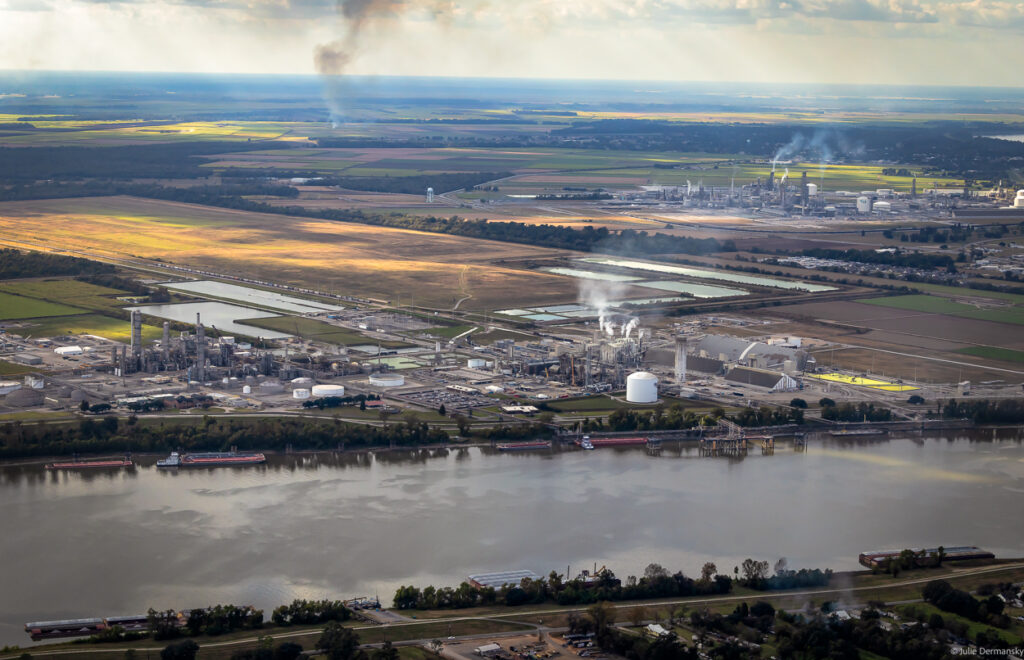

Prime Minister Mark Carney’s once-vaunted climate credibility appears to be in free-fall. After eliminating the carbon tax and rolling back vehicle emissions standards, his government announced fast-track support for two liquified natural gas projects and exactly zero renewable energy developments.
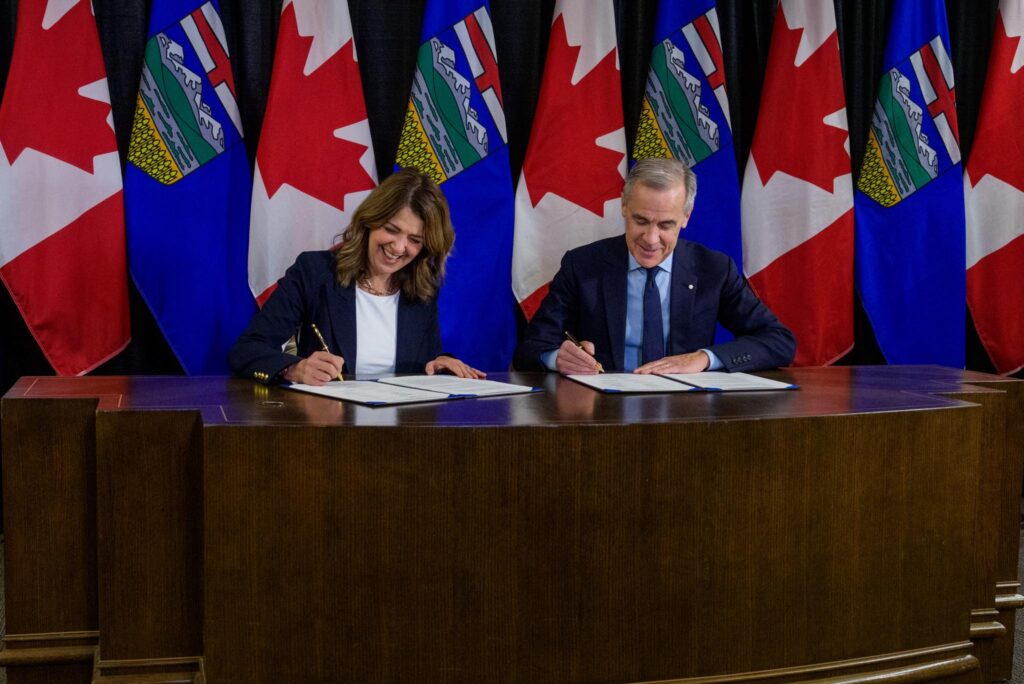
Carney’s latest fossil fuel photo op was with Alberta Premier Danielle Smith concerning a contentious pipeline to the British Columbia northern coast to transport what he calls “low emission” bitumen. Facilitating a vast increase in heavy oil extraction is somehow a climate win in the tortured logic of the political spin machine.
If this is all political theatre to placate Alberta, the price of admission makes a Taylor Swift concert look like a bargain. Carney’s government abandoned a proposed industrial emissions cap despite oil and gas extraction accounting for 28 percent of Canada’s total emissions.
Subscribe to our newsletter
Stay up to date with DeSmog news and alerts
Major trading partners like the European Union are on track to cut their carbon output by more than 50 percent by 2030 and 90 percent by 2040. Meanwhile, Canada continues to kick the can down the road, now trotting out talking points about net-zero by 2050.
Alberta is now exempt from federal clean electricity requirements, a concession demanded by Smith after her government kneecapped their once-thriving renewable energy sector. The oil tanker ban in place for decades on the perilous BC northern coast was also made expendable at the stroke of a pen, 1,500 km from Indigenous communities directly impacted by this decision made without their consultation or consent.
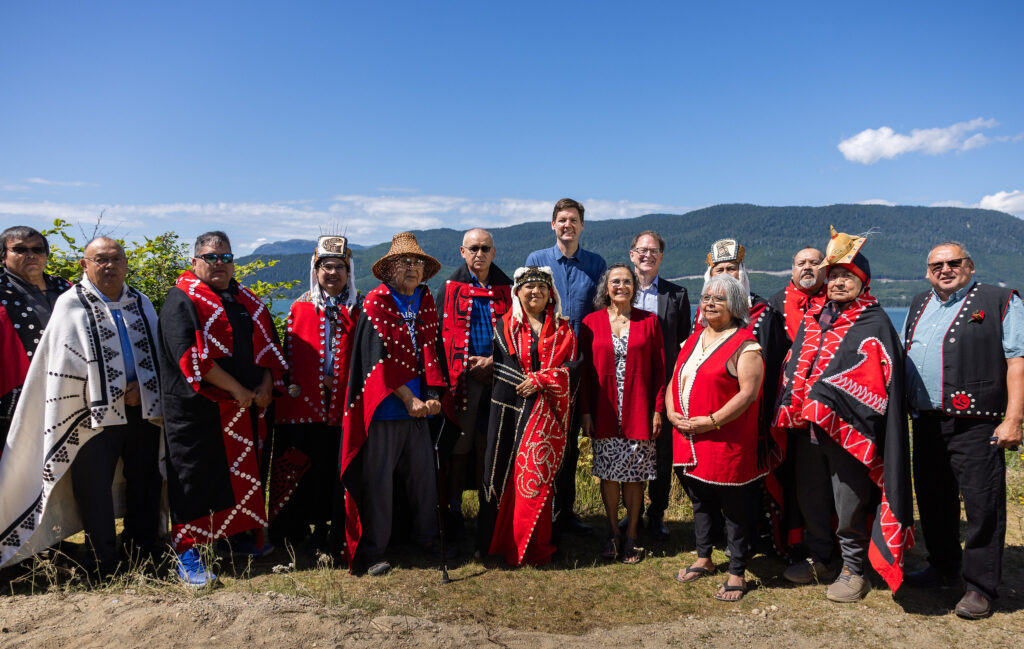
Carney’s disrespect to coastal First Nations is particularly galling. Despite his practiced word salad about Indigenous rights and economic reconciliation, First Nations that would be devastated by a bitumen spill are united in enraged opposition to yet another oil pipeline proposal through unceded lands and waters. Some legal observers feel that Carney may be cynically setting up First Nations to take the blame (and pay the enormous legal bills) when this so-called “project without a proponent” dies in the courts.
By signing this memorandum of understanding (MOU) with Alberta for the pipeline, Carney is forcing the hand of First Nations on the BC coast who need to promptly challenge any infringement of their constitutional rights.
“If I were their lawyer, I’d be saying, ‘I know this is a pain in the ass. I know you don’t want to spend the money on it, but my advice to you is go ahead and sue now,’” Amir Attaran, professor of law at University of Ottawa told Desmog.
According to Attaran, an Indigenous government would limit their legal options if it waited to challenge specifics like potential pipeline routes. “You could sue on those things, but you’ll have missed the opportunity to fight the high-level decision of the MOU,” he said, “You would be limited to challenging the details, not the big picture.”
Attaran believes that if First Nations are forced to kill the latest pipeline proposal in the courts that could be a political win for Carney since his government would avoid taking the fall for blocking what the oil patch wants. “I think what Carney is doing from a Liberal perspective is excellent politics, and from an Indigenous perspective, it is utterly abusive,” he said.
Indigenous Equity Partner Needed
Carney also assures taxpayers that this project will only proceed with a private proponent. So that means no public money will be thrown at this? Not quite. He also stresses that a bitumen pipeline would need an Indigenous equity partner to move forward. And where would First Nations borrow billions in required capital? The federal government has set aside $10 billion in loan guarantees.
“I think that what we’re seeing now is the federal government and the provincial governments to a smaller degree … laundering money through indigenous people to provide fossil fuel subsidies,” Tara Marsden, Gitanyow Wilp sustainability director previously told DeSmog.
The long- delayed Pathways Alliance carbon capture scheme is apparently now moving forward, with taxpayers on the hook for the lions share of the $16.5 billion price tag. This yet-to-be-built boondoggle is already impacting Indigenous rights in western Alberta where vast amounts of oil sands carbon dioxide are planned to be injected underground.
Kelsey Jacko, chief of Cold Lake First Nations told the National Observer that industry and government are ploughing ahead over the objections of his community. “They’re pushing it through, ramming [it] down our throats, harder than they did before. ”
The political and reputational costs of caving to Alberta’s political blackmail are only beginning to unfold. Culture Minister Steven Guilbeault resigned in protest from Carney’s cabinet, signaling how this capitulation to the oil lobby will undermine Liberal caucus unity.
BC Premier David Eby was furious to learn Ottawa was secretly negotiating with Alberta and Saskatchewan, even though his province will bear the brunt of the risks from pipeline construction across multiple mountain ranges, or the very real threat of a tanker spill in the treacherous waters of Hecate Strait.
Team Canada is taking a big hit from Carney’s top-down tactics.
Legal Fight ‘Unnecessary and Expensive’
Quebec separatists and the ascendant Parti Québécois will delight in making hay of how the federal government bulldozed BC’s concerns in favour of pleasing the oil patch. In seeking to quell separatist sentiments in Alberta, is Ottawa creating other complications elsewhere?
Carney’s stated top priority of building global trade relationships will also be undermined by an unnecessary and expensive legal fight foisted on First Nations to block a multibillion-dollar development. Canada already has a reputation as a litigious jurisdiction to build big things. Is this the best way to tell the world that Canada is open for business?
Another casualty of Carney’s capitulation is evidence-based decision-making. At the earliest, pipeline construction would start in 2029 — the same year the International Energy Agency predicted global peak oil demand. Oil prices are already below $60 per barrel and are expected to plunge in coming years due to global oil glut and the accelerating energy transition in the global south. Carbon Tracker projects that oil-dependent provinces like Alberta could see bitumen revenues drop by 80 percent in 10 years. Despite years of arm twisting in the oil patch, Danielle Smith has produced no proponent willing to even suggest they are interested in bankrolling the pipeline.
This pipeline will almost certainly never be built, but that’s not the point. By weaponizing grievance, Alberta and the oil patch get the emissions cap eliminated. Clean energy requirements also go away. Alberta Premier Danielle Smith gets to throw some red meat to her party’s political base. Carney rehabilitates the Liberal brand in Alberta.
Everyone is a winner, except of course for aggrieved First Nations, the province of British Columbia, Canada’s reputation on emissions and investment, the stability of the climate and the virtue of rational thought.
Other than that, well done Mr. Carney.
Subscribe to our newsletter
Stay up to date with DeSmog news and alerts