On Saturday, 17 January, world leaders gathered at Westminster Central Hall to mark the 80th birthday of the U.N. General Assembly. The same room where it first convened in 1946.
At the same time, something quietly historic happened.
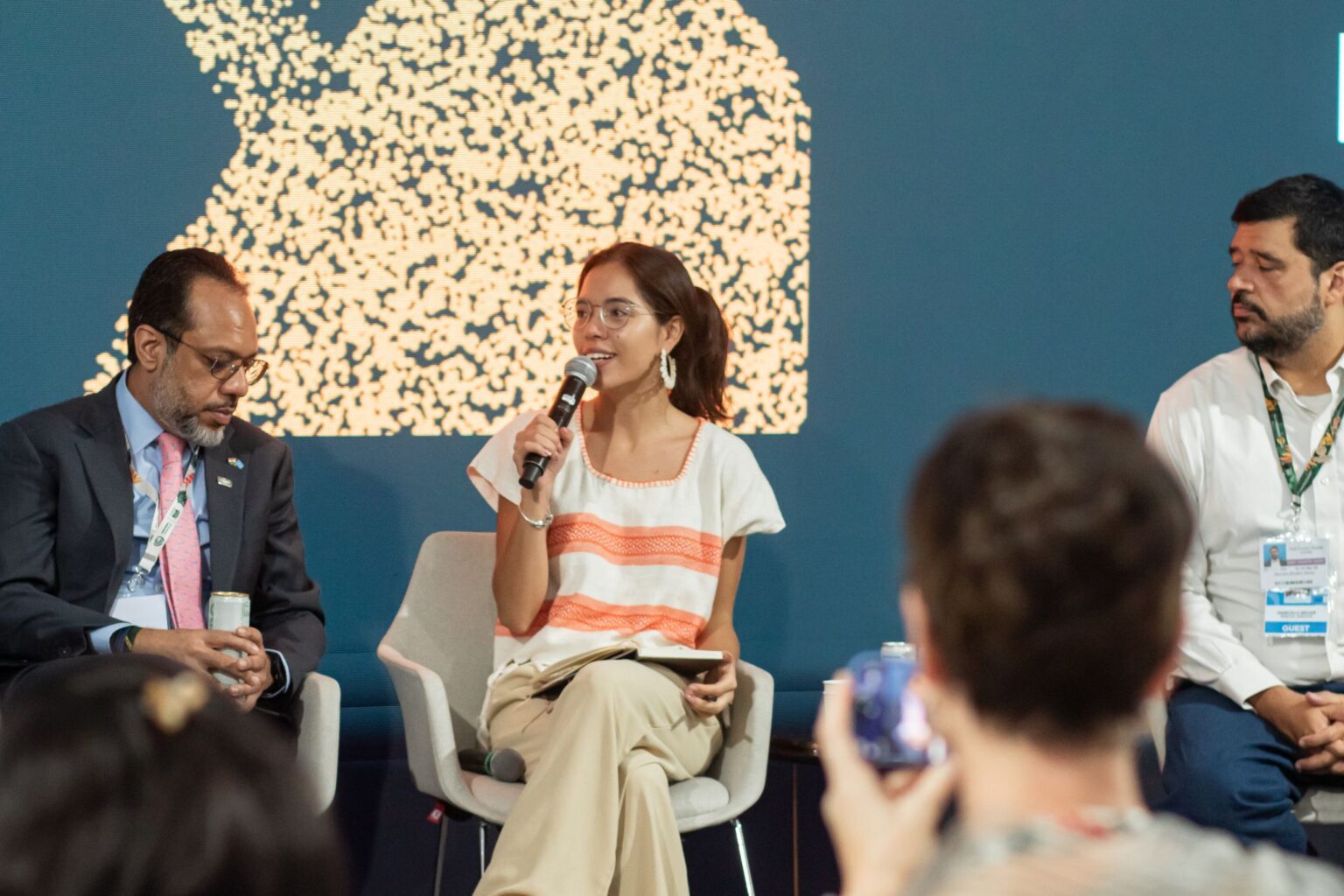
For the first time, the permanent Global Citizens’ Assembly met.
Selected by lottery and representative of the world’s population, a group of 105 people began deliberating on the climate and food crises. By 2026, more than 100,000 people will have taken part. Later this year, discussions on Artificial Intelligence (AI) will follow.
It’s an experiment in global governance reform. A kind of anti Trump–Monroe spheres of influence project.
Instead of carving the world back up into competing empires, it connects communities, cities and countries into a living global network, designed not to replace governments, but to act where they increasingly cannot.
That matters because demand for global governance reform has rarely been higher. As Sir George Robertson, ex-Nato Secretary-General, said on Saturday: “It’s not an underestimate to say that today we face our most acute crisis since 1946.”
When the U.N. first opened its doors, many of its staff still bore the visible wounds of war. As the U.N. Secretary-General António Guterres reminded us, they understood that: “Peace, justice and equality are the most precious, practical and necessary pursuits of all.”
Today, many governments are turning away from multilateralism. Yet around two-thirds of people worldwide want stronger international cooperation on climate, AI and global security.
That gap matters. It’s where citizens’ assemblies come in.
A citizens’ assembly brings together a group of everyday people, selected by lottery, to reflect the wider population, to learn, deliberate and make recommendations on major public issues.
Our research suggests that more than 7,000 formal citizens’ assemblies have been organised over the last decade. This does not include the hundreds of thousands, maybe millions, of community-level assemblies operating below the radar. This global movement of deliberative democracy has grown because we now know assemblies produce more effective policy, reduce polarisation, and act as an antidote to misinformation.
The task of the Global Citizens’ Assembly is simply to connect and strengthen what already exists. Linking local assemblies into a global fabric that can begin to plug some of the gaps in the existing multilateral regime.
The U.N. has never been the whole of global governance. In 2021, the UN Foundation, Climate Analytics and E3G published The Value of Climate Cooperation, which mapped a far wider ecosystem of climate action: spanning science networks, businesses, investors and civil society alongside the U.N.Framework Convention on Climate Change.
Global governance, in other words, is already far more distributed than our institutional imagination tends to acknowledge.
This was exemplified during the pandemic when many now agree that the most important parts of the response emerged from a partnership between governments, academia and corporate manufacturing and distribution, rather than from any single multilateral institution.
AI is also transforming what’s possible, making it feasible to run thousands of high-quality citizen conversations at a fraction of the cost and time of traditional assemblies.
In a world where crises now move faster than parliaments or summits, this kind of human–machine collaboration opens the door to a new form of civic infrastructure continuous, distributed and capable of matching the speed and scale of global challenges.
The members of the Global Citizens’ Assembly are on the front line of today’s crises, just as the first members of the U.N. General Assembly were 80 years ago. They know what suffering looks like. And they know that peace, justice and equality are not abstract ideals, but practical necessities.
That’s why nation states committed to global collaboration in 1945.
And that’s why people, ordinary people, need to be at the heart of global governance today.
Subscribe to our newsletter
Stay up to date with DeSmog news and alerts