
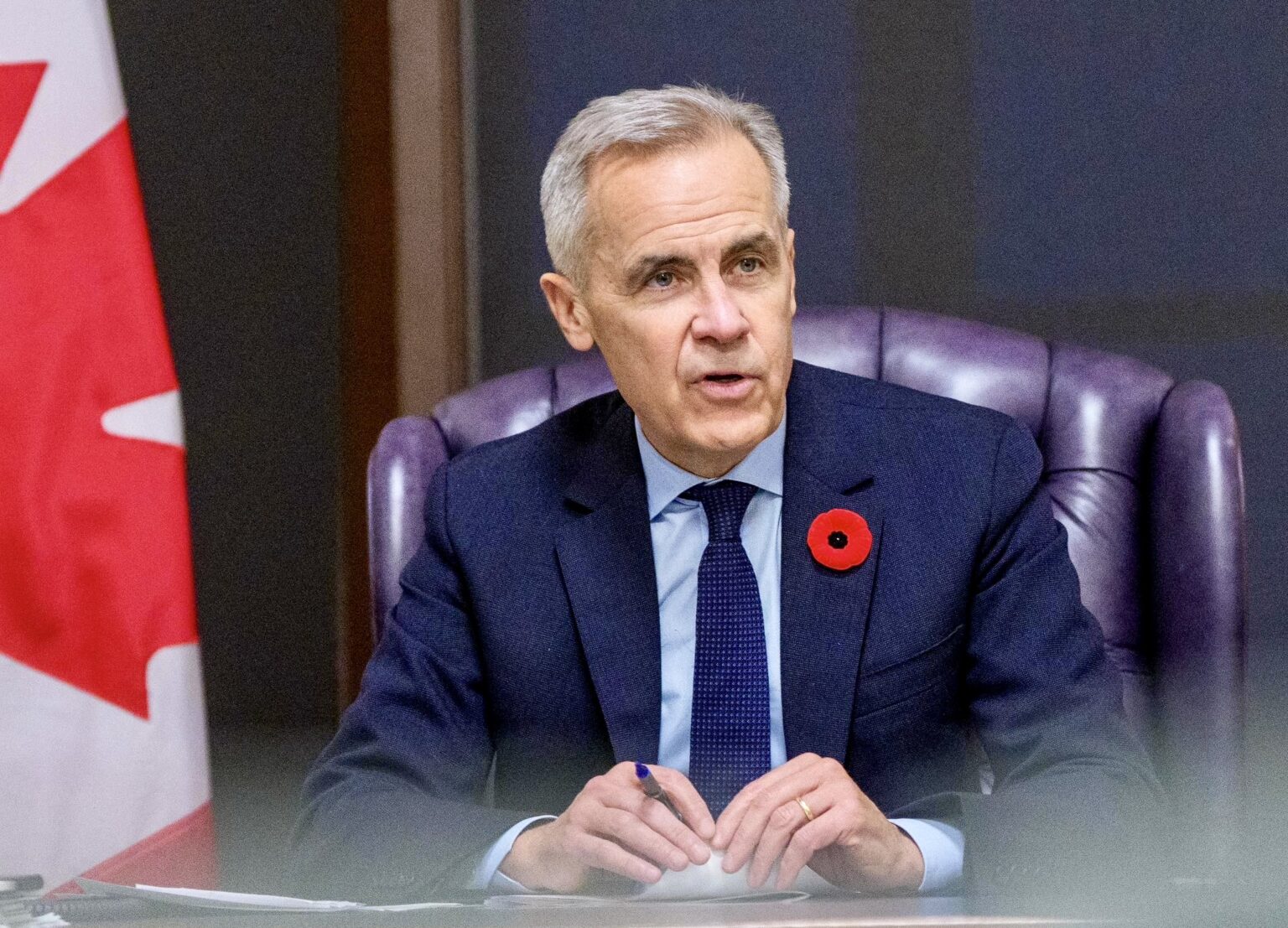
A key goal of the Mark Carney government is to “increase our oil production”, according to the Canadian prime minister’s former Chief of Staff Marco Mendicino.
Mendicino made the comment during a panel on U.S.-Canada relations at the Next Campaign Summit 2026, a recent one-day conference in Toronto held to “redefine the future of political campaigning, advocacy, and innovation in Canada.”
When asked by the moderator to outline what success looks like for Canada as it navigates a tumultuous relationship with U.S. President Donald Trump, Mendicino’s answer included specific examples of energy goals that the Carney government is working towards.
“I would say take a look at the energy sector and the work that the major projects and sub-offices are doing on account of it, and how we can get LNG to Asia,” he said, according to audio of the event obtained by DeSmog. “How, yes, we can increase our oil production. As complicated as that may be when it comes to our relationship with the climate and First Nations groups.”
This energy agenda is seemingly at odds with Carney’s previous stated commitments to addressing climate change, and with the country’s emissions goals. Canada is projected to overshoot its climate targets of net-zero emissions by 2050 even without considering further increases to oil production.
Yet the goal of higher oil production seems to align with Carney’s recent speech at Davos, which generated headlines around the world for its apparent critique of a U.S.-led international order, where he stated that Canada is “fast-tracking a trillion dollars of investment in energy, AI, critical minerals, new trade corridors, and beyond.”
Keith Stewart, senior energy strategist with Greenpeace Canada, responded to Mendicino’s comments in an interview with DeSmog. “It’s like he’s acknowledging that [the federal Liberals] are betraying a portion of their base” and “the commitment that they’ve made on climate, on reconciliation, on free prior and informed consent,” Stewart said.
Mendicino did not respond to DeSmog’s request for clarification about his comments at the summit.
Subscribe to our newsletter
Stay up to date with DeSmog news and alerts
Can an “Energy Superpower” Fight Climate Change?
Mendicino was a Liberal Member of Parliament from 2015- 2025, and served as Immigration Minister and Public Safety Minister Minister under Justin Trudeau before working as Chief of Staff to Mark Carney beginning in early 2025. Mendicino recently left politics and joined the national law firm Cassels Brock & Blackwell.
In addition to boosting fossil fuel production, Mendicino listed reviving NAFTA, supporting the manufacturing industry in Ontario and aiding aluminum producers across the country as other key goals for the federal Liberal government during the panel.
Things not included in his ideas for success were a plan to fight climate change, economic support for renewable energy, or mention of repairing relationships with Indigenous peoples.
Carney has taken some steps to support the green economy including recently allowing China to sell electric vehicles in Canada. Carney’s list of nation-building projects for fast-tracking includes The Iqaluit Nukkiksautiit hydro project. Similarly, Carney’s “transformative strategies” under the Major Projects Office include the Alto High-Speed Rail project between Toronto and Quebec city and the Wind West Atlantic Energy project.
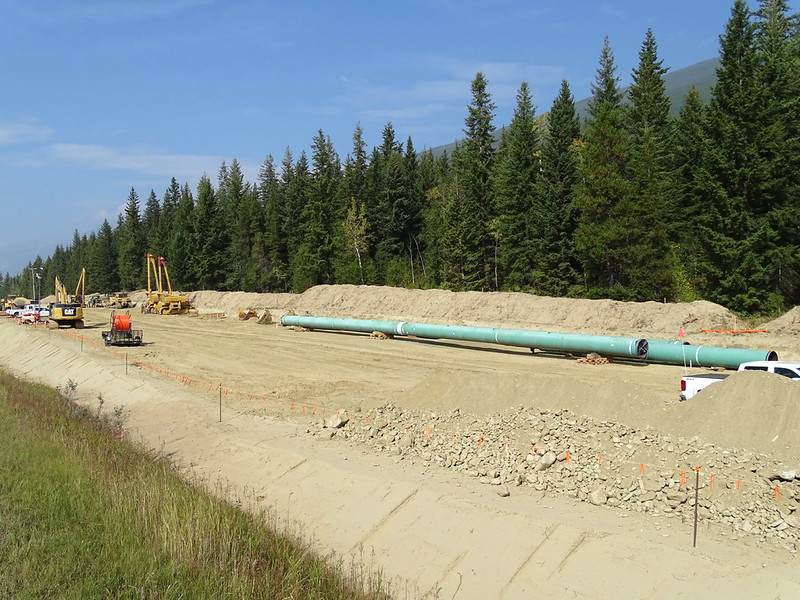
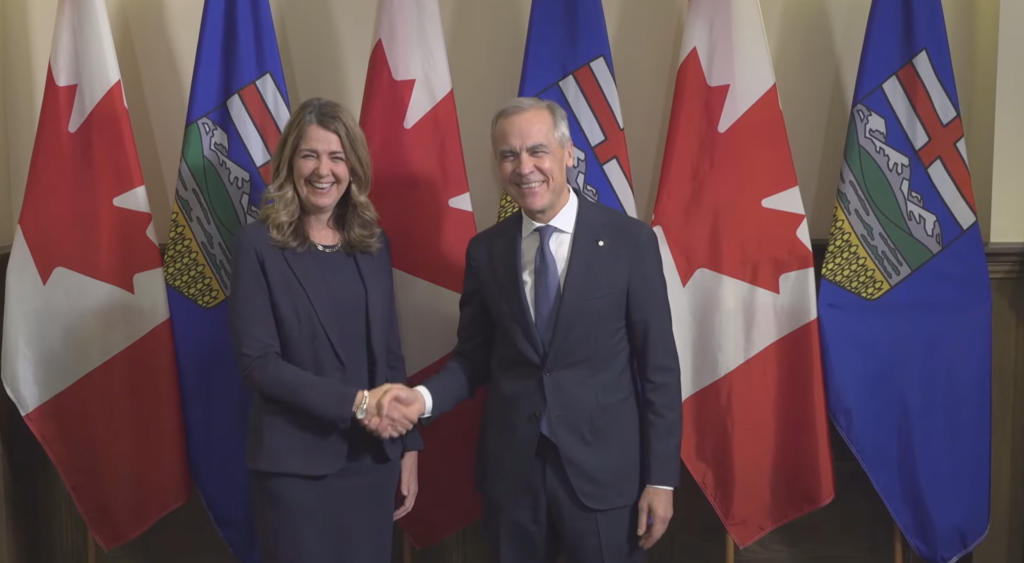
Despite this, Carney’s government is still intent on supporting oil and gas. Carney continues to refer to Canada as “an energy superpower”, a term used by former Conservative Prime Minister Stephen Harper, though at times Carney adds “in clean and conventional energy.” Carney seems to be focused on the conventional side, however, as he slated two LNG projects for fast-tracking and signed a memorandum of understanding (MOU) with Alberta Premier Danielle Smith for a new oil pipeline to the west coast of Canada.
Carney’s Climate Record
Some of Carney’s actions seem to align directly with the interests of oil and tech billionaires. DeSmog revealed in December that Carney took speech ideas from Build Canada, a Canadian group that was founded in part by the billionaire Tobias Lütke, who is CEO of the Ottawa-based e-commerce company Shopify. The group is also associated with oil and gas investor and billionaire Adam Waterous.
While Carney promotes oil and gas production as a means of strengthening Canadian sovereignty, billions of dollars in fossil fuel profits from Canada land in American shareholder pockets. U.S. investors now own 59 percent of Canadian fossil fuel companies while Canada’s four largest oil sands companies are over 60 percent U.S. owned, according to reporting from Oilprice.com and a recent report from Canadians for Tax Fairness.
Carney’s goal of increasing oil and gas production is also facing resistance from First Nations, many of which aren’t on board with an expanded fossil fuel agenda. Several BC First Nations are strongly opposed to Carney and Smith’s proposal for a new west coast oil pipeline.
“We’re doubling down on exporting more fossil fuels at a time that all of our major customers not only want to stop importing fossil fuels, but can stop importing fossil fuels,” Stewart said, adding that it’s like “betting on Blockbuster when Netflix is on the rise.”
Subscribe to our newsletter
Stay up to date with DeSmog news and alerts