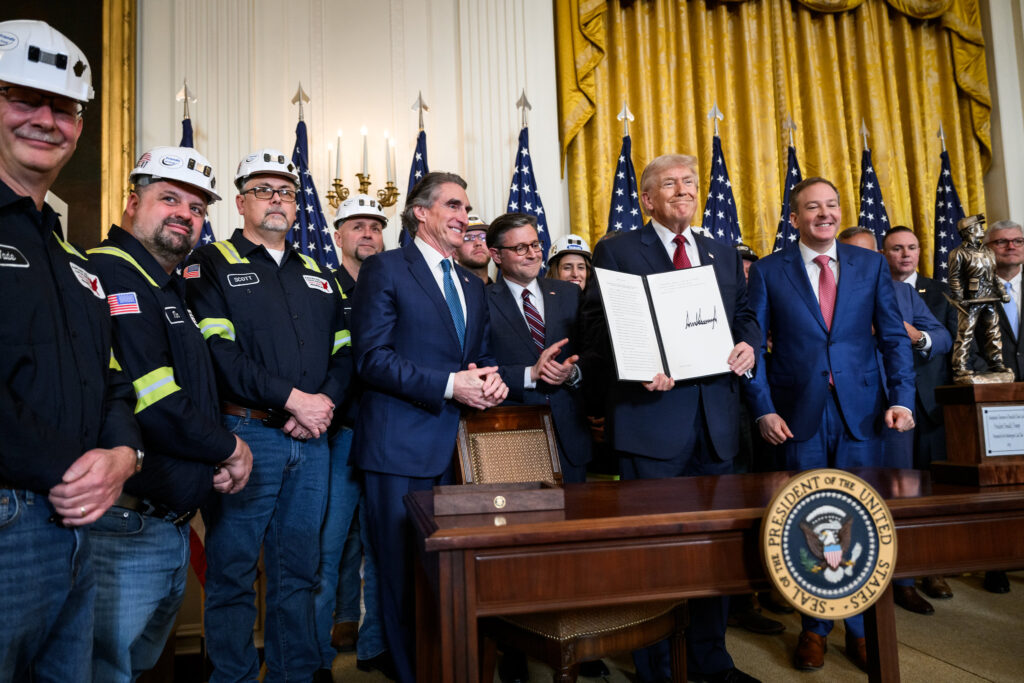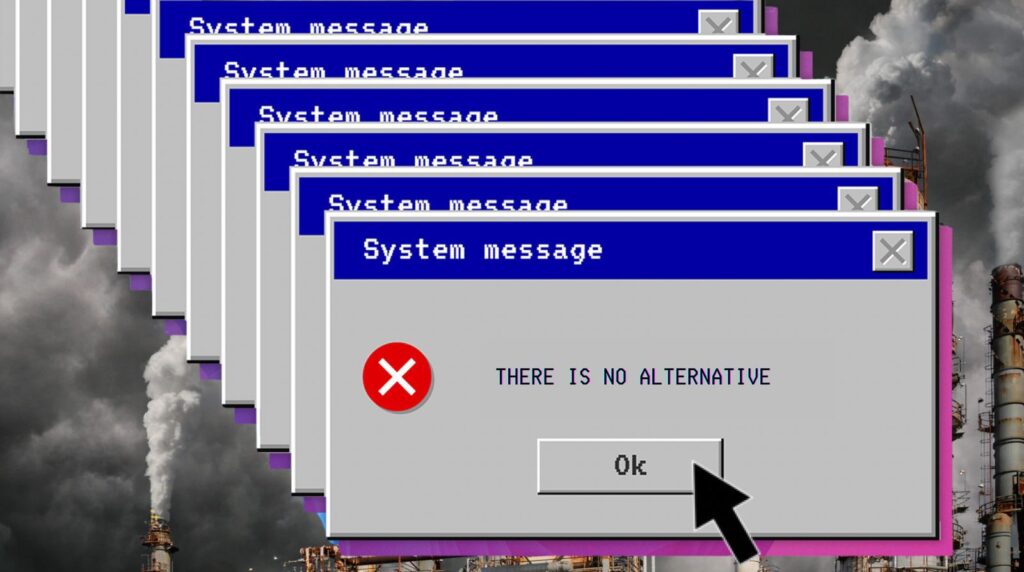

Under cover of Trump’s “drill, baby, drill” mantra and “shock and awe” style of government, major fossil fuel companies are taking the opportunity to roll back key elements of their energy transition strategies. Now, a growing number of oil and gas professionals are confronting a difficult personal question: Will my conscience allow me to continue to work in this industry, or is the cognitive dissonance becoming too extreme?
A new initiative, Life After Oil, has been formed to help them answer that question.
Launched at a media briefing in Westminster, London during International Energy Week earlier this year, the network is a support community for current and former oil and gas employees who believe the sector is moving in the wrong direction on climate and are considering what comes next.
Founding members of the Life After Oil community say the initiative reflects a widening rift inside the fossil fuel workforce – between corporate messaging about transition and the reality of business strategies that remain heavily focused on expanding oil and gas production.
A Growing Crisis of Conscience
For many professionals inside the industry, the tension has been building for years.
Arjan Keizer, a former senior manager at Shell, said the issue eventually became moral rather than professional.
“Prestige and salary matter far less than whether you can look your children in the eye in twenty years,” he said. “The majority of employees want their companies to lead the transition.”
Others describe a deeper internal conflict. Guy Mansfield, a former financial director at a major oil and gas company, said the mental strain of reconciling the industry’s role in climate change with corporate narratives became overwhelming.
“The level of cognitive dissonance made it impossible for me to remain within the company. Staying in, the level of denial simply became too painful.”
These concerns are increasingly reflected in workforce trends. Research suggests more than a quarter of oil and gas workers are actively considering leaving the sector. Meanwhile, universities are becoming more reluctant to funnel graduates into fossil fuel careers: around 12 percent of higher education institutions now refuse to advertise fossil fuel industry roles to their students.
Talent Drain as Climate Strategy
Some long-time climate advocates argue that the movement of expertise away from fossil fuels and toward clean energy could help to accelerate the transition.
Among them is Jeremy Leggett, a former oil industry geologist who left the sector decades ago and later founded Solar Century, a start-up that became a major player in the UK solar industry. Now chief executive of Highlands Rewilding, Leggett sees the shift as both inevitable and necessary.
“I quit oil and gas on grounds of conscience many years ago, and have worked with some success ever since in the technologies disrupting the industry.”
“Talent is the lifeblood of the oil and gas industry, and it is now imperative that we drain it into the transition away from fossil fuels.”
Leggett argues that professionals leaving the sector should not fear the move. The energy transition, he says, requires precisely the technical skills many oil workers already possess.
“My experience shows there is nothing to fear,” he said, “and indeed much to do that allows an oilman or oilwoman to look their children in the eyes without shame.”
Corporate Retreat
The emergence of communities like Life After Oil comes at a moment when several oil majors are softening or delaying climate commitments announced earlier in the decade.
Companies including BP and Shell have adjusted transition plans in recent years, slowing emissions reduction targets or expanding fossil fuel investment after earlier pledges to accelerate diversification into renewables.
Critics say these moves reinforce the perception among employees that the industry is failing to match climate rhetoric with meaningful structural change.
Nick Smith, whose family has worked in coal and oil supply for four generations, helped inspire the Life After Oil initiative. His own businesses have gradually shifted toward renewable energy, while still supplying fuels where alternatives are not yet viable.
He believes the problem is not simply consumer demand, as oil companies often argue.
“What binds our community together is a recognition that the major oil companies are failing to provide a sensible contribution to the conversation about how to respond to the fossil fuel dilemma.
“Clearly we need oil now for essential purposes, but we need to reduce consumption urgently.”
According to Smith, companies frequently point to rising global energy demand as justification for continued fossil fuel expansion. But he says this ignores the role large energy firms play in shaping markets and investment decisions.
“By blithely pointing to increased consumer demand, they sidestep their own role in shaping markets, investment priorities and narratives.”
The Human Side of the Energy Transition
While debates about fossil fuels often focus on policy, economics, or emissions targets, Life After Oil highlights a less discussed dimension: the personal decisions facing the people working inside the industry.
For some, leaving has been a gradual process. For others, it has been an abrupt break. Jo Alexander, a former senior manager at BP, said the decision eventually came down to a simple question about the future.
“I had to decide if this was really a career I wanted to dedicate my life to. The obvious and unavoidable answer was no.”
The new community hopes to provide a space for people wrestling with similar questions — offering peer support, sharing stories of career transitions, and exploring how industry skills can be applied in the low carbon economy.
Its founders emphasize that many members understand the complexity of replacing fossil fuels quickly. Their goal is not to demonize individuals working in oil and gas, but to encourage honest conversations about the direction of the industry.
For some employees, that conversation may ultimately lead to staying and pushing for change internally.
For others, the conclusion may be different.
For more information and to join the Life After Oil Community, visit https://lifeafteroil.net/.
Subscribe to our newsletter
Stay up to date with DeSmog news and alerts