
Causing decades more of earth-warming carbon emissions, last year, the 65 largest banks heavily expanded their fossil fuel financing, committing $906 billion to industry companies — totalling $65 billion more than in 2024, according to a new report.
Released today, the 2026 “Banking on Climate Chaos Report,” published annually by the Rainforest Action Network and its partner organizations, analyzes global banks’ fossil fuel financing data.
For the third year in a row, JPMorgan Chase topped the rankings, the report says, committing $58.2 billion to fossil fuel companies, which marked a 12.6 percent increase from 2024. Bank of America, MUFG, Mizuho Financial and Citigroup rounded out the top five, with each committing between $45-$47 billion last year.
One of the most notable changes from last year is the large amount of financing that went to the midstream sector, which transports, stores and trades oil and gas and their refined products. That number skyrocketed 84 percent, totalling $116 billion since 2024, the report states.
Much of that financing went to liquified national gas (LNG) operations, which was “one of the most startling developments seen in 2025,” report coauthor and Rainforest Action Network Research Director Niko Lusiani told DeSmog.
Bank financing for developing new infrastructure for fossil fuel production also saw a major rise from last year, with the report finding that the top 65 banks committed $508 billion to the sector, a roughly 27 percent increase from 2024.
“Expansion finance is uniquely consequential,” the report authors write, “as it locks in decades of future carbon emissions, future localized pollution, future supply shocks, and future stranded-asset risk.”
The report also notes that the wars in Ukraine and the Middle East have shown the fragility of a global economy still tethered to fossil fuels. Yet, even as oil and gas disruptions send energy prices soaring and squeeze households, major banks continue to finance new fossil fuel expansion.
The ‘Dirty Dozen’
Of almost 2,000 banks reviewed for the report, the top “Dirty Dozen” — which also includes Wells Fargo, Royal Bank of Canada, Barclays, SMBC Group, Morgan Stanley, Goldman Sachs and Toronto-Dominion Bank — accounted for almost 39 percent of all bank fossil fuel financing. Banks outside of the top 65 contributed just 26 percent.
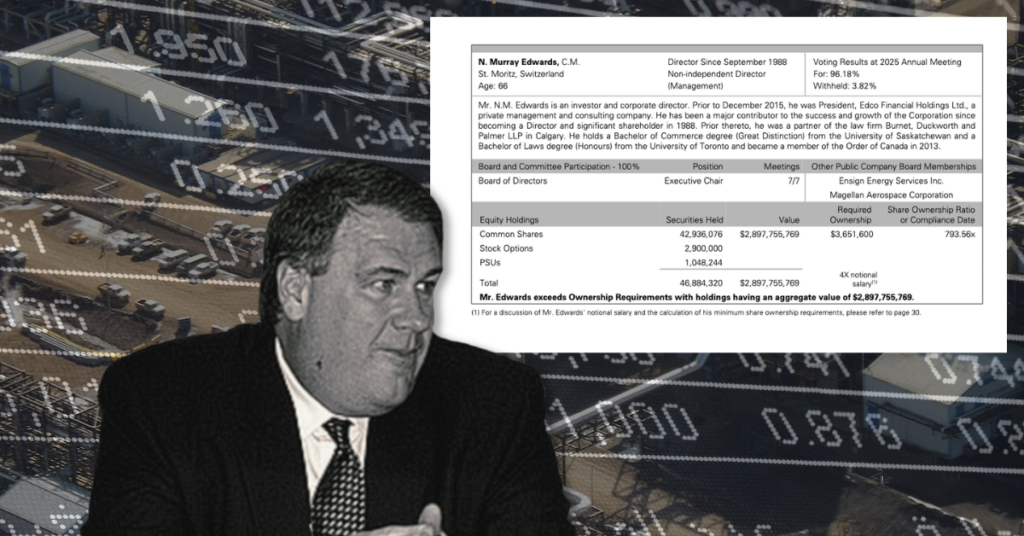
A larger share of the financing is also going to fewer recipients. Over the last five years, just 10 fossil fuel companies received 12.5 percent of the total fossil fuel financing. Atop that list is Enbridge, a midstream company building major pipeline expansions in North America, which received $123 billion, or 2.1 percent, of the total financing from 2021-2025. Meanwhile, in 2025 alone, the top 10 companies received 15.2 percent of the total financing, with LNG giant Venture Global accounting for 2.7 percent.
“Given the increasing concentration in the dealmakers, the deal takers, and then the financial centers that the financing is coming from, it seems to me, at least, that the overall fiscal and economic risks of these developments are getting worse,” Lusiani told DeSmog.
This year’s report says that this increase is “directly incompatible” with Paris Agreement goals to achieve carbon neutrality by 2050 and limit global warming to 1.5°C. A decade after the agreement, many banks are walking back their climate policies, a trend the report identifies for a third year in a row.
A months-long mass exodus of banks from the Net-Zero Banking Alliance — including all of the “Dirty Dozen” — culminated in its collapse in October 2025, which the report says “freed banks to further unwind from climate targets and other elements of their climate strategies.”
For example, a JPMorgan Chase sustainability report from last year said the bank has “transitioned from time- and percent-bound” emissions targets; Wells Fargo discontinued its “sector-specific 2030 interim financed emissions targets” and goal to have net zero financed emissions by 2050; and, more recently, the Royal Bank of Canada announced its withdrawal from its 2030 emissions goals.
Most policy changes from last year were “downgrades of existing policies rather than improvements,” the report says, a trend that anti-climate political pressure, particularly in the U.S., may have influenced.
The Trump Effect
In the first months of the second Trump administration, the Department of Energy announced a slew of deregulatory efforts, including the “Unleashing American Energy” executive order that, among other things, diminished barriers for developing fossil fuel energy.
“Banks keep telling us they’re committed to climate,” report coauthor Diogo Silva, a campaign lead at BankTrack, said in a statement. “Then they abandon their own policies the moment political pressure mounts. Voluntary pledges have had their chance. We need binding rules — not promises.”
The banks driving fossil fuel financing were already doing so anyway, Lusiani said, though the Trump administration’s policies could have had some role in the uptick.
“It’s also showing that the U.S. is increasingly an outlier,” he said, in that U.S. banks are providing more of the overall financing, and currently have policy and regulatory stances that are “off-kilter” in comparison to other places.
In a statement, a JPMorgan Chase spokesperson said that, “as one of the world’s largest financiers of energy, we support the full range of energy solutions and technologies, with a focus on reliability, affordability, security and long-term resilience. We believe our data reflects our activities more comprehensively and accurately than estimates by third parties.”
The report states that banks are given an opportunity to see and confirm their data’s accuracy prior to its publication.
A Citi statement said the bank “supports clients in the low‑carbon transition while recognizing the real need for secure, affordable and reliable energy today,” and that it’s committed to achieving net- zero financed emissions by 2050 and advancing its $1 trillion sustainable finance goal.
A Bank of America spokesperson declined to comment; MUFG and Mizuho Financial did not respond to inquiries.
Despite an overall increase in financing across the top 65 banks, 26 of them did reduce their commitments last year, the report reveals. Of the financial centers that account for most fossil fuel financing, Canadian banks’ total market share decreased by about 2 percent; the European Union’s fell by almost 1 percent, and the United Kingdom’s also decreased marginally. Banks in the United States, Japan, and China each saw increased market shares.
The decreases suggest that “a sizable segment of the global dealmaking market continues to see the risks of financing fossil fuels and are beginning to respond in kind,” the report says.
Still, Canadian banks are “overexposed to fossil fuel financing relative to their asset size,” Richard Brooks, climate finance director at Stand.earth, said. And they remain “focused on financing dirty energy companies, particularly those building new polluting projects — overly concentrating their energy financing on these fuels of the past at the expense of doing more to accelerate the clean energy transition.”
“Overall, it is devastating to see that the global banking sector, taken as a whole, has not stepped up to recognize the severity of the climate crisis and has embraced disaster capitalism at its worst,” Brooks said.
Economic Uncertainty
Since LNG export terminals “are typically financed against 15-to-20-year sales contracts,” the report says, each new one being financed represents a multi-decade commitment to fossil gas.
“That’s troubling from a climate perspective, because this new financing is locking in at least two decades, if not more, of increased carbon emissions,” Lusiani said.
The sharp rise in financing LNG operations also creates economic problems, he said, “because it locks fossil fuel import countries into a very volatile and unaffordable gas import energy system, which many don’t want but are being, in some ways, implored to take on.”
And, as globally important banks concentrate their financing in the LNG sector, there’s uncertainty about where that gas will be sold in coming years, “especially considering the rapid integration of renewables — in particular, solar and storage — in exactly the markets that LNG exporters want to sell into,” Lusiani said.
Brooks similarly noted that the LNG-driven expansion financing comes at a time when energy analysts have been predicting a global supply glut, and LNG’s reliability “has been trashed by the war in the Middle East.”
“As such, permanent demand destruction for LNG and gas is accelerating in key European and Asian markets,” Brooks said. “Yet the banks continue to over-finance this sector and a particularly small number of companies like Enbridge, Energy Transfer, and Venture Global. This ignorance of the long- term ramifications for short-term deal profits is a set-up for a financial crash and ignores the realities of global energy systems.”
Coal expansion financing also rose dramatically in 2025, the report finds, with a 77 percent increase for coal mining and a 40 percent boost for coal power compared to 2024.
Much of the financing for oil and gas expansion occurs in the United States, while the majority of coal expansion financing is received by Chinese companies, it says.
The disruptions and cost increases that have arisen from the wars in Ukraine and Iran have also added to economic uncertainties in the current energy system, illustrating how fossil fuels “are now sources of instability, not energy security,” the report says.
“In terms of issues of affordability and cost of living, I think it’s pretty clear that the banks are actively involved in sustaining and future-proofing a very fragile, unreliable and unaffordable energy system based on fossil fuels,” Lusiani said.
The International Energy Agency said in March that “the war in the Middle East is creating the largest supply disruption in the history of the global oil market,” and noted in a May report that “mounting supply losses from the Strait of Hormuz are depleting global oil inventories at a record pace” and that more price volatility ahead of summer demand “appears likely.”
To date, Americans have paid over $55.5 billion, or about $424 per household, in increased fuel costs since the war in Iran began on Feb. 28, according to a tracker from the Climate Solutions Lab at Brown University.
“The twin fossil energy crises of the 2020s have made one thing clear: Fossil fuel dependence
is not energy security — it is structural vulnerability,” report co-author Gerry Arances, executive director at the Center for Energy, Ecology and Development said in a statement. “Every dollar that still flows to fossil fuel expansion is a death sentence for the most climate-vulnerable peoples.”