
Amsterdam city council has passed a legally binding ban on advertising for fossil fuels and meat products across public spaces in the city, becoming the first capital in the world to prohibit such ads through local law.
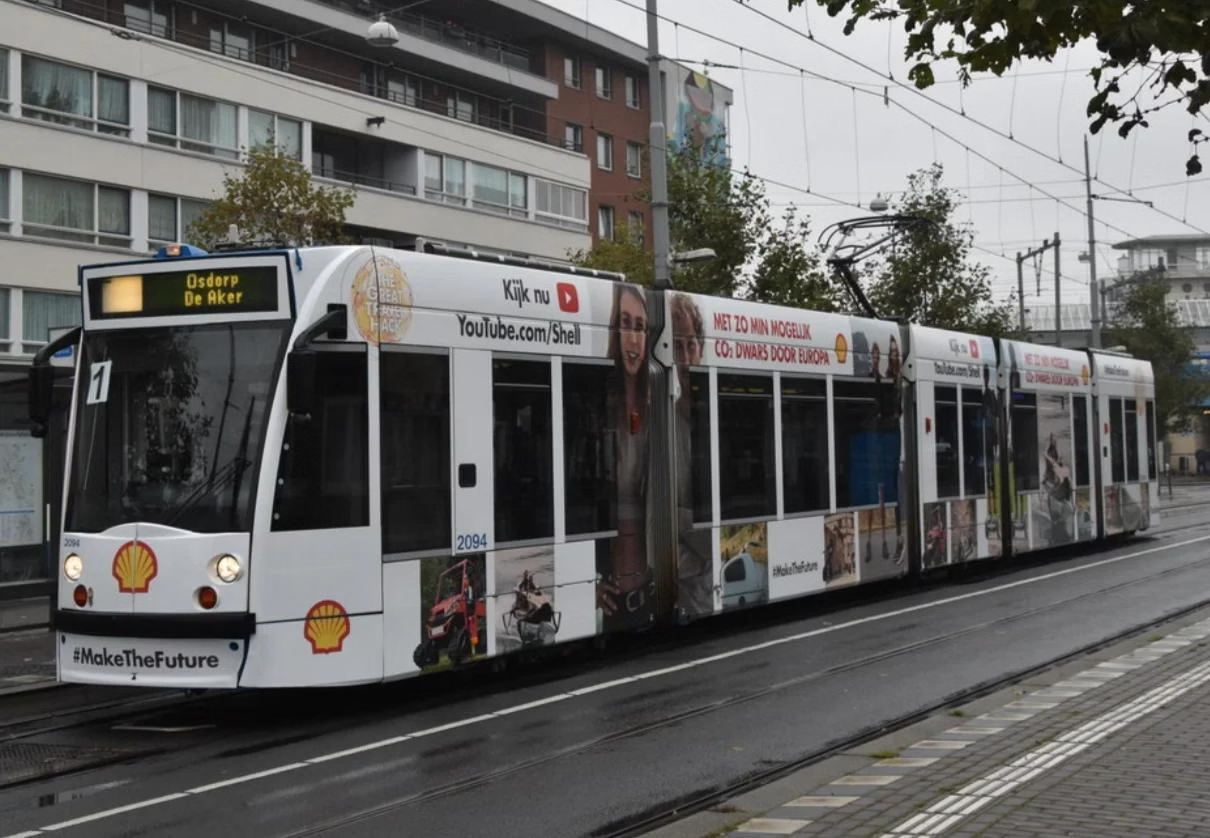
The city council voted 27-17 on Thursday (January 22) to approve the measure, which from May 1 prohibits advertising for high-carbon products and services such as flights, petrol and diesel vehicles, gas heating contracts and meat products across all public spaces in the city, including on buses, trams, and in metro and train stations.
The day before the vote, JCDecaux — the world’s largest outdoor advertising operator, controlling ad space on bus shelters, billboards, and street furniture, all of which are covered by the ban — sent an email to all party groups in the Amsterdam city council, warning the ban would have “far-reaching financial and legal consequences”.
In the email, seen by DeSmog, JCDecaux said it was “deeply concerned” about the proposal and accused councillors of failing to exercise due diligence in preparing the advertising ban, claiming the city had not adequately consulted the industry and created unclear definitions of the restrictions based on “incorrect and incomplete information”.
Subscribe to our newsletter
Stay up to date with DeSmog news and alerts
JCDecaux — which reported global revenues of nearly €4 billion ($4.7 billion) in 2024 — stressed its 40-year partnership with the city and warned that advertising revenue pays for maintenance of public infrastructure. This is a common business model for outdoor advertising companies, which provide and maintain public amenities (such as bus shelters, public toilets, and street furniture) in exchange for the right to sell advertising on them.
In its letter, JCDecaux told city councillors that it manages and maintains 1,500 bus shelters in greater Amsterdam and warned that without advertising revenue these services could come under pressure.
Anke Bakker, Party for the Animals councillor and co-sponsor of the ban, disputed the implication that infrastructure funding was at risk. “I am confident that they will be able to continue filling the advertising space, but with vegetarian and emission-free products,” she said. JCDecaux’s email “illustrates how deeply fossil fuels and meat are rooted in the advertising industry,” Bakker said, adding that there was “widespread support in society” for pro-climate advertising bans.
JCDecaux had not responded to a request for comment at the time of publication.
The ban covers product advertising –– ads for flights, petrol cars, and meat –– but not corporate branding by fossil fuel and aviation companies, which can continue until contracts expire. Fossil fuel companies and other high-carbon industries can still run campaigns in public spaces, as long as they don’t advertise specific products. That continues until Amsterdam’s contract with JCDecaux expires in 2028, after which all corporate advertising will be prohibited under the new terms.
The pushback followed The Hague’s successful defence of its similar legal fossil fuel advertising ban in April this year. Travel industry groups ANVR and TUI sued to overturn The Hague’s ordinance, which prohibits advertising for petrol, diesel, aviation and cruise ships. The court upheld the ban, ruling it complies with EU law and serves a clear public interest in addressing the climate crisis.
“The Hague paved the way for cities to legally install an ad ban for climate-damaging products,” said Rémi ter Haar of campaign group Reclame Fossielvrij, which has spent years pushing for a nationwide fossil fuel advertising ban in the Netherlands.
“That a big city like Amsterdam now follows suit is no small feat and sends the message worldwide that fossil fuel advertising is on its way out, just like tobacco.”
It is not the first time JCDecaux has resisted restrictions on fossil fuel advertising. When Amsterdam first moved to exclude ads on high-carbon products from metro stations in 2020, managing director Hannelore Majoor told Adformatie, a Dutch advertising trade publication, that the measure was “a form of censorship” and complained, “It’s not our role to decide on communication for products that aren’t prohibited.”
‘Drawing a Clear Line’
Advertising for fossil fuel-intensive products and by fossil fuel companies has come under growing scrutiny for normalising climate-damaging consumption and undermining government climate policies.
Multiple Dutch government advisory bodies have recommended restricting both product advertising (such as for flights and petrol cars) and corporate brand advertising by oil and gas companies as essential climate measures.
The ban goes considerably further than Amsterdam’s landmark 2020 decision to voluntarily exclude fossil fuel ads from metro stations. Unlike voluntary agreements, the ban is written into Amsterdam’s APV – the local ordinance governing public order and safety in Dutch municipalities.
Violations will incur administrative fines, though the specific penalty has not yet been determined. The city expects enforcement to be largely complaint-based, with officials expecting advertising companies to comply without needing enforcement.
A narrow exemption allows businesses to advertise at their own physical premises, meaning a local butcher can display meat promotions in their shop window, but oil and gas companies, and other high-carbon industries cannot buy billboard space across the city –– even to advertise renewable energy initiatives or sustainability programmes.
Creatives for Climate, a global network that coordinated an open letter signed by almost 100 advertising professionals, backed the ban. Community Manager Andrea Mancuso said it represented the industry holding itself accountable: “Advertising doesn’t just sell products, it grants social licence. Our network backed this ban because they know that promoting fossil fuels undermines climate action and public trust.”
The letter noted that Amsterdam’s 2020 commitment to ban fossil fuel advertising in metro stations had “sent a powerful signal” globally but remained “unfinished”, with fossil fuel ads still promoting flights, cruises, high-emission vehicles, and gas contracts across the city. “As the first capital city in the world to legally ban fossil fuel and meat advertising, Amsterdam is drawing a clear line,” Mancuso said.
The city’s metro station ban sparked a global movement, with Sydney, Edinburgh, and Stockholm among the cities to introduce similar voluntary restrictions on municipal advertising spaces.
Several Dutch cities have adopted legally binding bans through local ordinances which prohibit fossil fuel ads, regardless of existing contracts. The Hague was the first to use this approach in 2024. Utrecht and Bloemendaal followed with legal bans in 2025, upgrading their earlier contract-based restrictions.
Subscribe to our newsletter
Stay up to date with DeSmog news and alerts