
“Do governments have to do more? Absolutely,…without question. There is a gap between ambition and policies that’s large. It needs to close.” – Mark Carney, United Nations Climate Action & Financial Special Envoy.
Now-Prime Minister Mark Carney spoke those words in 2021, commenting on news that the six largest Canadian banks had joined the Net-Zero Banking Alliance (NZBA) – an effort Carney spearheaded to steer capital away from fossil fuel development.
What a difference five years makes. All those financial institutions have since fled the now-defunct NZBA, which collapsed in 2025. Carney just pledged to pay $1 billion in required fees to the United Nations for the massive Bay du Nord offshore oil development in Newfoundland on behalf of oil giant Equinor, a move that might be described as a haiku of hypocrisy.
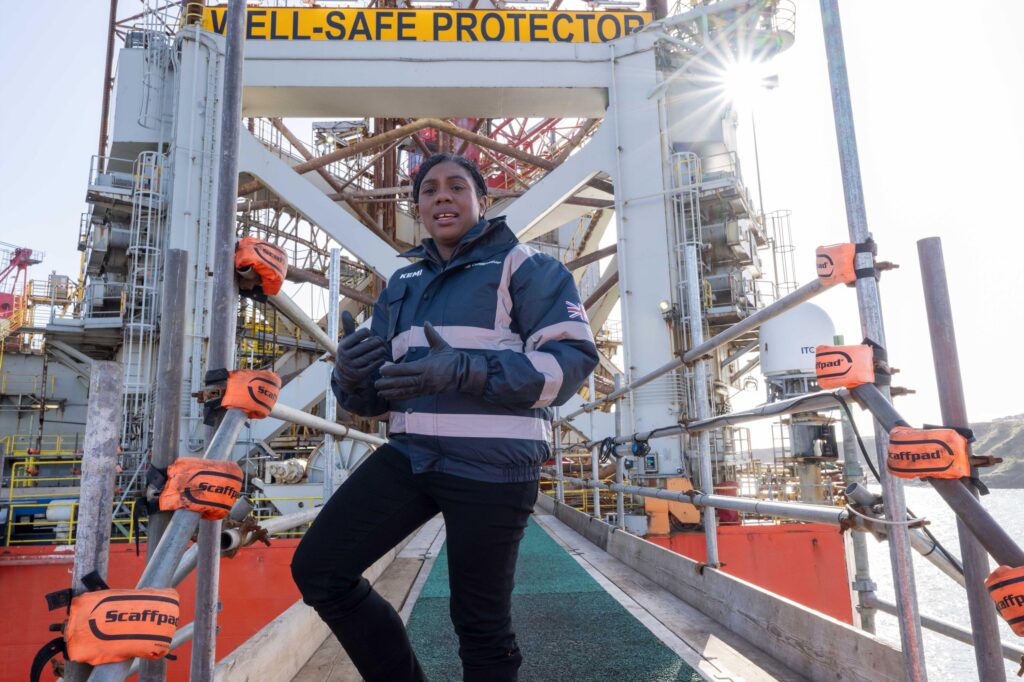
The Bay du Nord proposal would involve deep water drilling 500 km offshore of St. John’s, potentially extracting almost one billion barrels of oil with emissions per barrel just six percent lower than diluted bitumen from Alberta’s oil sands.
When Newfoundland and Equinor signed a tentative agreement on royalties in early May, the federal government proudly proclaimed in a statement, “The Government of Canada is committed to helping de-risk this project to enable this important investment in Canada’s energy future to move forward.”
Subscribe to our newsletter
Stay up to date with DeSmog news and alerts
Strange. Canada pledged in 2009 to phase out fossil fuel subsidies along with our G20 partners. As part of the legally-binding 2015 Paris Agreement, Canada also committed to “making finance flows consistent with a pathway toward low greenhouse gas emissions and climate-resilient development”. Yet Ottawa still shovels billions in public funds at a highly profitable and polluting sector, totalling almost $30 billion in 2024.
“There is no good reason why the federal government should be using taxpayer dollars to give a giant subsidy to a foreign-owned oil company,” Julia Levin, Associate Director, National Climate at the non-profit Environmental Defence, told Desmog.
Environmental Defence previously conducted opinion polling which showed that two-thirds of the public oppose fossil fuel subsides. “That’s not how Canadians want their money used,” said Levin. “It violates the government’s own commitments that they have now had for decades about ending fossil fuel subsidies.”
Besides being unpopular and terrible for the climate, this latest gift from Carney to Norwegian-based Equinor also sets a troubling precedent. The Bay du Nord deposit lies in international waters, and would be the first project required to pay production fees under Article 82 of the United Nations Convention on the Law of the Sea (UNCLOS). The Carney government caving on paying this revenue rather than Equinor means that nations elsewhere in the world may be on the hook for private sector resource extraction beyond their territorial waters.
“This is just the latest example of how Prime Minister Carney is giving big oil everything on their wish list,” said Levin. Carney recently asserted that Bay du Nord is “one of the lowest-carbon new oil fields, depending on how you develop it.” Yet according to Levin, “Bay du Nord would be a carbon bomb. Its emissions would equal those of 100 coal fired power plants. It’s also a really risky project. It’s a real threat to Labrador’s fisheries and biodiversity.”
Another red flag is the shaky business case. Drilling for oil 500 km offshore at ocean depths exceeding one kilometre is challenging and expensive, requiring an estimated $14 billion in capital investment. Equinor has been kicking the tires of the Bay du Nord project for years and has delayed a final investment decision until 2027.
Nichole Dusyk, a senior policy advisor and lead at the International Institute for Sustainable Development is concerned that taxpayers will again be forking over public money for another risky fossil fuel project. “If projects like Bay du Nord are not receiving final investment decision, why is that,” Dusyk asked when contacted by Desmog.
She feels that Ottawa offering to cover the UNCLOS royalties is “very clearly a subsidy, and a very generous subsidy.” Dusyk sees this outlay of public money as a sign that Bay du Nord is not nearly as viable as the company and the government are telling the public. “Why would a mature industry need government de-risking?”
Formerly named Statoil, Equinor is a 54-year-old company with a market value of $100 billion. Does a state-controlled oil company from Norway, a country with a $2.7 trillion sovereign wealth fund, really need handouts from the Canadian taxpayer?
The Carney government has so far announced fast tracking for eleven major projects totalling $116 billion, including two LNG developments worth over half that amount. The only renewable energy project prioritized so far by Carney is a hydro development in Nunavut valued at $500 million – less than 0.5 percent of the major projects total.
Carney may want to notice news from another United Nations body, the World Meteorological Organization, that just released an alarming report that the planet is being “pushed beyond its limits” due to dangerous heating of the oceans driving more extreme weather.
The authors found that 2015-2025 were the hottest 11-years on record and that “the Earth’s climate is more out of balance than at any time in observed history, as greenhouse gas concentrations drive continued warming of the atmosphere and ocean”.
If only Canada had courageous climate leadership to help meet this challenge. What happened to the allegedly principled person who was the UN special envoy on climate action and finance?
Subscribe to our newsletter
Stay up to date with DeSmog news and alerts