

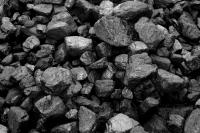
Despite scientific consensus and growing public and political concern over climate change, electrical utilities are still formulating plans for coal-fired power plants – the biggest single source of global warming.
A recent article in USA TODAY said of the 150-or-so proposed coal-fired plants, only a dozen will utilize new coal gasification technology, which emits fewer pollutants and can be fitted more easily with equipment to trap carbon dioxide before it’s released.
The vast majority will be standard pulverized-coal plants, which pummel coal into tiny bits that are burned in a boiler The coal-fired power plant burns the dirtiest, most carbon-laden of fuels, and its smokestacks belch millions of tons of carbon dioxide – the main global warming gas.
The news breaks at a time of rising expectations that federal limits eventually will be placed on carbon dioxide emissions, despite the Bush administration’s adamant opposition to any limits on fossil fuel emissions. That likelihood has increased with the new Democratic majority in Congress. California Gov. Arnold Schwarzenegger last month signed legislation to reduce emissions of greenhouse gases to 1990 levels by 2020. And eight Northeastern states are taking part in a regional initiative to cap discharges.
Global warming is not only an environmental hazard, but also a great challenge for economic policy. Without economic incentives, analysts say, the needed investments in industrial cleanup, innovative low-carbon technologies, fuel-efficient cars and other ways of reducing energy waste will not occur.
James E. Rogers, chief executive of Duke Energy, a coal-burning utility in the Midwest and Southwest US, is an advocate of federal regulation imposing a first-ever cost or emitting carbon dioxide.
“Climate change is real, and we clearly believe we are on a route to mandatory controls on carbon dioxide,” Rogers told The New York Times recently. “And we need to start now because the longer we wait the more difficult and expensive this is going to be.”
Traditional-coal proponents “are putting their head in the sand and saying (a carbon constraint) is not going to happen,” said Peter Fusaro, chairman of consulting group Global Change Associates, in USA TODAY.
All agree new generation is needed. Power demand is projected to jump 19% over the next decade, yet generating capacity is slated to rise just 6%, says the North American Electric Reliability Council.
Coal remains the fuel of choice for most companies, producing just over half of the US‘s electricity. Natural gas prices are highly volatile. Nuclear plants, though gaining favor, still face public opposition. And wind turbines and solar panels operate too intermittently to constitute the bulk of a utility’s portfolio.
Coal is cheap and plentiful. There’s enough in the US to meet demand for the next 250 years. Yet coal plants produce a third of U.S. carbon dioxide emissions, the main culprit in global warming, which is blamed for rising sea levels and more virulent hurricanes, floods and droughts.
Gasification plants turn coal into gases, filtering out carbon dioxide before the gases are burned, a simpler process that also removes pollutants, such as sulfur and mercury, more efficiently. A gasification plant costs about 20% more to build than a typical $1 billion pulverized-coal plant. But it will be cheaper to add carbon-capture to gasification plants.
Bottom line: Gasification is about 20% cheaper than pulverized coal if both plants add carbon-capture. Equipment to trap and store carbon for both types of generators should be ready in five to 10 years.
Faced with hazy rules and technology, many utilities are sticking with pulverized coal. In Texas, TXU is spending $10 billion to build 11 pulverized-coal plants by 2010, citing population growth. If all are built, TXU would become the fourth-largest carbon emitter, up from No. 10, says environmental group Natural Resources Defense Council.
“We certainly understand the growing concern in society about carbon,” says TXU spokeswoman Kimberly Morgan. “But the only absolute thing we know right now is that Texas needs more power, and we are offering up a solution.”
Subscribe to our newsletter
Stay up to date with DeSmog news and alerts