
As I write this, US leaders have just two weeks to make a deal on how to cut the deficit to prevent the nation defaulting on their debt commitments.
President Obama said that, in terms of budget cuts, “everything is on the table.” Of course, that includes crucial programs such as research for clean energy. But one aspect of US military spending doesn’t seem to be getting much attention: the $600 billion the US will spend this decade on dangerous and useless nuclear weapons.
And the US isn’t alone. As President of World Security Institute (and co-founder of Global Zero) Bruce Blair wrote on Time.com, the nine nuclear nations will spend more than $1 trillion on their nuclear programs over the next decade:
While spending generously on nuclear weapons which serve no good purpose and only pose a mortal threat to the world – a single nuclear explosion in a major city would cause trillions of dollars of direct economic damage – governments are cutting programs serving the health and welfare of their citizens in response to the global financial crisis.
How can we measure that cost? The cost of maintaining just one nuclear weapon (there are an estimated 23,000 nukes around the globe) for one year could mean 99,000 square feet of new solar panels or 70 new wind turbines.
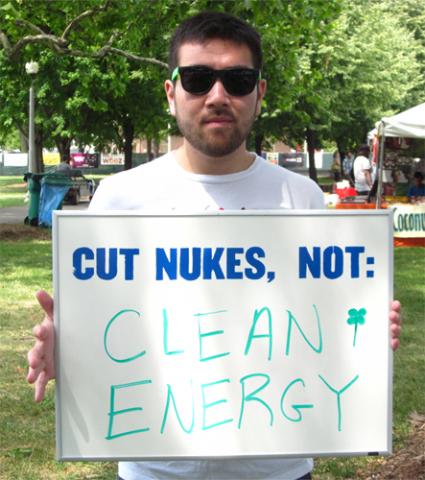
It’s time to consign these Cold War relics to the dustbin of history, and cut nukes instead of forward-looking solutions like renewable energy.
Global Zero is working to collect 25,000 signatures on their petition to tell leaders to cut nukes first. Learn more and sign the petition at CutNukes.GlobalZero.org.
Subscribe to our newsletter
Stay up to date with DeSmog news and alerts