EPA Scientists Consider Dropping "Widespread, Systemic" Language from National Study Findings

1-DSC09675
on

A phrase in the Executive Summary of EPA‘s national study on the threat that hydraulic fracturing, or fracking, poses to American drinking water supplies has come under increasing fire from environmentalists and scientists.

The EPA‘s draft executive summary, released this fall, included a line that has been widely quoted by supporters of the shale gas rush: “We did not find evidence that these mechanisms have lead to widespread, systemic impacts on drinking water resources in the United States.”

There are signs that the EPA‘s scientific advisors, currently engaged in a peer-review of the study, are now backing away from that phrasing, emphasizing instead the fact that drinking water supplies have been impacted at times, and that many factors, like sealed legal settlements and trade secrecy, have kept information out of the public eye.

“There’s agreement the sentence needs to be modified,” Prof. David Dzombak, who chairs the EPA scientific advisory board, told E&E News. “The sentence is ambiguous and requires clarification.”

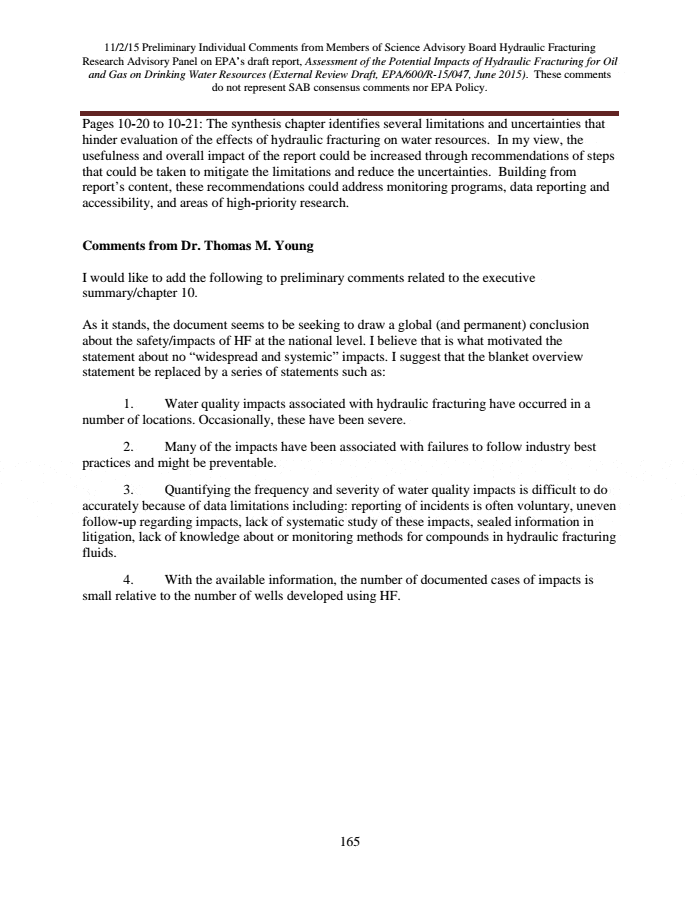
As DeSmog reported earlier this week, at a advisory board meeting last Friday, the gathered scientists broke out into applause when Prof. Thomas M. Young offered an alternative version. Prof. Young’s wording, which also appears in his written commentary, appears below.
 

1-DSC09675
Sharon Kelly is an attorney and investigative reporter based in Pennsylvania. She was previously a senior correspondent at The Capitol Forum and, prior to that, she reported for The New York Times, The Guardian, The Nation, Earth Island Journal, and a variety of other print and online publications.

Related Posts

on

By backing a right-wing Canadian conference featuring anti-climate speakers, experts warn TikTok has “abandoned” its commitments to combat climate misinformation

By backing a right-wing Canadian conference featuring anti-climate speakers, experts warn TikTok has “abandoned” its commitments to combat climate misinformation
on

DeSmog obtained audio from a summit where industry talked candidly about how Indigenous partnerships ‘de-risk’ projects.

DeSmog obtained audio from a summit where industry talked candidly about how Indigenous partnerships ‘de-risk’ projects.
on

Campaigners say corporate-friendly science has “corrosive effects on public health debates”.

Campaigners say corporate-friendly science has “corrosive effects on public health debates”.
Analysis
on

Instead of delivering on its promised CCS project, the Oil Sands Alliance is turning up the heat on Ottawa to rollback environmental regulations, and government is capitulating.

Instead of delivering on its promised CCS project, the Oil Sands Alliance is turning up the heat on Ottawa to rollback environmental regulations, and government is capitulating.