
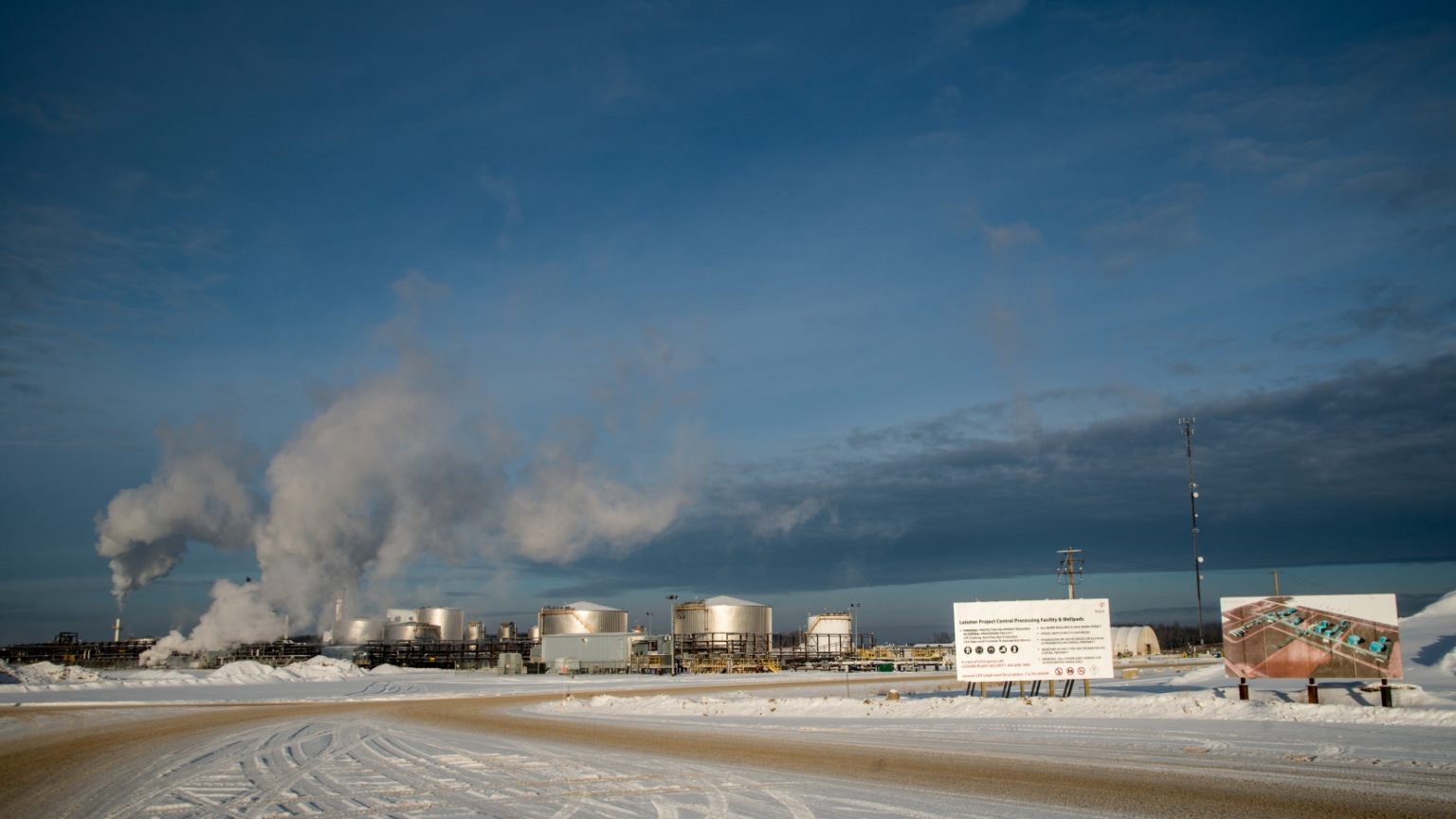
Norwegian oil major Statoil will be pulling out of its Canadian oilsands project after nearly a decade with an expected loss of at least USD$500 million.
In yet another sign that Canada’s oilsands – one of the most polluting fossil fuel projects on the planet – is becoming increasingly costly, Lars Christian Bacher, Statoil’s executive vice-president for international development and production, said in a statement: “This transaction corresponds with Statoil’s strategy of portfolio optimisation to enhance financial flexibility and focus capital on core activities globally.”
The 14 December announcement comes just weeks after Prime Minister Justin Trudeau approved the controversial Kinder Morgan Trans Mountain pipeline and the Enbridge Line 3 pipeline in a move to facilitate growth in the oilsands and create jobs.
The international energy giant will sell all of its oilsands assets to the mid-sized Alberta-based Athabasca Oil Corp effective 1 January 2017 in a deal that could produce about 80,000 barrels of oil a day with reserves expected to last up to 70 years. It is estimated to be worth up to CAD$832 million. The deal will also see Statoil retain a stake of just under 20 percent in Athabasca.
Statoil was one of 13 companies operating in the oilsands that had signed a long-term contract with Texas-based pipeline operator Kinder Morgan to ship oil via the Trans Mountain pipeline. However, it is now unclear what will happen with its contract, the National Observer has reported. According to Statoil Athabasca will have the option to enter the agreement.
The move is the latest in a string of losses for oilsands operators since global oil prices began to plummet in 2014, triggering other European companies such as Shell and Total to pull out of projects and resulting in tens of thousands of jobs being lost across Alberta.
And while Trudeau has said recently that tar sands and pipeline expansion will be “integral” to the country’s climate plans, Statoil’s head of sustainability, Bjorn Otto Sverdrup, tweeted on the day of the company’s announcement that Statoil’s exit from the oilsands “bends our cost and emission curves. Building resilience.”
Today we announced @Statoil exit of oil sands which bends our cost and emission curves. Building resilience @CFigueres @IEABirol @topnigel https://t.co/WvvZYoN0q3
— Bjørn Otto Sverdrup (@BSverdrup) December 15, 2016
Photo: Lawrence Sauter via Statoil