TransCanada’s Energy East pipeline is officially dead.
Announced via press release on Thursday, the news confirmed long-held suspicions that the $15.7 billion, 4,500 km oilsands pipeline simply wouldn’t cut it in today’s economic context.
But that hasn’t stopped commentators on all sides from pouncing on the cancellation as proof of their political project. Conservative politicians have lambasted the federal Liberals for introducing carbon pricing and new rules on pipeline applications, while environmentalists have claimed the company’s decision was a direct result of their organizing.
DeSmog Canada is here to help wade through the mess. Here are five things you should know about the cancelled Alberta-to-New Brunswick pipeline.
1. Energy East was primarily for export
Perhaps the most lingering myth about Energy East was that it would be built to displace foreign oil imports in Eastern Canada.
In fact, that very notion was repeated by Alberta Premier Rachel Notley in her Facebook post about the cancellation: “We believe this nation-building project would have benefited all of Canada through new jobs, investment, energy security and the ability to displace oil being imported into Canada from overseas and the United States,” she wrote.
Except it’s never been true.
An application by TransCanada to the National Energy Board back in May 2016 indicated that it would ship an estimated 281 tankers per year of oil, equivalent to about 900,000 barrels per day. That’s more than 80 per cent of the pipeline’s planned 1.1 million barrel per day capacity, leaving around 200,000 barrels per day to be refined at New Brunswick’s Irving Oil refineries.
That’s far below the 736,000 barrels per day that TransCanada suggested is being imported from foreign countries due to a lack of a west-to-east pipeline. In addition, Irving Oil’s president suggested in 2016 that his company wouldn’t necessarily displace its use of cheaper barrels from Saudi Arabia with product from Alberta.
Energy East was never about energy independence. The whole point was to ship oil by tanker to the U.S. Gulf Coast for refining.
2. Canada’s regulatory process is catching up with reality
Back in early September, TransCanada requested that the National Energy Board suspend its review of the Energy East project for 30 days.
That followed news that the review panel for the pipeline would be evaluating the climate impacts of upstream and downstream emissions associated with the project: a first for any major Canadian pipeline. (The Keystone XL pipeline in the U.S. was also subject to a climate test.)
It’s something that many industry boosters have now locked on to as the pipeline’s deathblow.
What’s often left unacknowledged is that Canada has committed to international climate change goals under the 2015 Paris Agreement, requiring the country to slash 230 megatonnes in annual greenhouse gas emissions by 2030. That’s where policies like the federal carbon pricing mandate and the overhaul of the National Energy Board and Canadian Environmental Assessment Agency can come into play, integrating climate tests into the very fabric of reviews.
In addition, many critics conveniently fail to mention that the entire National Energy Board review process for Energy East was suspended with all decisions thrown out because the National Energy Board privately met with TransCanada consultant and former Quebec premier Jean Charest.
The complete restarting of the process and inclusion of a climate test was the price of doing business in a country ostensibly committed to reducing greenhouse gas emissions and introducing transparent environmental reviews.
3. Canada doesn’t necessarily need more pipelines
Energy East was the last of the big four Canadian pipelines to get underway.
Kinder Morgan’s Trans Mountain and Enbridge’s Line 3 pipelines were both approved by the current Liberal government, while TransCanada’s Keystone XL was resuscitated with the election of U.S. President Donald Trump.
All offer better prices for exporters. As noted by University of Alberta professor Andrew Leach, shipping crude to New Brunswick via Energy East would cost $10/barrel, far higher than other networks.
That matters a lot given heavily reduced forecasts for oilsands production in coming decades. The Canadian Association of Petroleum Producers now estimates that oilsands production is expected to hit 3.7 million barrels per day by 2030. That’s down from their 2013 forecast of 5.2 million barrels, when Energy East was first announced.
In other words, Alberta at most needs an additional 1.3 million barrels of pipeline capacity by 2030. Just two of the three aforementioned pipelines would easily allow for that.
And that’s to say nothing of Alberta’s cap on oilsands emissions of 100 megatonnes per year (for comparison purposes, Ontario plans to reduce all of its emissions to 115 megatonnes by 2030).
Unless there are substantial technological innovations that cut per-barrel emissions, it’s expected that the province will hit its emissions cap by 2030. That calls into question the need for several of the pipelines that are further along in the process, let alone Energy East.
5 Things You Need to Know About the Cancellation of #EnergyEast https://t.co/yUPyOUruzy #oilsands #climate #cdnpoli #keystonexl pic.twitter.com/6jJV9KqGLd
— DeSmog Canada (@DeSmogCanada) October 6, 2017
4. The majority of Canadians want to decrease oil demand
Spend too much time in the “Canadian politics” corner of Twitter and you might be inclined to believe that the average Canadian overwhelmingly favours increased oil and gas development.
But that’s not at all the case, based on recent polling numbers by Abacus data.
A poll published in September noted that 55 per cent of people would prefer to see demand for oil drop in the coming decade, with 65 per cent wanting to see a decline in the next 30 years. Even in Alberta, there are more people who wish to see oil demand decline in 10 years (38 per cent) compared to people who want to see oil demand increase (28 per cent).
There’s also been a marked drop in support for pipelines. In 2014, 58 per cent of Canadians supported building more pipeline capacity. Now, that number has dropped to 44 per cent.
In addition, when asked “recently, I’ve grown more worried about climate change and it is changing my view of how long we should use oil,” 22 per cent of people said “strongly agree” while another 37 per cent said “agree.”
This clear shift in public opinion is in line with the global consensus that the world needs to rapidly reduce emissions to avoid the worst of climate change.
5. This was about harsh economics
Environmental organizations across the country loudly celebrated in the wake of the cancellation. To be sure, Indigenous and environmental organizing has greatly raised the public profile of major pipeline projects like Energy East and arguably contributed to delaying the process while market conditions changed. But it’s seriously doubtful that the project would have been cancelled if oil prices were hovering in the $70-plus/barrel range and the company’s Keystone XL project was still blocked by the U.S.
TransCanada couldn’t make the numbers work. There was enormous unused capacity risk at play. To proceed with a multi-decade project in an era of sustained low oil prices and depressed production forecasts would have been a baffling decision.
Now, the company only faces a $1 billion charge to write down the project instead of $16 billion in capital expenses that might not ever be recovered. This move also allows them to focus more on making Keystone XL happen, and investing in markets with less immediate competition.
It doesn’t have quite the same inspirational tone to it. But hey, that’s capitalism for you.
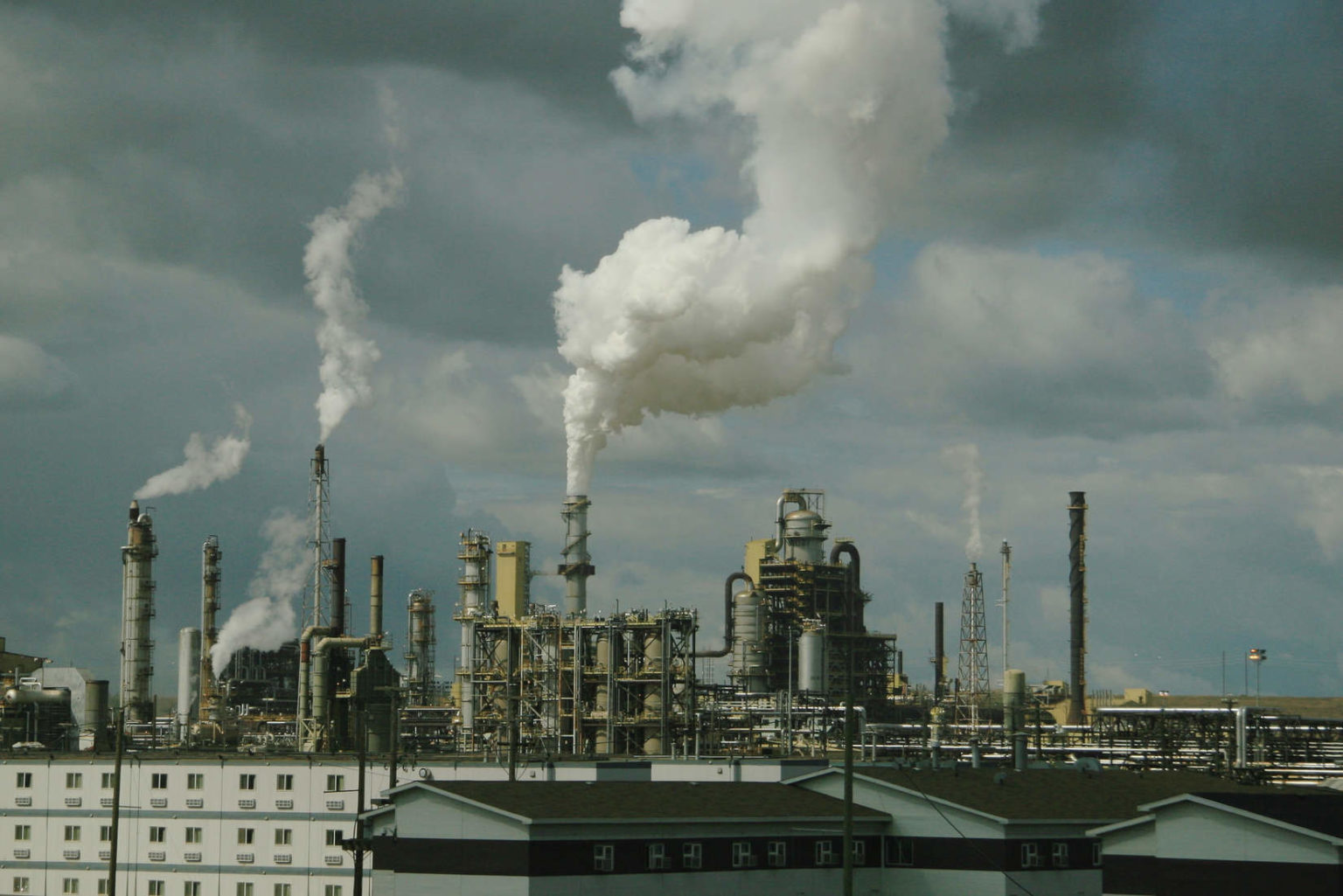
Photo: Julia Kilpatrick, Pembina Institute.