
A pro-AI data center group purchased at least $2.54 million dollars worth of television ads that ran recently in Ohio, a new DeSmog analysis reveals. The group, Build American AI, is linked to Leading the Future, a major AI industry super PAC backed by Silicon Valley billionaires.
The ads extolled the economic benefits of Ohio’s data center boom, one of the hottest issues in the state’s Senate election, but did not endorse either candidate in the race: Trump-aligned Republican incumbent Jon Husted, who was appointed by Governor Mike DeWine to serve out Vice President J.D. Vance’s term, and former three-term Democratic Senator Sherrod Brown.
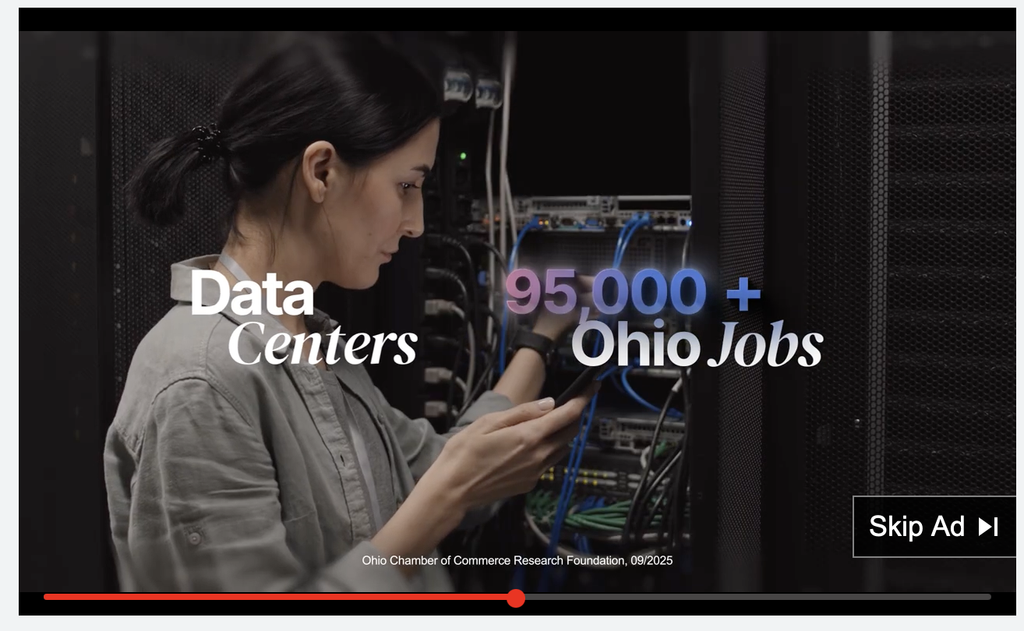
“When some people hear data centers they picture computers and servers,” says one Build American AI ad. “But we see something different: electricians, engineers, manufacturers.” The ad states that data centers have brought more than $40 billion in investments and created over 95,000 jobs in Ohio.
“The future won’t be built by politicians or special interests,” states the ad, “It’ll be built by American workers right here in Ohio.”
The ads appeared on at least 16 Ohio television stations between September 7 and October 21, according to Build American AI’s filings with the Federal Communications Commission, which described them as “non-candidate issue ads.”
Build American AI ordered at least $2.5 million in ads in Ohio, $1.5 million in ads in Wisconsin and $1.1 million in Kansas between September 7 and October 24, according to DeSmog’s analysis. Jesse Hunt, the group’s head of communications, confirmed that the group is spending over $5 million in the three states, but did not comment on the exact amounts.
Build American AI has been described by Politico as a “subsidiary” of Leading the Future, a super PAC which was formed last year to promote AI industry interests. Leading the Future has emerged as a major player in 2026 election cycle — backing both Democratic and Republican candidates in primary races earlier this year.
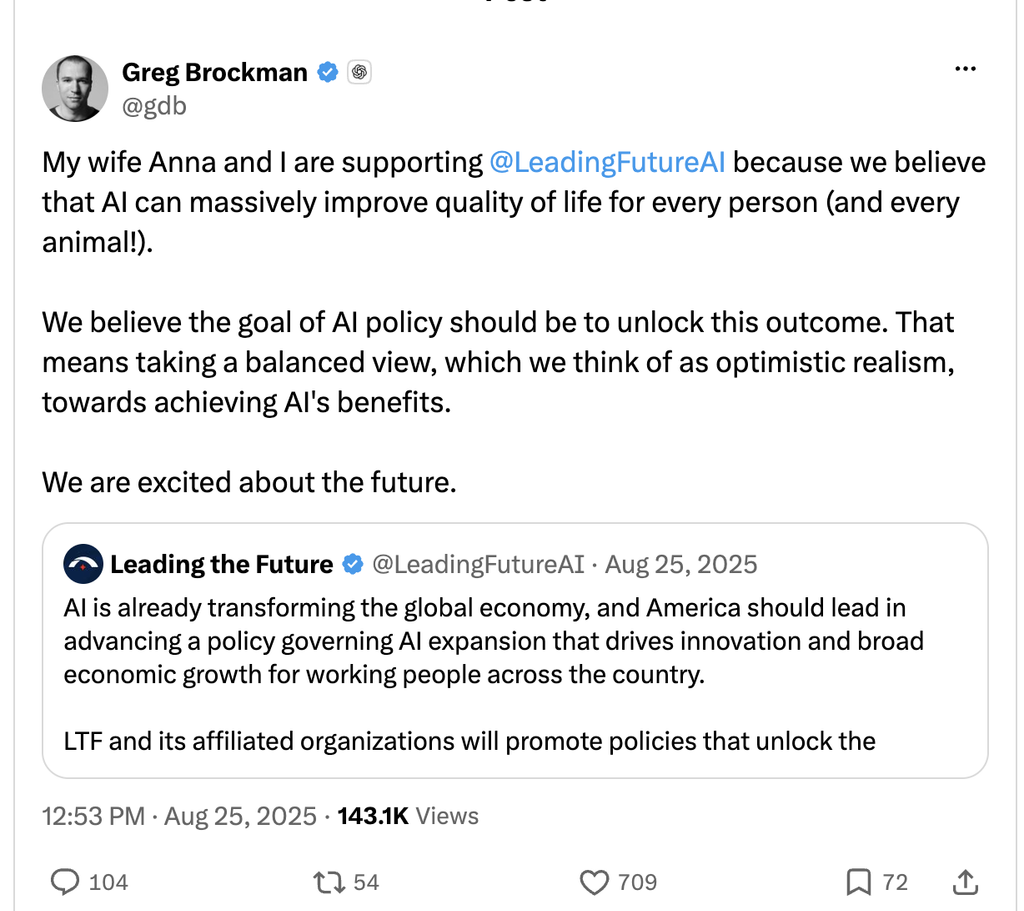
The super PAC has received about $125.79 million in contributions during the 2026 midterm election cycle as of October 29, according to Federal Election Commission (FEC) filings. Most of that came from a handful of donors: $25 million each in individual contributions from tech venture capitalists Marc Andreessen and Ben Horowitz, $50 million from their venture fund Andreessen Horowitz, also called a16z, and $12.5 million each from OpenAI co-founder and president Greg Brockman and his wife Anna Brockman.
OpenAI is part of a joint venture with SoftBank, Nvidia, the U.S. Department of Energy, and other partners to build a mammoth data center complex on federal land in Pike County, Ohio. The project would include an on-site gas-fired power plant designed to produce 9.1 gigawatts of power — larger than any gas-fired power plant currently operating worldwide, and enough to power about 7 million homes.
OpenAI’s investors include the Andreessen Horowitz venture capital fund. OpenAI’s energy chief is John McCarrick, who as an energy official in Trump’s first administration promoted exports of U.S. liquefied natural gas to Europe following Russia’s invasion of Ukraine, and advocated for Asian countries to invest in natural gas.
Andreessen Horowitz did not respond to a request for comment.
OpenAI did not respond to DeSmog’s request for comment on the Brockmans’ personal donations to Leading the Future, or its stance on using gas-fired power for its data centers.
Marc Andreessen is also a board member of tech giant Meta, which is building “Prometheus,” a massive data center in New Albany, Ohio, about 15 miles northeast of state capital Columbus. The partially-built computing complex runs on natural-gas turbines — and is designed to scale to one gigawatt, enough to power about 800,000 homes.
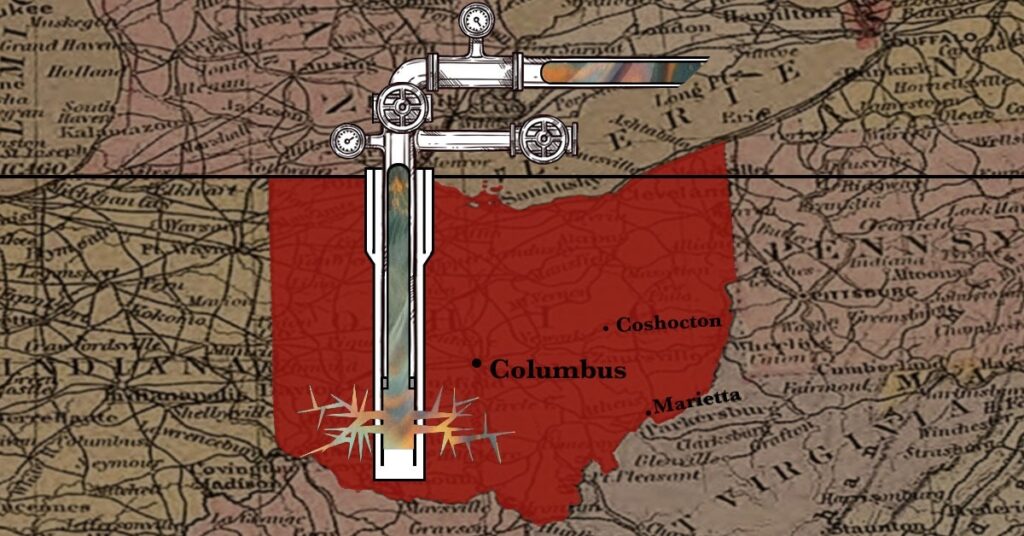
These projects are among dozens of proposed data center projects in Ohio, which is strategically positioned atop part of the Marcellus Shale, the biggest gas field in the U.S.
The AI boom is on track to worsen the climate crisis, which is on the verge of passing the key 1.5 degree Celsius (2.7 degrees Fahrenheit) limit on global heating that nations set in the 2015 Paris Agreement.
Based on current trends, the energy demand of new U.S. data centers could increase the nation’s carbon emissions by 24 to 44 million metric tons a year between 2024 and 2030, according to a recent study published in the journal Nature Sustainability — equivalent to the tailpipe emissions from an additional 5 to 10 million additional gasoline-burning cars.
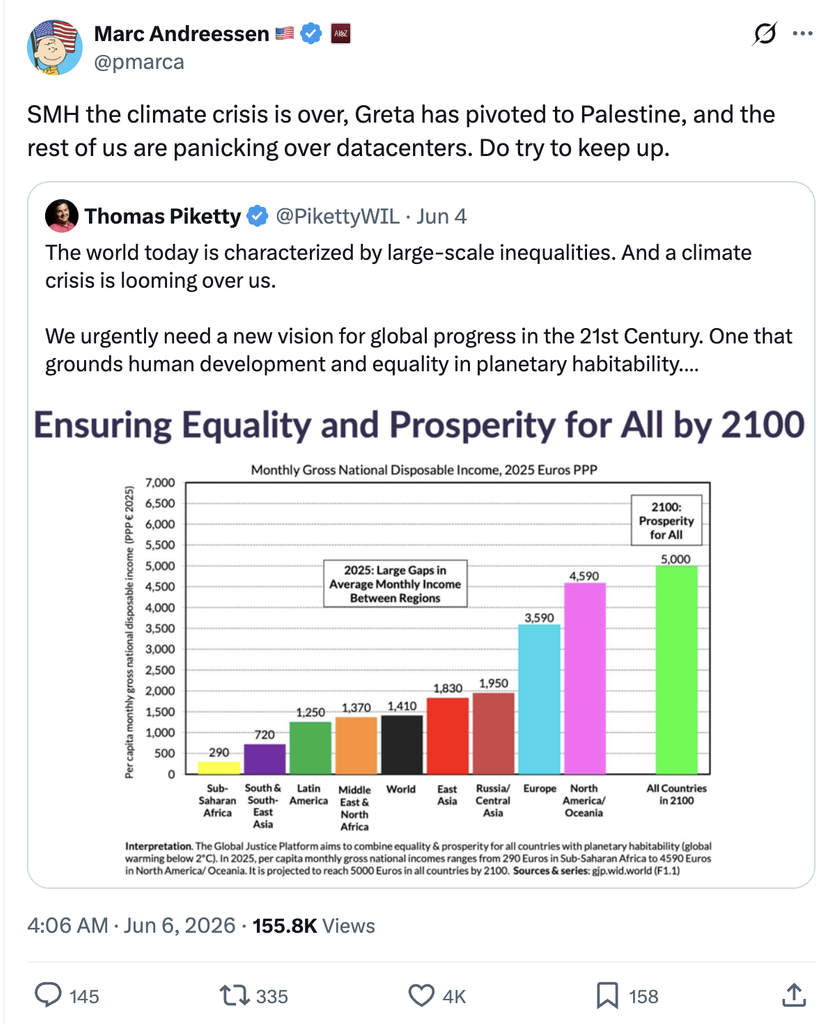
Marc Andreessen recently called the climate crisis “over” in a post on X, and has praised fracking as an “incredibly positive outcome” of energy industry research and development.
“Energy should be in an upward spiral,” wrote Andreessen in his “Techno-Optimist Manifesto” in 2023. “The more energy we have, the more people we can have, and the better everyone’s lives can be.”
Both he and Horowitz have each contributed at least $3,500 to Husted’s re-election campaign since late 2025, according to FEC filings.
Build American AI’s ads appeared after Sherrod Brown’s campaign ran a series of ads branding Husted “the face of data centers in Ohio” and lambasted him for supporting multi-billion-dollar, greenhouse-gas spewing data center developments as well as for handing out tax breaks for data center developers.
Brown’s campaign spent $2.4 million on ads criticizing Husted’s support for data centers as of late August, according to political ad spending tracker AdImpact.
The ads caught the attention of the National Republican Senatorial Committee, which sent out a memo in mid-August to “interested parties” about “Ohio’s data center risk,” as first reported by Axios. The memo warned that Brown’s opposition to data centers had turned the issue into “the anchor hanging around Husted’s neck” that could get him voted out of office. “The companies that need these projects built have to fix how Ohioans see them: who benefits, who pays, and why a community should want one,” the memo stated — the themes of Build American AI’s TV ad campaign.
Sixty-three percent of Ohioans oppose AI data centers, according to a recent poll by The New York Times. As of September, the state has over 125 local data center moratoriums in place, as well as 21 ballot measures across 16 counties targeting data center construction, the most of any state. “People who would wave at their neighbors that they’ve seen for 10 years but never have spent the time on their porches” are “looking past partisan differences to fight for their communities,” Nick Owens, an attorney in rural Ohio, told DeSmog. Owens, who said he is a Republican, volunteers with the campaign Conserve Ohio, which is seeking to ban large-scale data centers in the state.
Looking ahead, local community groups in Ohio are attempting to gather 413,000 signatures needed to put a statewide data center moratorium on the ballot in 2027.
“Grassroots people who frankly have one hundredth the level of funds [of tech leaders] are battling these fights,” said Owens. “It’s really David versus Goliath, but the righteous people in this case, I believe, will prevail: the people who live in their communities.”