

This story is published in partnership with The Lens.
Dasha pushed a lock of wavy purple hair out of her eyes and turned a knob — and at last, the generator on the sidewalk before her roared to life. Finally, she could return to the light and heat of the hemp cafe where she works near the center of Kyiv, the capital of Ukraine.
Bundled up on a cold Ukraine winter afternoon, Dasha and her co-worker Sasha—both of whom declined to give their last name for fear of personal safety — have spent 25 minutes attempting to start the cafe’s generator. Usually, their boss is there to show them. But with outages happening more frequently, the two have had to learn how to power up on their own.
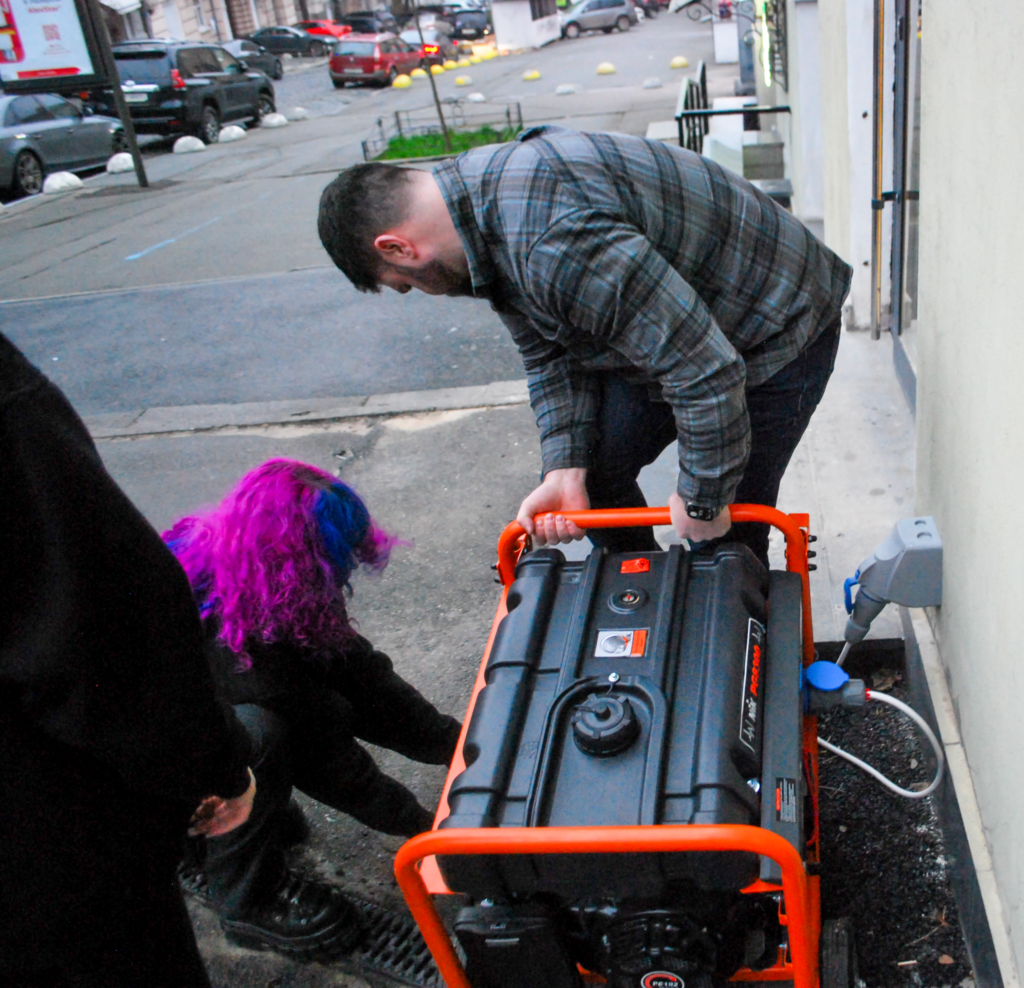
Amid freezing temperatures, the blackouts — the result of Russia’s targeted drone attacks on power plants and other energy infrastructure — have brought the fighting to every Ukrainian’s doorstep. “Taking advantage of the coldest days of winter to terrorize people is more important to Russia than diplomacy,” Ukrainian President Volodymyr Zelensky said Tuesday, as The Hill reported, noting that temperatures in Kyiv had dipped to -3 Fahrenheit even as representatives from both countries prepared to meet for US-brokered talks.
With Ukraine’s power plants targeted and Russian gas increasingly sanctioned, LNG export facilities in the state of Louisiana — which now supply more than half of the U.S. LNG exported to Europe — stand to profit big, even as much of that money then flows out of Louisiana, to investors overseas.
The Trump administration’s new war on Iran is also a boost for U.S. LNG companies — though not U.S. consumers — as a supply squeeze drives up prices. Amid the Middle East strikes, production has ceased in Qatar, the supplier of about a fifth of the world’s LNG exports, allowing U.S. companies to fill the gap.

Residents of Ukraine and the U.S. Gulf Coast have both learned how to operate during disasters. In Kyiv for the last few months, during the city’s daily multi-hour blackouts, urban blocks have echoed with the roar of scattered generators — a sound familiar to anyone who’s weathered a storm in Louisiana.
Along the streets of central Kyiv, in the pastel-painted Tsarist apartment buildings with elaborate plaster fronts, rows of lit windows blink off during blackouts, and the Christmas lights strung along the sidewalks go dark. Cafes turn cash-only. Bars light candles and offer “blackout menus” of snacks that don’t require cooking. Cables snake from generators into grocery stores and phone shops, and down the steps of metro stops into kiosks.
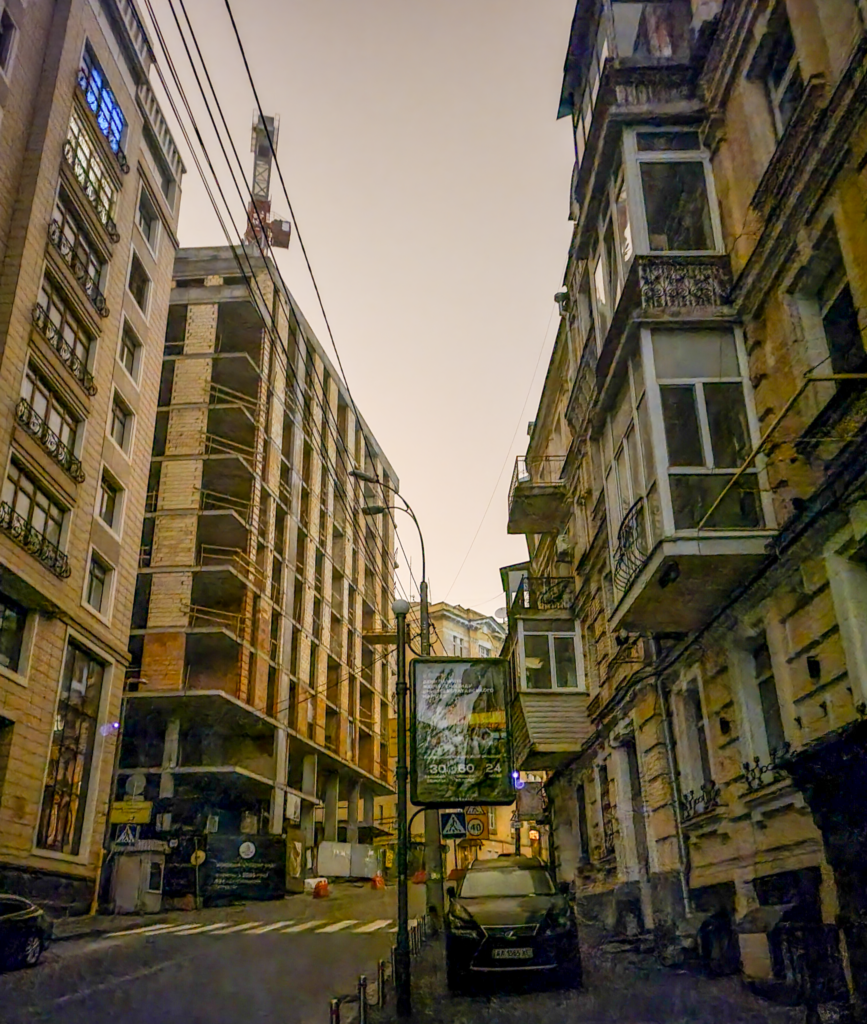
Many Louisianans may only know about Kyiv from news clips or pre-war travel footage as a city of snow and golden-domed cathedrals. But as relentless Russian airstrikes have left Ukraine scrambling for fuel, it is Louisiana plants that are increasingly keeping the lights on, by loading massive tankers with liquefied natural gas (LNG) and sending them overseas for use in Ukraine.
In Kyiv, residents have found ways to adapt to the repeated power outages. Shop attendants at a luxury clothing store a few streets from the cafe worked by the lights of their phones before they got a generator, staff explained. A nearby pub chills its pint glasses in preparation for the blackouts, since generators don’t keep the kegs cold. “I recommend a power bank and not panicking,” quips bartender Vlad Krechko, holding a frosty glass up to the light.
Until recently, Russia had largely refrained from directing major attacks at crucial energy infrastructure like substations and power plants. But in spring 2025, a US-brokered moratorium on energy facility attacks broke down. As cold temperatures set in last year, Russian attacks on energy facilities seemed to escalate every week. Strikes on October 3 and 5 wiped out about 60 percent of Ukraine’s gas production. Russian drones near the frontline target transformers and substations in civilian neighborhoods. And as electricity demand outstripped supply, utility operators were forced to institute country-wide blackouts to conserve energy and avoid a catastrophic failure of the grid.
How Russia’s Invasion Has Boosted LNG Companies in Louisiana
The Friendly Coffee Shop around the corner from Dasha also has a small generator — just enough to keep the lights on and run an espresso maker. Out front, uniformed Ukrainian soldiers light cigarettes and stamp the cold out of their feet. But the modest generator behind the day’s steaming cups of espresso cost the cafe about 100,000 Ukrainian hryvnia, or $2,300 — a steep and unexpected expense, not to mention the gasoline needed to run it, says the barista, Shushana.
In the US, as recently as October, President Trump promised he’d cut energy prices in half, a key campaign pledge. But in December, U.S. natural gas prices surged to a three-year high, due in part to record-high LNG exports. As New Orleans residents complained about rising gas bills, energy analysts named the LNG exports as a key driver of skyrocketing costs.
Instead of having a glut of natural gas, drilled from rigs in the Gulf of Mexico and fracked from shale basins in the West and North, petrochemical companies are compressing it into LNG and shipping it across the Atlantic Ocean. Gas prices at home, once at record-low levels, are now rising due largely to the sheer volume of gas the U.S. now ships overseas.
U.S. exports of LNG began only a decade ago, in 2016. Today, the U.S. is the world’s biggest liquid natural gas exporter. Half of the nation’s eight active export terminals are in Louisiana.
Those eight U.S. terminals now consume more gas than all American residential gas users combined.
That pressure on supply translates directly to higher gas bills and pinched pockets. The average American family paid $124 more for gas over the first nine months of 2025 when compared with the same time period a year earlier — an even bigger increase than a Department of Energy white paper had warned consumers to expect when it was published in 2024 under Biden.
A key driver in those increases is Venture Global’s Plaquemines LNG, which stands less than 40 miles downriver from New Orleans. The massive terminal, which has been exporting for about a year, already accounts for a fifth of U.S. LNG exports — reportedly the fastest LNG ramp-up ever.
After Louisiana’s Sabine Pass, Plaquemines is now the second-largest feedgas consumer of the nation’s eight terminals, guzzling so much that it has forced a reshuffle of where gas gets piped and impacted prices amid a “knife fight” for gas. When Plaquemines is running at full capacity, the terminal diverts natural gas from nearby regions like Florida and Alabama, causing rates to spike and posing challenges, especially during extreme weather, for some areas with increased residential demand.
Natural gas prices spiked again in March with the new US-Israeli war on Iran. The big winner? Venture Global, whose stocks surged 17 percent when the market opened the Monday following the first strikes.
LNG Exports Push up U.S. Gas Prices but Ease Costs Overseas
But before the U.S.-Israeli strikes in Iran, European gas prices were declining. In other words: by exporting such huge amounts of gas, U.S. families have essentially been subsidizing cheaper gas for Europeans, contrary to Trump’s “America first” pledge, says Tyson Slocum, energy program director at the nonprofit think tank Public Citizen. “Record exports are causing an affordability crisis for American families,” Slocum said in a statement.
Europe’s imports of U.S. and Russian LNG reached a record high in the first half of 2025 and continue to rise, albeit more slowly than in recent years. On Jan. 1, 2025, U.S. LNG got a further boost, when Ukraine stopped allowing Russian gas to flow through Ukrainian territory on its way to Europe.
The U.S. now contributes 57 percent of LNG imports to Europe — more than double the 28 percent it supplied before Russia’s full-scale invasion in 2022. Of the U.S. LNG brought into Europe, more than a quarter — 27 percent — comes from Sabine Pass alone.
Ukraine and Louisiana’s LNG links are only deepening. Last June, a subsidiary of DTEK, Ukraine’s largest private energy company, signed an agreement to purchase LNG from Plaquemines through the end of 2026, plus another 2 million tons per year for 20 years from CP2, a third Venture Global facility in Louisiana that is slated to begin production in 2027.
The first cargoes arrived from Plaquemines in December 2024.
Though Ukraine sits on the Black Sea, getting LNG directly into a Ukrainian port is impossible at this point because of war blockades and because Ukraine has no regasification terminals on the Black Sea to turn liquid natural gas back into gas for pipelines. So instead, Ukraine is getting LNG by pipeline from three countries with port access: Lithuania, Poland, and Greece.
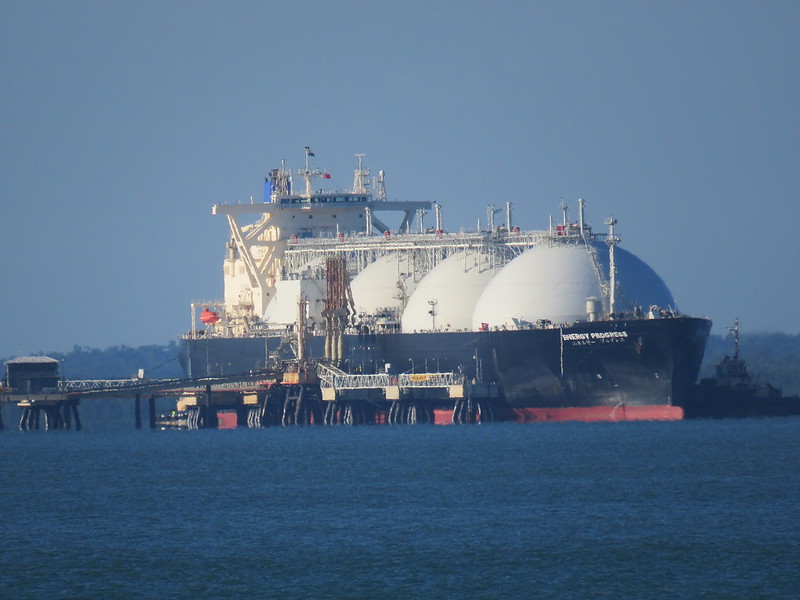
Ukrainian President Volodymyr Zelensky, during a visit to Athens, linked the need for Louisiana LNG imports directly to Russian missile strikes on domestic gas facilities. The deal with Greece will “cover nearly two billion euro [US$2.3Bn] needed for gas imports to compensate for the losses in Ukrainian production caused by Russian strikes,” he said.
Louisiana is certainly a key player in all of Ukraine’s gas imports: The LNG coming to Ukraine through Lithuania and Greece? That will be coming from Venture Global in Louisiana. The LNG coming to Ukraine through Poland? That will be coming from two terminals that likewise receive most of their LNG from Louisiana.
Does War in Ukraine Benefit U.S. Gas Moguls?
The CEOs of Venture Global, billionaires Robert Pender and Michael Sabel, are also friendly with the Trump administration.
Energy Secretary Chris Wright visited Plaquemines LNG last March, along with Gov. Jeff Landry, to celebrate the plant’s expansion. In October, Venture Global’s top executives were part of a delegation alongside Wright, Zelensky, and Ukrainian Energy Minister Svitlana Hrynchuk at the White House, along with heads of other energy companies. Ukraine’s deals with Poland and Greece followed soon after the October White House meeting.
By November, Venture Global announced they were seeking to expand the Plaquemines terminal even more, doubling its original capacity.
Then, in December, senior U.S. Senator Jeff Merkley began to call for an investigation into potential insider trading by Pender and Sabel. The CEOs had bought $12 million worth of shares of their own company in March 2025, shortly after a meeting with senior Trump officials at Mar-a-Lago, and just days before Wright granted the company a license to export LNG from their CP2 plant.
Meanwhile, 41 percent of Cheniere Energy’s Sabine Pass is owned by Brookfield Asset Management. Brookfield was previously named in Congressional investigations when they were accused of steering $1 billion towards the Kushners at a time when Jared Kushner held influence on foreign policy decisions.
Some skeptics, seeing the cozy relationship between the White House and Venture Global, mused whether more Russian attacks on Ukraine’s energy infrastructure might be opening up more opportunities for those LNG exporters closely aligned with the White House.
“There is, of course, a clear reason why U.S. LNG companies believe the crisis in Ukraine presents an opportunity: as war has raged, their balance sheets are looking much better,” wrote Global Witness in a 2022 report, entitled Wartime Windfall, which pointed fingers at earlier Washington leadership in the Biden administration. Similar claims were raised in a 2023 Greenpeace report, Who Profits from War: How Gas Corporations Capitalize on War in Ukraine.
And then, in an explosive turn of events, corruption in Ukraine’s energy sector was confirmed and dragged out under the light.
Three days after signing the deal to take Venture Global’s LNG from Greece, Energy Minister Hrynchuk was forced to resign as a $100 million corruption scandal erupted in Ukraine. Hrynchuk has denied wrongdoing, but other energy sector officials in Kyiv stand accused of embezzlement, kickbacks, ties to Russia, and undermining the protection of targeted energy facilities. Earlier this month, former energy minister German Galushchenko was detained while attempting to leave the country.
“Everyone benefits from this war, but Ukraine loses,” says Oleg Stravitskiy, an energy policy expert in Kyiv. ”The capitalists, they love this war.”
This reporting was supported by the International Women’s Media Foundation’s Women on the Ground: Reporting from Ukraine’s Unseen Frontlines Initiative in partnership with the Howard G. Buffett Foundation.”