

Rossana Valverde’s house didn’t burn down.
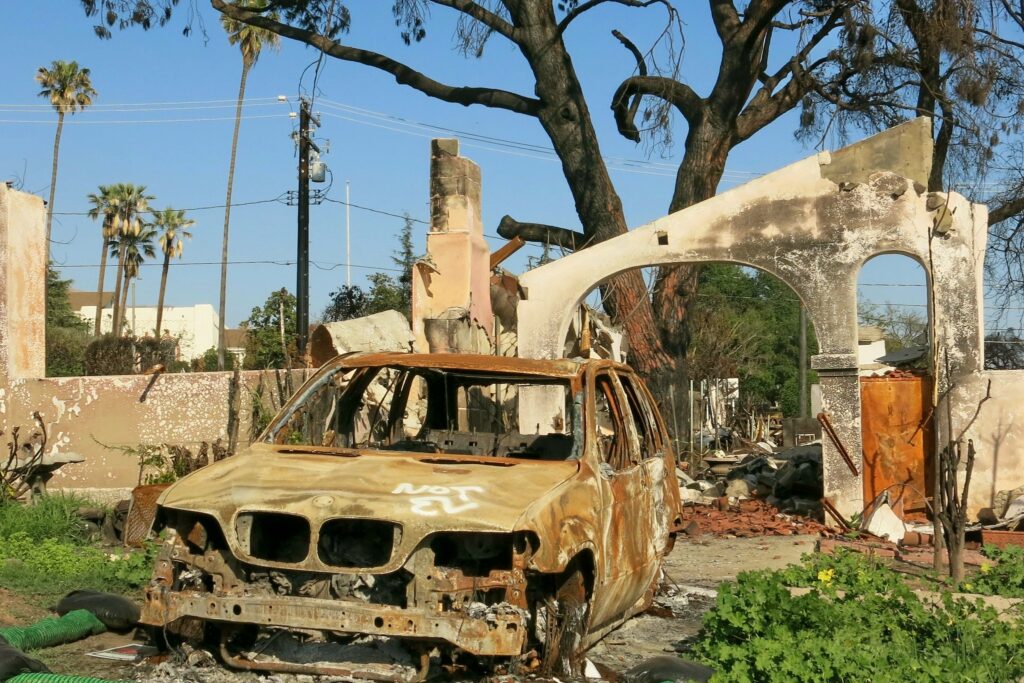
It stood, despite the 99 mile-an-hour winds that swept the Eaton Fire toward her home in Pasadena in January 2025. After the massive wildfire broke out at a utility tower just 300 yards from Valverde’s back fence, she had less than 10 minutes to escape with her husband, three dogs, and the clothes on their backs.
They made it out. And when they returned, the house was still there, their possessions intact.
And that’s when their insurance problems began.
It wasn’t just the haggling over what their insurer was willing to pay to cover damage from smoke and ash to her home.
There was also the soaring cost of keeping their home insured. Valverde says her premiums skyrocketed from $2,200 a year to $9,000.
“This is what climate disasters are,” Valverde, who still hasn’t returned to her home a year later, said. “It’s not just the loss, but the long stressful aftermath, the costs, and the protracted battle with insurance companies.”
Valverde is hardly alone in feeling the impacts.
The climate crisis has already arrived for most Americans — not by battering down their doors but by entering people’s mailboxes in the form of higher bills and nonrenewal notices from their insurance companies. That’s how U.S. Senator Sheldon Whitehouse put it at a March 12 news conference about climate change and home insurance organized by the Center for Climate Integrity.
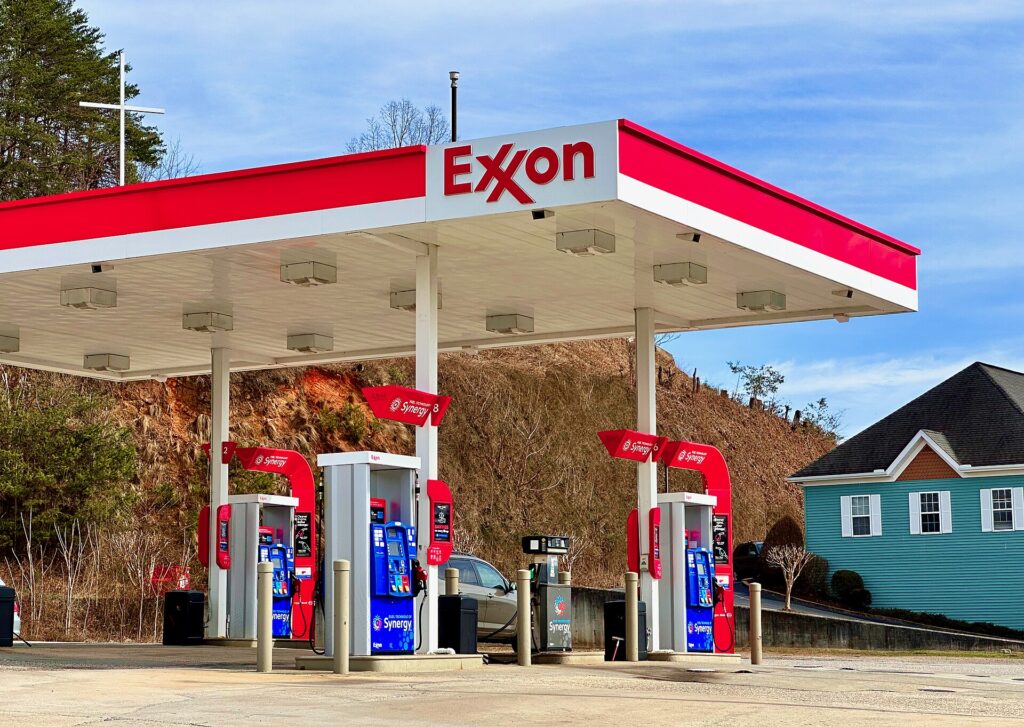
Given the known role that the climate crisis has played in driving home insurance costs up, a handful of states have begun considering bills aimed at shifting some of the costs of climate-related disasters from individuals over to big oil companies.
New York, California, and Hawai’i all introduced bills this year that backers say would let state attorneys general sue major oil and gas companies over the costs incurred from climate catastrophes. Any money recovered would go to reimbursing people hit by higher insurance rates while maintaining “last resort” property insurance programs run by the states including wildfire resiliency efforts in California.
The oil and gas industry bears a special responsibility, backers of those bills argue, not just because burning fossil fuels is the biggest contributor to climate change — but because, for decades, the industry misled policymakers, sowing disinformation about their products and climate change itself in an effort to stall an energy transition.
With the Trump administration turning a blind eye to the climate crisis, the human and financial toll of the harms caused by climate denial continue to mount according to advocates of the bills. That means the potential liabilities faced by the companies responsible will continue to grow — unless something changes.
“There are simply no longer any scenarios in which the fossil fuel industry gets to pollute for free and in which there’s a pathway to climate safety,” Sen. Whitehouse said at the news conference. “It’s as simple as that.”
“Fossil fuel companies knew decades ago that their products would lead to these disasters, yet suppressed those studies, manipulated policymakers, and obstructed the transition to clean energy,” California State Senator Scott Wiener, who in February sponsored that state’s Affordable Insurance and Recovery Act (SB 982) to hold Big Oil accountable for rising insurance rates due to climate hazards, said at the news conference. “Californians should not have to continue to pay the full cost of climate-driven disasters given the role the fossil fuel industry has played in getting us here.”
Oil industry groups have begun mobilizing to fight those state efforts.
They scored an early success this year in Hawai’i. The state’s Senate Bill 3000 unexpectedly stalled out in committee earlier this month after legislators received public comments in opposition to that bill from the oil trade group American Petroleum Institute (API) and the local Chamber of Commerce.
The API called the bill unconstitutional, arguing that the law would retroactively penalize the legal sale of fossil fuels and unfairly single out the oil industry.

“‘Climate superfund’ laws in Vermont and New York are being challenged in federal court, including by the U.S. Department of Justice and national business groups, on the ground that these statutes improperly impose retroactive strict liability for global greenhouse gas emissions,” the API wrote.
“At the same time, the State, the City and County of Honolulu and Maui County are currently litigating climate-related claims against major energy companies in Hawaiʻi State courts,” it added, calling that pending litigation “rife with uncertainty and legal questions.”
“That uncertainty may chill long-term investment and competition,” the trade group warned, “in a market that already faces some of the highest energy and living costs in the nation, making it harder for families and small businesses.”
‘Mass Disruptions’
With extreme weather on the rise, home insurance costs nationwide have surged, rising at twice the rate of inflation between 2021 and 2024. Premiums rose 70 percent over the past five years, Intercontinental Exchange’s mortgage monitoring report found in September. In Los Angeles, rates spiked 19.5 percent from 2024 to 2025 alone.
Private insurers are increasingly pulling out of vulnerable areas, deciding it’s not worth the risk. Between 2021 and 2024, roughly 1.4 million home insurance policies nationwide were not renewed, according to Dave Jones, director of the Climate Risk Initiative at University of California-Berkeley Law School’s Center for Law, Energy and the Environment.
Around 3.2 million Americans have been “forced onto insurers of last resort, called ‘FAIR plans’ or ‘residual markets,’ as of 2025 because they can’t get private insurance anymore,” he said at the Center for Climate Integrity event.
Confronted with steeply sharper costs, some homeowners are simply going without. A 2025 survey of Californians conducted by UCLA’s Luskin School of Public Affairs, found that more than 20 percent of those surveyed “had opted to stop purchasing home insurance because the costs were too high.”
But for anyone paying off a mortgage, home insurance is a necessity because lenders generally require it until their loans are paid off.
Spilling Over
That means problems with home insurance can spill over into the home mortgage market.
“We’re also seeing, as Senator Whitehouse alluded to, increased mortgage delinquencies, mortgage defaults, and mortgage repayments, as people who can’t afford insurance any longer have to give up their home because they’re defaulting on or unable to pay their mortgage.” said Jones, the former California Insurance Commissioner, referring to the Climate Integrity news conference.
Those difficulties are also taking a toll when people try to buy and sell houses.
A recent survey showed that “64% of mortgage lenders reported experiencing issues with home insurance either frequently or somewhat frequently,” the trade publication Mortgage Professional America reported on March 20. “Thirty-seven percent of mortgage lenders reported clients who had to opt for a less expensive home because of insurance costs. Many loan officers report walking away from one to two loans per month specifically because of insurance-driven [debt-to-income] problems.”
You don’t have to own a home — or want to — to be hit by the rising costs. Landlords are passing a portion of their higher costs along to renters, the Federal Reserve found in a September report. Renters’ insurance rates are also up, Experian noted last year, reversing the extended downward trend renters enjoyed during the 2010s.
Take, for example, Hawai’i, where high winds drove wildfires that destroyed a historic Lahaina town on Maui in 2023, causing billions in damages.
Hawai’i faced an insurance crisis that was initially estimated at up to $40 billion — twice the state’s entire annual budget. Non-renewal rates went up by 200 percent after the fires, Hawaiʻi State Sen. Jarrett Keohokalole told reporters.
In response, Hawai’i did what Florida and other states have tried in some form — create a “public option” where the state government steps in and becomes an insurer of last resort.
“We were forced to take action,” Sen. Keohokalole said. Non-renewals were causing “mass disruptions in our housing market, particularly in the condominium space, in which 170,000 residents in the state of Hawai’i reside.”
Today, Hawai’i is recovering from its worst flooding in decades, as heavy rains forced thousands, including the Aquaman movie star Jason Momoa, to evacuate over the weekend. Gov. Josh Green estimated the damage at over $1 billion during a Friday evening press conference.
Hawaii’s SB 3000, the bill that died this month, would have boosted the state attorney general’s powers, allowing “the state to recover losses incurred if there’s another climate-induced event that this public option needs to pay for, from the oil companies who directly contributed to the problem,” Keohokalole said, just days before that flooding struck.
“It’s not only our responsibility in our respective communities to try and figure out how to deal with this crisis,” Keohokalole said, “it should be the responsibility of the entities who profited off of a situation that they knowingly created and helped perpetuate.”
Breaking the Ties That Bind
It might sound like a stretch to ask oil companies to pay for someone else’s property insurance costs — but insurance experts say it comes from a principle that’s well-established in the law: When you cause harm, you have to pay for the damage. You break it, you buy it, as the saying goes.

Insurance might cover the tab for property damage at first — but if someone else is at fault, the insurance company can turn around and sue whoever was responsible. In some states, that applies even when there’s a mix of causes, when, for example, someone else’s negligence or recklessness is only partly to blame.
“Insurance companies have a long-standing right to bring lawsuits against third parties whose actions and reactions caused them losses,” said Jones. “It’s called the right of subrogation and insurance companies have not been shy about bringing subrogation claims against Big Tobacco and Big Opioids for health insurance losses or against utilities whose equipment starts fires.”
So far, private insurance companies haven’t brought a single case seeking to recover damages caused by oil and gas companies’ role in the climate crisis, Jones said.
He pointed to the ways big oil and major insurance companies are intertwined.
“It turns out that in the United States alone, insurers have over half a trillion dollars invested in the oil and gas industry,” he said. “And they write a substantial amount of insurance for the oil and gas industry.”
The state bills, Jones said, would make sure state attorneys general get the chance to act when corporate insurers won’t — a backup plan he said is especially vital now that states are acting as the insurer of last resort.
The Aftermath
“Our house was saved and at first, we felt so fortunate,” Valverde said.
Months later, she said, they conducted independent testing, which revealed the presence of lead, arsenic, and nickel.
“We’ve had to dispose of many of our possessions because of the contamination,” she said. “My husband and I are both turning 70 in the next year. I’m a retired social worker, he’s a retired special ed teacher.”
“I’ve lived in Pasadena for over 50 years. I’ve raised my family here. My two-year-old twin grandsons are here. This city is home,” she said. “But last year that home became unlivable.”
For Valverde, the climate connections are obvious.
“The fire made it into our backyard just days before the Palisades burned,” Valverde said. “A few weeks later [wildfires hit] the East Coast. These kinds of disasters aren’t rare anymore. They’re becoming constant. It’s not just fires, it’s floods, hurricanes, extreme heat, and in our case, extreme wind storms.”
That adds to the fear that, unless something changes, Valverde’s insurance costs — alongside everyone else’s — will continue to climb.
“How much higher will it go? Will we even be able to get insurance?” Valverde said. “We do know people in our neighborhood who are paying even more than we are.”
“I’m speaking up for my community, for my grandsons, and for the families that have been made invisible by this crisis,” she said. “We deserve, as survivors, something more than silence. We deserve accountability, we deserve real recovery — and we deserve to be able to return to our home and not be pushed out by the untenable rising costs of insurance.”