Environmental campaigners are urging Ireland to protect the public interest and resist industry pressure as the country takes up the presidency of the EU Council.
The EU’s top agricultural polluter took the helm earlier this month (1 July) amid a wider push for deregulation that has left key green protections diluted, delayed or scrapped.
Over the next six months, Ireland will be charged with marshalling agreement between the EU’s 27 member states on a raft of policies that will be key to delivering on Europe’s climate goals — among them farm subsidies, the 2040 emissions reduction target, and the EU’s carbon market rules.
Under EU conventions, Ireland is required to be a neutral facilitator and “honest broker” throughout the presidency. But experts agree that the role offers a major opportunity to shape EU policy.
Among those planning to advance their own agenda are the powerful Irish farm lobby, which, as DeSmog has shown, has repeatedly lobbied against or sought to weaken climate policies affecting agriculture, such as emissions targets for the sector. So far, their demands for the presidency emphasise “simplification” — a shorthand for axeing regulatory burdens for business that critics say is a byword for slashing green rules.
Farm lobby groups are also urging the Irish government to boost the polluting livestock sector during its presidency. At 38.7 percent, according to official figures released last week, agriculture is the largest single source of emissions in Ireland, with nitrates-heavy manure and fertiliser contaminating Ireland’s air, soils, and waterways.
In Europe, Ireland also faces pressure from an increasingly powerful far-right in the European parliament, who are pushing a deregulatory agenda which attacks key EU rules. In the face of this opposition, campaigners say, Ireland must stand firm and back policies which support climate targets and repair degraded nature.
Farming is both a key contributor to emissions — responsible for 11-12 percent of the EU’s total — and highly exposed to climate impacts, with rising temperatures from climate change punishing farmers through increased droughts, flooding and soil erosion. A 2025 study estimates that extreme weather impacts from climate change now cost the EU farming sector €28 billion (£24 billion) a year.
Against this backdrop, the presidency presents Ireland with a “remarkable, though challenging, opportunity to drive forward EU climate action,” according to Chiara Martinelli, director of Climate Action Network (CAN).
“As the recent heatwaves make clear, the climate, nature, and pollution crisis is not going away,” Faustine Bas-Defossez, director for nature, health and the environment at the Brussels-based European Environmental Bureau told DeSmog.
“This leaves Ireland with a choice: reinforce the current drive to weaken environmental and health safeguards, or help Europe respond to the crisis with policies grounded in science and public interest.”
Below are some of the key battlegrounds for environmental action we can expect to see playing out under the Irish presidency, which will run until December 2026.

Livestock — A Live Debate
Ireland’s long record of lobbying the EU on behalf of its polluting agricultural sector raises alarm bells for the presidency among campaigners. They fear that the country’s influential dairy lobby could seize on the opportunity to advance its agenda without addressing the sector’s devastating contribution to biodiversity loss and global heating.
In its list of priorities, published in mid-June, the Irish presidency notes in neutral tones that Council discussions “will consider how livestock farming can contribute to economic and social objectives, while responding to environmental and climate-related challenges”.
But how will this play out in practice? At home, Ireland is currently considering adopting a controversial way of accounting for national methane emissions using a metric called GWP*, which is widely condemned as a greenwashing tactic.
The Irish government has previously indicated it will advocate for this new accounting method at EU level, but climate scientists caution strongly against this approach. They say it distorts science, undercuts countries’ ambition to make progress on their climate goals and allows emitters to claim they are “climate neutral” simply for stabilising emissions.
GWP* flies in the face of recommendations from the world’s leading climate science body. The Intergovernmental Panel on Climate Change (IPCC) has thus far resisted pressure to adopt the metric for its assessments. The IPCC reports also state that methane emissions must be cut by 45 percent before 2040 to preserve a liveable climate.
Ireland took on the presidency just days before the EU Commission published its Livestock Strategy, which has come under fire from environmental groups.
The vision, which was aimed at harmonising EU policy governing subsidies, emissions and trade, dodges important questions such as the sector’s large emissions footprint and proposes weakening environmental rules, critics say.
The ‘simplification’ of the EU Nitrates Directive — a key EU water protection law — is discussed in the text, along with calls for changes to how methane is counted, which appear to open the door to the use of GWP*.
“Beyond the climate harm, any attempt to distract of methane’s real-world impact only wastes precious time,” said Claire Stockwell, the director of European strategies from the non-profit research and advocacy organisation Institute of Agriculture and Trade Policy.
“Farmers and farming communities need to diversify their agricultural systems,” she told DeSmog. “Any distraction puts them at risk of significant losses in old production models, as global warming increases the frequency and severity of extreme climate events.”
Stockwell called on Ireland to stay true to its “honest broker” role on livestock during the presidency and be “transparent” about the real-world impact methane pollution has on global heating.
Livestock is responsible for just under a third of global methane emissions, which in turn account for a third of man-made global heating to date, according to the UN’s 2022 Global Methane Assessment.

Simplification Agenda
Ireland takes up its role as a deregulation push is in full swing.
High on the Council’s agenda are two major files — the Food and Feed Omnibus and Environmental Omnibus, sweeping legislative packages that are used to amend or modify multiple directives at the same time. Ireland, which will first broker agreement within the EU Council, has said it will agree on both files with the EU parliament by the end of the year.
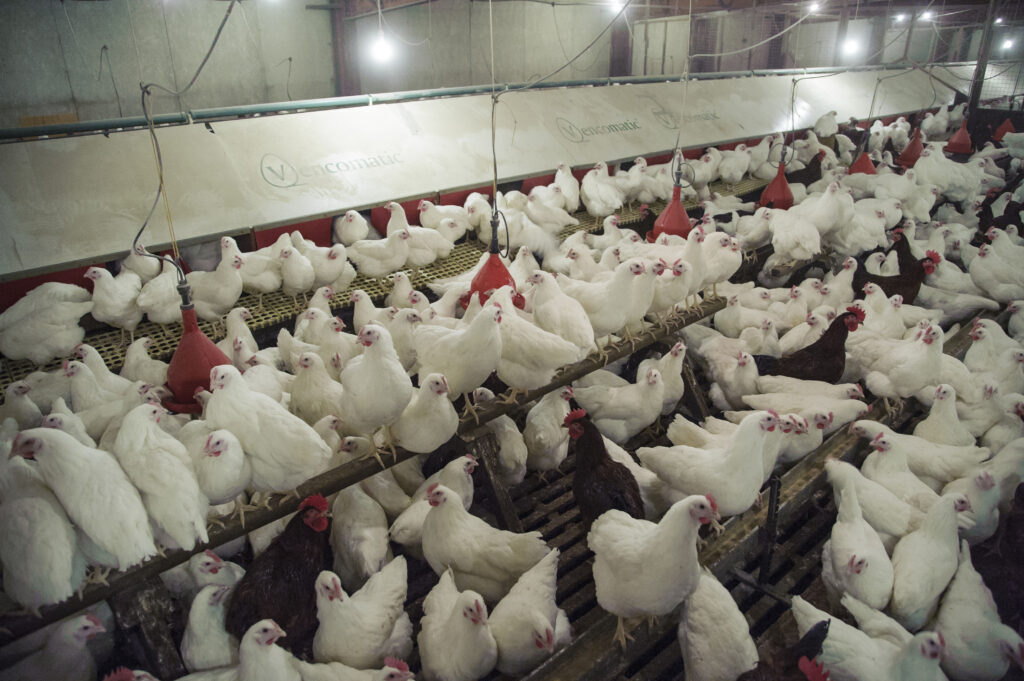
Ireland’s powerful farm lobby has a stake in the outcome of both omnibuses — as do intensive farmers across the bloc. Proposals include a rule that would make it easier to reapprove potentially harmful pesticides, and changes to the Industrial Emissions Directive (IED), which regulates emissions from large pig and poultry farms.
These omnibuses are central to a “simplification” agenda that the EU has advanced in the last two years — and which has led the block to roll back on a number of key safeguards, often without impact assessments.
Ireland has listed simplification as a priority for the presidency, saying that it will work to advance this agenda “extensively” over the next six months. Meanwhile, some of Ireland’s biggest and most active farm lobby groups, including the Irish Farmers Association (IFA) and Irish Creamery Milk Suppliers Association (ICMSA), highlighted simplification in consultation responses they submitted on the presidency late last year.
The IFA, which has consistently sought to weaken environmental policies it views as negatively impacting the sector, called on the Irish Presidency to make an “absolute commitment” to “simplifying rules for farmers on the ground”.
In February, presenting evidence to a parliamentary hearing, the group highlighted the Nitrates Directive and Habitats and Birds Directives as of “immense significance” to the sector, without immediately elaborating further.
The Nitrates Directive — which is designed to protect EU waters from the impacts of agricultural pollution — is of particular importance to Ireland’s intensive dairy farmers.
After heavy lobbying by both the Irish government and industry, the EU granted Ireland its latest derogation in December. The exemption — which makes Ireland an outlier in Europe — means selected farms in Ireland can spread more manure per hectare than would normally be permitted up until a new deadline of 2028, allowing for a continuation of high herd numbers and intensive production.
Research from Irish state scientific agency Teagasc found herds in Ireland’s intensive dairy sector would have to be cut by 14 percent if the derogation was lifted, as farmers would struggle to find ways to dispose of animal manure.
The Habitats and Birds Directives, which protect designated species and habitats and are both under review, play into the nitrates debate, since the EU requires Ireland to show farms are compliant with these laws in order to retain its derogation. Meanwhile, the EU is due to report back on a review of the Nitrates Directive this week — which green groups and politicians fear could open it up to deregulation.
Fintan Kelly, senior land use officer at the Irish Environmental Network, said that the presidency “presents significant environmental risks”, particularly through the simplification agenda, which he says is “better understood as deregulation rather than improved regulation”.
“The ongoing omnibus processes and the proposed streamlining measures [in Ireland’s official list of priorities] risk introducing exemptions that could undermine core EU laws protecting nature and water, along with broader EU efforts to restore nature,” he warned.

Climate Legislation
Ireland is making positive noises about “accelerating climate action” at both EU and international levels.
But the next six months will test whether such commitments have teeth, as Ireland facilitates member state agreement and progress discussions on a number of key files. These include the Emissions Trading System (ETS), the EU’s internal carbon trading system, which sets a carbon price for high-emitting products and is credited with significantly bringing down emissions from the sectors it covers.
The ETS has come under fresh attacks this year from business groups and member states such as Poland, Italy and the Czech Republic. Some farm industry groups have also called for revisions to the legislation, which adds a carbon price to fossil fuel fertilisers.
Campaigners say that in order to drive forward agreement and action on the ETS, Ireland’s credibility would be boosted by showing a clean domestic scorecard. But the country’s own emissions record is patchy, particularly on agriculture.
Latest figures, released this week by Ireland’s Environmental Protection Agency, showed agriculture made up 38.7 percent of the country’s emissions. In total, it achieved a reduction of just 0.2 percent last year, compared with sharper cuts in other sectors.
In another worrying sign for environmental progress, Ireland last month introduced a new Critical Infrastructure Bill, a law aimed at fast-tracking strategically important developments, which relieves authorities of the need to ensure developments hit climate obligations. This June, the government also approved a new Strategic Gas Reserve Bill, opening the way to a new liquid natural gas development in the South of Ireland.
Jerry Mac Evilly, head of policy at Friends of the Earth Ireland, says it’s crucial for Ireland to get its own house in order on climate: “The EU presidency is a significant opportunity for Ireland to show its commitment to climate action and resilience”, he said, but carries “a severe risk of reputational damage” if government actions at home don’t match its rhetoric abroad.
Sophie Nodzenski, a senior campaign strategist from Greenpeace, said Ireland’s agricultural policy — particularly around GWP* — also undercuts its credibility on climate: “Ireland’s flirtation with this unscientific accounting trick raises serious questions about its claim to be an EU climate leader,” she said.
Farming Subsidies
Ireland adopts its presidency at a critical time for negotiations on the EU’s post-2027 budget.
Agriculture will be core to the discussions on the seven-year budget — known as the Multiannual Financial Framework (MFF) — as the Council irons out its stance on the structure and size of the EU’s farming subsidy scheme. The Common Agricultural Policy (CAP) is the budget’s biggest ticket item, representing a third of the EU’s total €1.2 trillion budget.
Ireland’s biggest farming groups, as well as Ireland’s agricultural minister, Martin Heydon, have argued against proposed reductions of 24 percent in Ireland’s CAP. In consultation responses submitted to the Irish government, the Irish Farmers Association (IFA) implies its support for simplification within the subsidy scheme — an aim that is also shared in Ireland’s Presidency priorities.
Meanwhile, both the IFA and the Irish Creamery Milk Suppliers Association called in their consultation submissions for a separation of environmental spending from subsidies that go towards food production, referencing initiatives including a key EU biodiversity protection measure — the Nature Restoration Law — which they say should be funded outside of the CAP.
ICMSA president Dennis Drennan told DeSmog that CAP “should be reserved for the support of farmers who produce meaningful amounts of food” and that a separate fund should be introduced to deliver on “environmental aims and ambitions”.
“We do not accept that our call for ‘simplification’ should be presented as a wish to dispense completely with legitimate requests and qualifications,” Drennan added. “All we have been saying is that for at least a decade, the Commission has been talking about ‘simplification’ while their processes and systems become steadily more cumbersome and complex.”
While many campaigners and experts agree that entirely new efforts, such as the Nature Restoration Law, require new funds in order to succeed, they caution against moves to separate out subsidies for farming from environmental efforts.
Scientists have said it is essential for CAP allowances to be tied to agricultural practices that help, rather than harm, nature, in order for the EU to meet its climate and biodiversity goals. When calculated from farm to fork, food systems are responsible for up to 31 percent of the bloc’s greenhouse gas emissions. Agriculture is also a leading driver of, biodiversity loss, water pollution, and soil degradation.
While the Irish Farmers Association has criticised the “raiding” of the CAP for environmental schemes, campaigners are urging EU decision-makers to take a more joined-up approach to subsidies.
“By rejecting the myth that we must choose between farming and environmental protection, Ireland can support policymaking that helps move the EU towards a food and farming system that is fairer for farmers, healthier for citizens, and more resilient to climate shocks,” said DeFossez of the European Environmental Bureau (EEB).
In practice, this means allotting dedicated funds to support farmers in the transition, she said, in addition to “action on agricultural emissions and pollution, and policymaking that brings food productions back within planetary boundaries”.
“Ireland has promised to be an ‘honest broker’ during its presidency,” Stockwell of IATP told DeSmog. “I hope that that courtesy extends to Europe’s farmers and public — and to not perpetuate industry spin.”
Additional research, reporting and fact-checking by Brigitte Wear
Editing by Phoebe Cooke and Hazel Healy