
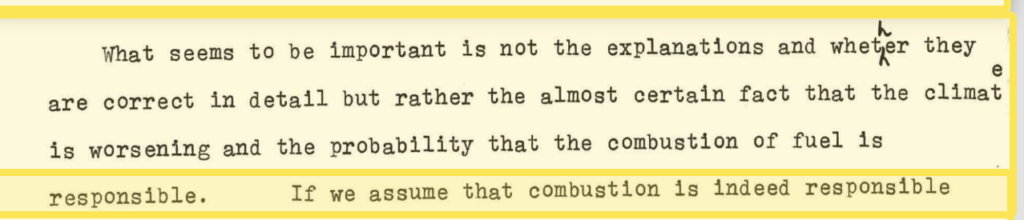
“What seems to be important,” wrote the visionary British scientist, James Lovelock, in June 1966, is “the almost certain fact that the climate is worsening and the probability that the combustion of fuel is responsible.”
Commissioned by Shell, the memo was the first in a series of secret reports by Lovelock for the UK oil giant exploring the “large scale atmospheric effects” of burning fossil fuels.
Sixty years later, evidence of Shell’s early knowledge of the climate impacts of its activities is being thrown into the spotlight by a first-of-its kind civil lawsuit, filed last December at the Royal Court of Justice in London. Lawyers are due to make a further filing against Shell, known as “the particulars” of the case, on Friday.
The lawsuit is being brought by UK law firm Hausfeld on behalf of the victims of Typhoon Rai, a 2021 Category 5 cyclone that devastated parts of the Philippines, killing over 400 people and causing more than $900 million in damages. It alleges that Shell helped to make the typhoon more destructive through the company’s contribution to historic greenhouse gas emissions and funding of climate denial — despite knowing since at least the mid 1960s that the burning of fossil fuels was the primary cause of climate change.
“By proving in court that Shell was at fault for this climate-change driven extreme weather event and the suffering it caused, the case highlights the far-reaching and direct impacts on vulnerable communities worldwide of oil and gas company activities,” said Greg Lascelles, the Hausfeld partner leading the legal team, in a 2025 statement at the time the case was filed.
The case draws on recent advances in attribution science that enable scientists to assess the degree to which climate change has contributed to an extreme weather event, such as a typhoon. Through Shell’s contribution of more than 2.5 percent of historical global greenhouse gas emissions, the suit alleges that Shell contributed to both the likelihood and severity of Typhoon Rai, known locally in the Philippines as Typhoon Odette. It is the first civil claim to link the climate impacts of an oil and gas company’s activities with death, personal injury, and damage to property that has already occurred in the Global South.
Shell has described the allegations as “baseless,” denying that the company had special knowledge of greenhouse gas emissions as a driver of climate change.
“The suggestion that Shell had unique knowledge about climate change is simply not true. The issue and how to tackle it has been part of public discussion and scientific research for many decades,” the company said in a statement on the case.
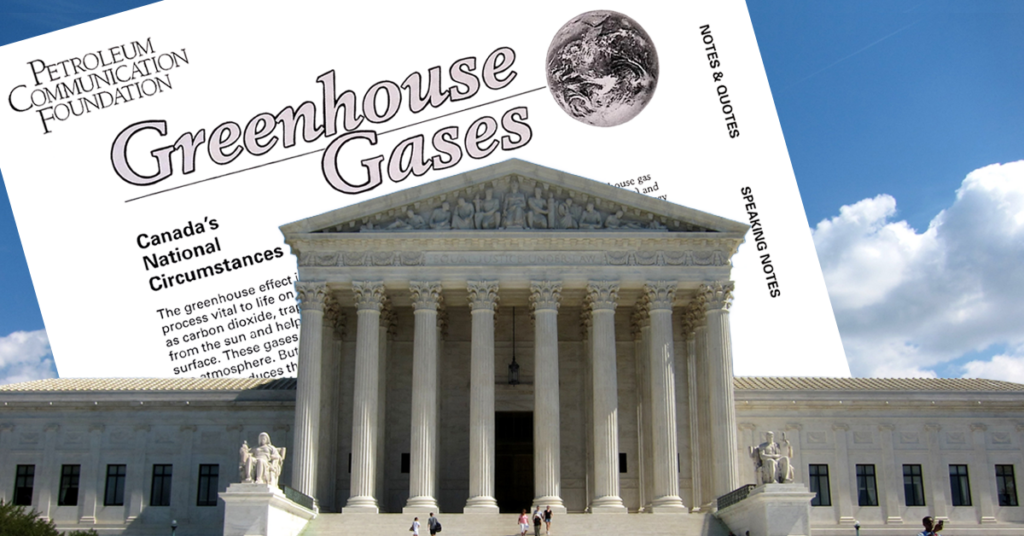
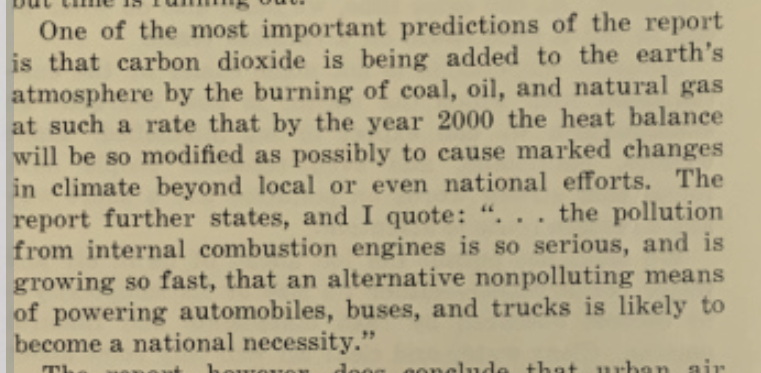
To date, evidence filed against Shell includes warnings about the climate risks of burning fossil fuels that the company received in 1959 and 1965 through its membership in the American Petroleum Institute (API), the largest U.S. oil and gas trade association.
However, further documents from the collected papers of Professor James Lovelock reveal that Shell also received direct warnings about the serious climatic risk of burning fossil fuels through the company’s own internal climate research conducted in the 1960s — research that Shell has never shared with the public.
The thrust of Lovelock’s June 1966 report, “Combustion of Fossil Fuel: Large Scale Atmospheric Effects Part 1. Climatic changes,” has previously been summarised by science historians Sébastien Dutreuil and Leah Aronowsky. DeSmog is now presenting the full report, found in Lovelock’s papers at the UK Science Museum Library and Archives, for the first time in public.
A previously unknown document from the Science Museum’s archives, “Shell Lecture Sept 1985,” features more urgent climate warnings from Lovelock 20 years after he began investigating climate change for Shell. This document, discovered by DeSmog, is also published here for the first time.
‘The Combustion of Fuel Is Responsible’
In the late summer of 1965, Lord Victor Rothschild, the 3rd Baron Rothschild, who served as chairman of Shell Research from 1961-1970, commissioned James Lovelock to produce a series of confidential reports investigating the atmospheric consequences of burning fossil fuels.
A few months earlier, Rothschild, a scientist and former British intelligence officer, had written to Lovelock, who had already been working for Shell for two years as an independent consultant, explaining that there were “many problems cooking in Shell about which we shall need your help.” Among these would be the question of whether burning fossil fuels was reshaping the Earth’s climate.
Following his 1957 invention of the “Electron Capture Detector,” a revolutionary device capable of identifying chemicals, including pollutants, at much lower levels than previous instruments, Lovelock was working part-time for NASA’s Jet Propulsion Laboratory in the U.S. developing ways of identifying alien life forms in space through chemical analysis of planetary atmospheres.
At Shell’s behest, the well-connected Lovelock quickly immersed himself in the subject of large-scale atmospheric pollution, consulting top atmospheric scientists around the world and absorbing the cutting-edge research of institutions such as the U.S.’s National Center for Atmospheric Research in Boulder, Colorado.
Jonathan Watts, author of the 2024 biography The Many Lives of James Lovelock, says it was “a masterstroke” of Rothschild’s to recruit Lovelock. Not only did this give Shell, “a technical advantage,” since Lovelock was the inventor of instruments that had “the greatest sensitivity to human made chemicals in the soil, in water, in air, in everything,” it also gave Shell “an information advantage because Lovelock had connections with the most advanced research organizations in the world, particularly in the U.S.,” says Watts.
Lovelock’s sharing of cutting-edge atmospheric research with Rothschild and Shell also gave the company a critical advantage on a much deeper level, Watts explains. “If you can see what’s coming down the road before anyone else, you can help to shape narratives in public opinion and you can potentially devote resources to overcoming those problems.”
For years, little was known about Lovelock’s climate research for the oil giant. In his 1979 autobiography, Lovelock divulged only that Shell Research had invited him “to consider the possible global consequences of air pollution from such causes as the ever increasing rate of combustion of fossil fuels” but gave no details of the findings he communicated to the oil company.
That changed in 2016 when Dutreuil discovered some of Lovelock’s 1960s reports for Shell on the atmospheric impacts of burning fossil fuels in the archive collection of Lovelock’s papers held at the Science Museum in London. More recently, Watts also analysed the full series of Lovelock’s reports in his biography of the scientist, who died four years ago at the age of 103.
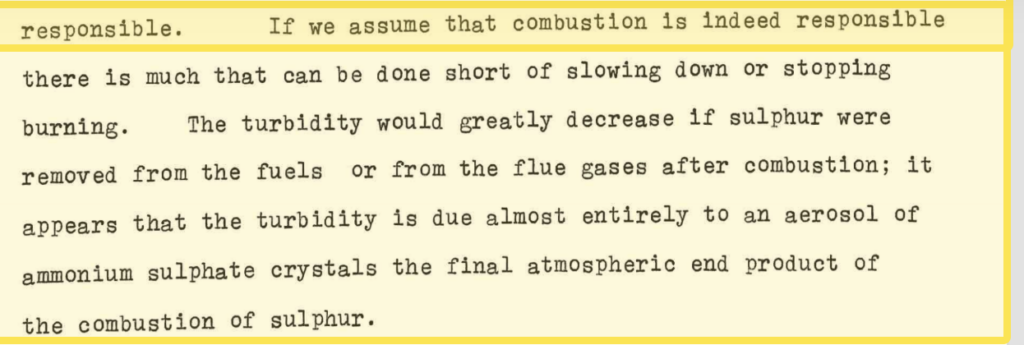
Submitted in June 1966, Lovelock’s first instalment, “Part 1. Climatic changes,” confirmed that pollution from burning fossil fuels was most likely altering the Earth’s climate. “[T]he products of combustion may be responsible for large scale phenomena affecting the whole of the Earth’s atmosphere,” stated Lovelock, before concluding that, despite remaining uncertainties over the precise impacts of different pollutants, it was important to recognise “the almost certain fact that the climate is worsening and the probability that the combustion of fuel is responsible.”
In the memo, Lovelock described a growing scientific understanding of recent changes detected in the Earth’s atmosphere. From 1850 to 1950, scientists had documented an overall rise in global temperatures, usually attributed to a 10 to 15 percent increase in atmospheric carbon dioxide (CO2), “the so-called ‘Greenhouse effect’” due to fossil fuel combustion. In the mid-1960s, however, Lovelock explained, new research was showing a fall in global temperatures, prompting investigations into whether “particulate combustion products,” caused by sulphur dioxide (SO2) pollution also from fossil fuel combustion, might “shield the surface of the Earth from incoming sunlight,” offsetting the warming effect of CO2.
During the late 1960s, fears of a new ice age competed with those of global warming. However, as Lovelock reported in his 1966 memo to Shell, both potential scenarios could be attributed to the combustion of oil, gas, and coal depending on the mix of fossil fuels burned and any steps taken to reduce pollution.
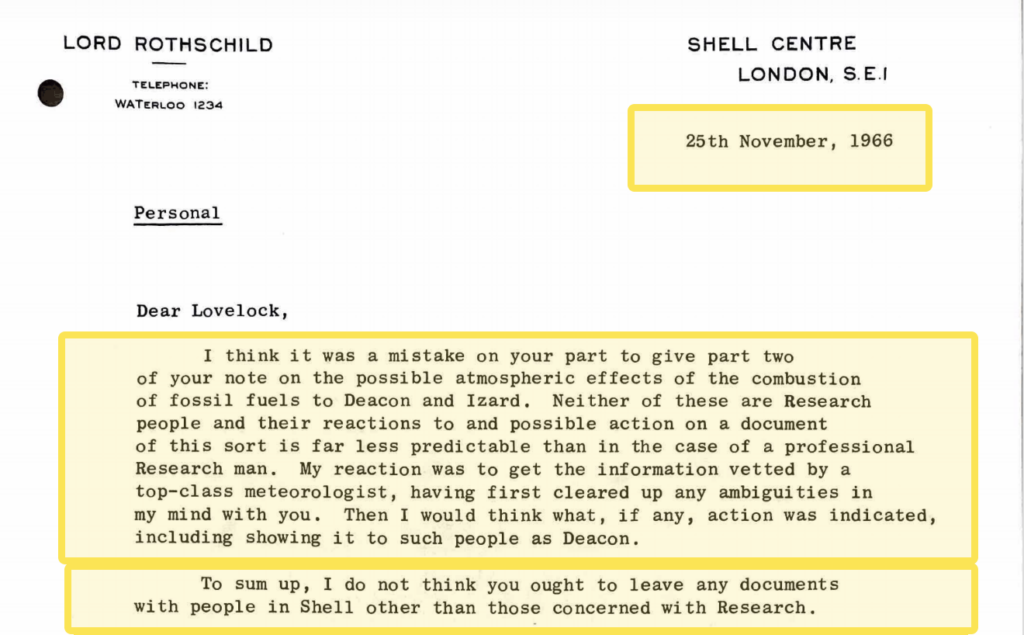
Secrecy was paramount. In the winter of November 1966, Rothschild reprimanded Lovelock for sharing information with Shell employees outside his immediate circle, and in early 1967 expressly forbade him from talking to “non Shell people” about the topic.
As described by Watts, who conducted numerous interviews with Lovelock as well as extensive research of the scientist’s papers, Lovelock produced three more reports for Shell. His second report, “Ecological Effects” dated November 1966, opened up a wholly original way of looking at the problem of atmospheric pollution, prefiguring debates about climate tipping points and boundaries of climate stability.
According to Lovelock, the atmosphere and life on Earth were inextricably linked, forming a system into which the injection “of large amounts of combustion products could reasonably be considered perturbing.” Describing this integral connection between the earth-atmosphere system, Lovelock’s report to Shell warned that even “a small perturbation” of the system could lead to “a temporary irreversible step of great magnitude.”
Lovelock’s third report, “Stock taking,” submitted in May 1967, emphasised that the consequences of burning fossil fuels were potentially “so unpleasant” as to justify further exploration and research. His fourth report, completed at the end of 1968, considered possible solutions such as geoengineering to rebalance a destabilised climate, an attempt Lovelock told Rothschild was “rash” since “the problem is very complex and long term.”
Internally, Shell confirmed the value of Lovelock’s expertise. In a letter, found by Dutreuil, Shell scientist and public relations expert Sidney Epton wrote in 1975 that Lovelock kept the company “abreast of the big picture and long-term trends (among other topics). On this subject, his advice is invaluable to us.”
Shell did not share Lovelock’s reports with the public. Instead, when the scientific consensus that burning fossil fuels was a major driver of rising global temperatures strengthened in the 1980s, Shell responded by funding the Global Climate Coalition — an industry group that pursued multimillion-dollar influence campaigns promoting climate denial and misinformation in the 1990s, with the aim of derailing U.S. ratification of the Kyoto Climate Treaty and other climate initiatives, the case alleges.
According to the plaintiffs in the London lawsuit, Shell “did not disclose to the public what it knew and took active steps to undermine the emerging scientific consensus on the causes and likely effects of anthropogenic climate change.”
“Shell was not as blatant as Exxon in pushing climate denial,” explains Kert Davies, director of special investigations at the U.S.-based Center for Climate Integrity, who has long studied climate denial. “They played their cards closer to their chest.”
“Like Exxon, Shell had a chance to be a leader in the clean energy transition,” says Davies, but instead chose “to challenge the growing scientific consensus and urgency, and slow policy momentum.”
Shell left the GCC in 1998 as public calls for action to address climate change intensified. But the company continued to cast doubt on the role of fossil fuels through organisations such as the API, and to call for the expansion of oil and gas production for the next 20 to 30 years, the lawsuit alleges.
‘The Quest for Gaia’
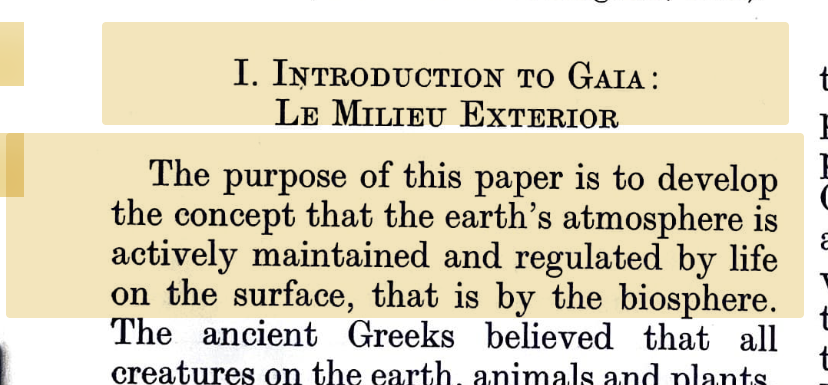
Lovelock’s understanding of the Earth and its atmosphere as a “living system” influenced the development of the paradigm-shifting “Gaia Hypothesis” he conceived in the 1970s with evolutionary biologist Lynn Margulis. Named after the Greek goddess of the Earth — a move suggested by Lovelock’s friend and neighbour, the novelist William Golding, author of Lord of the Flies – Gaia explored the idea that life on Earth actively adapts to regulate and maintain the atmosphere to keep the planet habitable, including potentially absorbing or clearing greenhouse gas pollution.
While initially optimistic, Lovelock’s investigations would later lead him to renounce the idea that the earth-atmosphere system could absorb rising rates of greenhouse gas pollution without jeopardizing life as we know it. Instead, he demonstrated that excessive fossil fuel pollution would push the planet beyond the stable boundaries in which human life had flourished for thousands of years.
In the interim, however, Shell appears to have exploited the usefulness of Lovelock’s hypothesis for downplaying the impact of human activities on the Earth’s climate, historians say. In 1975, Lovelock and Shell’s Sidney Epton co-wrote an article, “The quest for Gaia,” for the New Scientist. The article, featured on the cover of the magazine, propelled the concept to international prominence, popularising the idea of a self-regulating Earth. According to Lovelock, Shell’s Epton was the initiator of the magazine story, and Lovelock frequently gave credit both in public and private “to Shell and to Sidney Epton for unstinting support and encouragement” of his work on the Gaia Hypothesis.
Providing funding for Lovelock’s early testing of the hypothesis, Shell would continue to publicly support Gaia for at least another 20 years. “The Gaia Hypothesis was useful to Shell,” says Dutreuil, “because it tended to make people think that the Earth could regulate pollution.”
Watts agrees, “At the very least it was very convenient for Shell to have a theory that said the Earth would regulate itself, because that was the best argument they could make against regulation by government and society.”
Since then oil companies have used this idea to undermine concerns about greenhouse gas emissions and global heating. For example, a 1995 Exxon advertorial proclaimed “The environment recovers well from both natural and man-made disasters … Mother Nature is pretty successful at taking on human nature.” Today, Shell heavily promotes the company’s investment in ‘nature-based solutions,’ such as tree -planting or the purchase of carbon credits, as evidence that it is committed to tackling the climate crisis, an approach viewed as inadequate by climate scientists.
‘No Longer a Favored Species’
Following a short pause, Lovelock’s work as a consultant for Shell resumed in 1980 and in March 1982 he submitted two more papers, “Casting Pearls before Mink” and “Comments on CO2 in the Atmosphere.” These papers have not yet been discovered but correspondence from Shell in Lovelock’s archives reveals that Shell produced memos based on this work that were intended for “upward transmission within Shell.”
An indication of their content might be found in the newly discovered 1985 “Shell Lecture,” in which Lovelock issued more urgent climate warnings than he had in the 1960s — this time anchored in the revised version of the Gaia concept.

Planetary mechanisms were “trying hard to remove CO2” declared Lovelock, warning that Gaia was not gentle but “very tough.” Whereas the Gaia of ancient mythology was said to have eaten her children, Lovelock cautioned, “we also will be eaten if we transgress too far.” Overloading the Earth’s system with pollution could be a recipe for a “disaster global in scale” he warned, advising that it would be better to treat the Earth “with the respect proper to a living planet” rather than wait “for Gaia to prove that she is alive and to show her displeasure by a change of state to one where we are no longer a favored species.”
Four years after Lovelock’s cautionary words, Shell would become a founding member of the denialist Global Climate Coalition.
Shell did not reply to a request from DeSmog for Lovelock’s papers submitted to Shell in 1982 nor comment on the confidential climate research conducted by Lovelock for the company in the 1960s.
“I think it’s long overdue that Shell’s deep investigation of the impact of its activities came to light,” says Watts. “Hopefully this court case will bring these things to light and look at the company as an institution that has over decades put its own business activities before a wider responsibility to people and the planet.”
Rebecca John is the coauthor of The Fraud of “Clean” Natural Gas: How Big Oil and Gas Created the Myth That Natural Gas Is a Climate Solution published in July 2026 by the Center for Climate Integrity, an organisation mentioned in this story.