

Crypto billionaires Ben Delo and Christopher Harborne each recently piled £36 million into Reform UK, Nigel Farage’s political party.
The story amplified recent scandals about the party’s donors, with scrutiny mounting over the funding of Farage and his outfit.
In light of these recent developments, DeSmog has taken a closer look at the financial interests of Reform’s donors, to understand which sectors have been backing the party and why they’re interested in bringing about a Farage government.
Delo and Harborne made their money from the cryptocurrency sector, but DeSmog’s analysis shows that they – and Reform’s other major donors – have business ties spanning far beyond this one industry.
Farage’s party has taken substantial amounts of money from members of the Sunday Times Rich List, fossil fuel interests, the landed gentry, property developers, offshore investors, and has been forced to return large sums to those who aren’t allowed to donate to UK parties.
Meanwhile, campaigners and MPs continue to push Andy Burnham’s Labour government to stop a few super wealthy individuals from bankrolling our political system.
The Major Players
Excluding Reform’s new £72 million windfall, more than 72 percent of all recorded donations to the party since the 2024 election have come from just three people, including Delo and Harborne.
Harborne, who has lived in Thailand for 30 years and is worth £18 billion, is comfortably Reform’s biggest backer, having given £15 million to the party since the last general election (£47 million including his recent donation) and £25 million (£57 million) since the party’s launch in 2019.
Harborne is also responsible for a controversial £5 million undeclared personal gift to Farage prior to the 2024 general election, which is the subject of an investigation by the parliamentary standards commissioner.
Delo, co-founder and former executive of the crypto trading platform BitMEX, is behind a further £8 million, while venture capitalist David Grainger has given £1.4 million.
Major donations have also been received from Reform treasurer Nick Candy, and telecoms and fintech magnate Bassim Haidar, who have collectively donated a further £1.7 million since the last general election.
Billionaire venture capitalist Sasan Ghandehari has also pledged to donate millions to the party. Though these sums have yet to materialise, he has already given over £50,000 to Farage personally.
The Crypto Barons
If the new Delo and Harborne donations are deemed to be legal, Reform will have received 90 percent of its funding since the last general election from those with ties to the crypto industry.
Harborne is a shareholder in Tether, the world’s largest ‘stablecoin’ provider, which is based in El Salvador. Tether is currently seeking an injection of private capital that would increase its value up to $500 billion – making Harborne one of the richest men in the world.
The company has ties to Donald Trump’s U.S. administration and has reportedly benefitted from the crypto-friendly policies of his regime.
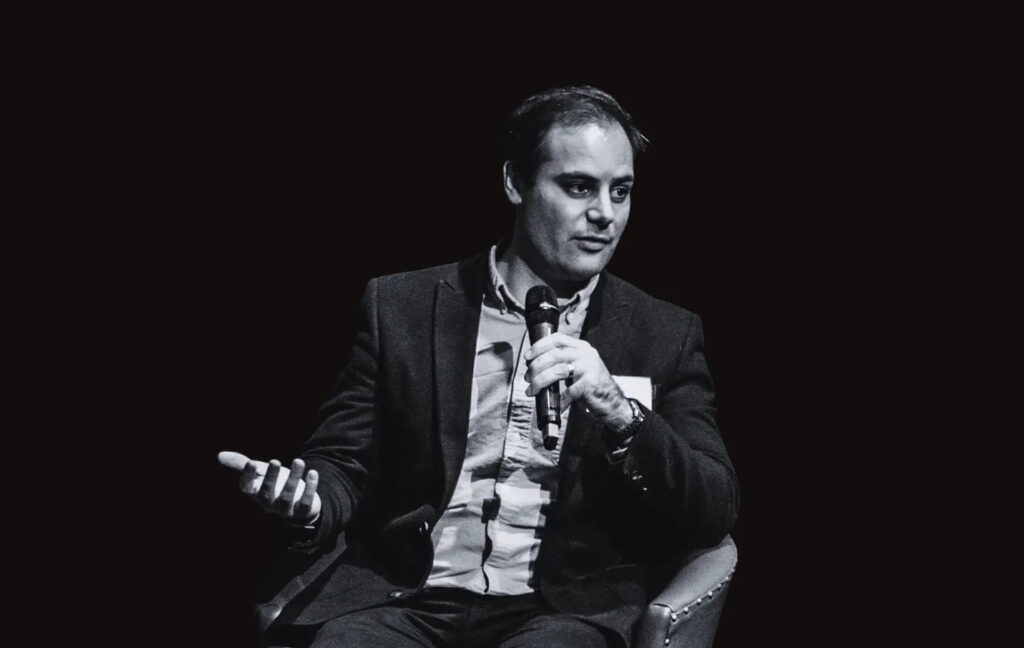
Delo, meanwhile, is one of the co-founders of the crypto trading platform BitMEX. He was one of those who pled guilty to Bank Secrecy Act violations for failing to establish and maintain an anti-money laundering scheme at the company. Delo was fined $10 million and served 30 months’ probation in Hong Kong, before later being pardoned by Trump. BitMEX was ultimately fined £100 million.
Credit:
Jkhildreth / Wikimedia Commons (CC-BY-SA 4.0)
But they aren’t the only Reform donors with an interest in the crypto industry. Farage’s backers also include Maria Rost, behind some £130,000 across nine donations to the party, who is understood to be the wife of U.S. crypto investor John Rost, as well as Oscar Townsley, founder of Bitcoin derivatives trading platform A1X, and London-based investor Simon William Smith.
Farage has repeatedly lobbied for the industry, promising to bring about a “crypto revolution” if he becomes prime minister. He announced flagship proposals for unleashing the sector at the Bitcoin conference in May 2025 in Las Vegas, including tax breaks and government support, although the document has now vanished from the party’s website.
Farage also lobbied the Bank of England to drop plans for a state-backed stablecoin, a move that would suit Harborne – his most generous patron – by blocking a rival to Tether.
Reform was until recently the only major political party in the UK to accept donations via cryptocurrencies, having been accused of using a third party to turn crypto into cash and obscuring the original funding source.
Burnham’s predecessor Keir Starmer introduced a temporary moratorium on crypto donations earlier this year, which campaigners say should become a permanent ban.
Offshore Interests
As previously reported by DeSmog, a large part of Reform’s funding comes from those with offshore business interests.
Since the last general election, 57 percent of its income has been donated by individuals and companies featured in the Offshore Leaks database, which details information about more than 810,000 offshore companies, foundations, and trusts.
A large number of the party’s donors are also international investors – people or companies with significant financial interests abroad. In the second quarter of 2026, prior to the £72 million windfall, Reform received £5 million from 17 different international investors – including a Monaco-based former Lehman Brothers executive, an investment firm in business with the UAE, and a New York-based asset management firm linked to the owners of Chelsea Football Club.
The party has been embroiled in controversy after an undercover investigation by Verbatim Investigations, broadcast by Channel 4 in September, appeared to show the party conspiring to accept donations from foreign sources.
Two of Reform’s most senior figures have now resigned following the documentary, though both deny wrongdoing – as does the party. The Metropolitan Police has launched an investigation into whether any laws were broken.
Farage has previously said that he wants to win back high net worth individuals to the UK through a £250,000 “Britannia Card” that would allow wealthy foreigners to buy a 10-year residency permit and enter a special tax regime. Labour has called the policy a “billionaires bonanza” and tax experts have estimated it would cost the UK £35 billion over five years in lost revenue.
Fossil Fuel Interests
As reported by DeSmog in April, Reform has received two-thirds of its funding to date, not including the £72 million, from fossil fuel interests. A further £2.4 million has been donated by individuals who have publicly disputed basic scientific facts about climate change.
Harborne owns AML Global, which supplies aviation and maritime fuel to a distribution network that includes “main and regional oil companies”, according to its website.
The price of jet fuel has spiralled since the start of the U.S.-Israeli war with Iran, which would benefit Harborne’s business interests.
Although Harborne doesn’t deny climate science, and recently called the issue an “existential threat”, Reform’s senior figures frequently dispute the contribution of carbon dioxide to global warming and support the mass expansion of fossil fuel production in the UK.
Fellow Reform donor Jeremy Hosking had $440.8 million (around £326.5 million) invested in oil and gas companies via his hedge fund Hosking Partners as of March – an increase of more than 50 percent from the previous three months.
Meanwhile, Reform-controlled councils have been axing net zero commitments and stating their intention to withdraw from climate emergency declarations. Farage has claimed it’s “bonkers” for carbon dioxide to be considered a pollutant.
Property Developers and Financiers
More than half (55 percent) of Reform’s corporate donors are connected to the construction, property, and development industries, which would stand to benefit substantially from the party’s policies. Of the 40 companies recorded as having donated to the party before June this year, 22 were involved in this sector.
Reform’s 2024 manifesto promised to “unleash” housebuilding across the country and “restore landlords’ rights” by reducing their taxes. Reform’s housing spokesperson and deputy leader Richard Tice is a property industry millionaire, having run the Sunley Group, a company founded by his grandfather.
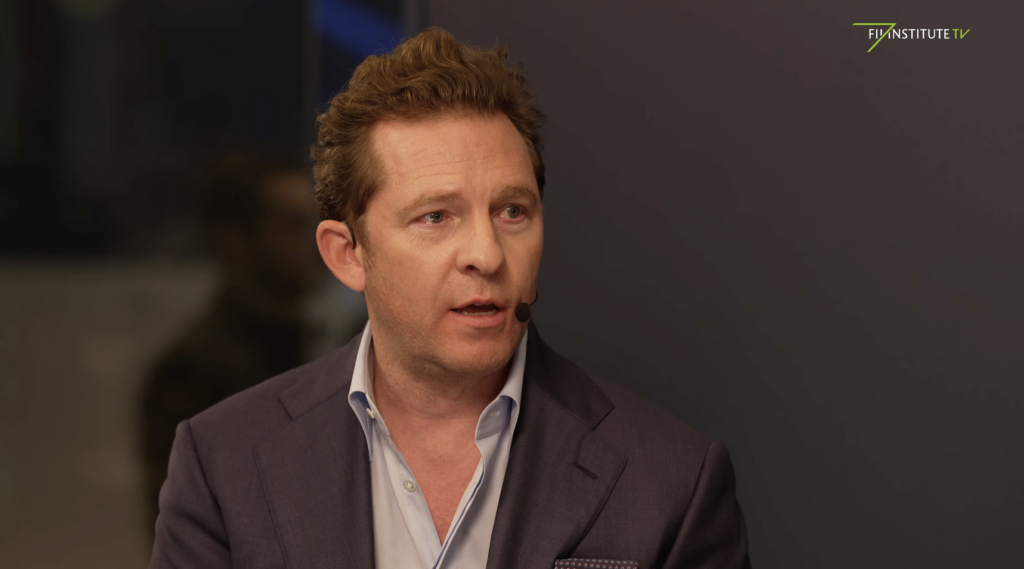
Reform treasurer Nick Candy is also a property magnate, having made his money selling luxury homes to the super rich. Candy recently sold his Chelsea mansion for £265 million – the most expensive residential property in UK history.
The party has also received extensive funding from financiers. Reform’s donors include hedge fund manager Johan Christofferson, who has given £200,000 to the party, the “vulture fund” Greybull Capital, and the disgraced City of London titan Crispin Odey.
Although Farage has threatened to impose higher taxes on banks, he has also promised to deregulate the sector – including by removing regulation introduced after the 2008 financial crash.
Credit: FII Institute / YouTube
The Rich List
As recently reported by DeSmog, Reform’s donors include aristocratic families, the owners of exclusive London clubs, peers, and members of the landed gentry.
The annual Sunday Times Rich List acts as “the definitive guide to the wealth of the UK’s richest people”, cataloguing the country’s 350 most affluent individuals and families. The entries in the 2026 edition share a combined wealth of £784 billion. Nearly a third of them no longer live on the British mainland.
Four of Reform’s donors appear in this year’s list, two of whom appear in the top 10.
Harborne ranks at number six, while the Reuben family – another Reform donor – sits at number two. The Reubens have donated to Reform through a private investment firm – Investors in Private Capital Limited – which is ultimately controlled by Omaha Business Holdings Corp, owned by the family and based in the British Virgin Islands, a tax haven.
Reform’s donor list also includes a number of old money backers. Among them is Fiona Cottrell – the daughter of Rupert Watson, 3rd Baron Manton. Under her maiden name, Fiona Watson, she was a former glamour model and one-time girlfriend of King Charles III when he was the Prince of Wales.
Cottrell has given £500,000 to Reform via Britain Means Business, a company owned by the party’s deputy leader, Richard Tice, and £750,000 directly to the party. The Metropolitan Police is currently investigating the majority of these donations. Cottrell has repeatedly declined to comment when approached by media outlets.
Fiona’s son George Cottrell – nicknamed “Posh George” – is part of Farage’s inner cadre, having been UKIP’s head of fundraising and later Farage’s chief of staff. George, who was previously convicted of wire fraud after being arrested by undercover U.S. agents while attending the 2016 National Republican Convention with Farage, has also provided direct financial support to the Reform premier.
Cottrell helped to fund Farage’s anti-immigration campaign videos in 2023 and 2024, supplied him with security, and allowed the Reform leader to use an office in his five-storey London townhouse, which overlooks Buckingham Palace. Farage didn’t declare these gifts, and falsely claimed that he hasn’t received any support from George since being elected to Parliament.
Reform and policy advisers associated with the party have proposed reducing taxes for the wealthiest, paid for by dramatic reductions in state benefits for lower-paid workers and the disabled.
Impermissible Donors
Another feature of Reform’s fundraising record is the vast number of impermissible donors who have attempted to give money to the party over its relatively short existence.
Reform has been forced to return donations worth more than £295,000, on 83 occasions, since its founding in 2019. Farage’s party had to reject more unlawful donations in 2025 than any other party, including donations from Monaco, Jersey, and Germany. The party ultimately had to give back £200,000, and their benefactors made up 18 of the 23 donors turned away by UK politicians or parties during the year.
Labour’s Response
Labour is in the process of introducing a new law that would set a £100,000 annual limit on the amount that foreign donors can give to political parties.
It’s unclear if Delo and Harborne’s latest donations will fall foul of the new rules, which are currently being debated by Parliament – given they have, at least until recently, been living in Hong Kong and Thailand respectively.
However, in the meantime, campaigners and MPs are urging Burnham’s administration to strengthen the legislation by introducing a £100,000-a-year cap on all donations – including from those based in the UK.
The government has been facing pressure from the trade union movement not to introduce a blanket cap, which would limit its extensive financial contributions to the Labour Party.
After donating his latest £36 million, Delo said that he wants to create “a level playing field” between Reform and other major political parties. However, the data shows that his and Harborne’s donations would tip the scales heavily in Reform’s favour.
Last year’s accounts for political parties, published by the Electoral Commission, revealed that Labour received £44.6 million, the Conservatives £30.9 million, and Reform £31.9 million. If Reform is able to receive the full £72 million, its 2026 income would likely be far ahead of the other parties.
Delo also cited Labour’s income from trade unions as a reason for his philanthropy. However, since 2020, Labour has received almost £43 million from the unions – whereas, in roughly the same period, Delo and Harborne will have given over £100 million to Reform.
What’s more, trade unions raise money from individual workers’ membership fees. The Trade Union Congress, a federation of trade unions across the UK, represents roughly 6.6 million people.
Speaking at the annual TUC conference in Brighton in September, its leader Paul Nowak said: “The evidence is clear: Reform UK is a party for sale. Nigel Farage is a politician for sale. And given half the chance, they’d sell our country down the river.
“Make no mistake, this is a crisis for our democracy. We cannot allow our political system to be captured by corporate interests.”
He said there was no similarity “between care workers chipping in a few quid a year through their union and a party bought and paid for by billionaires” – adding: “We need a proper conversation about how we clean up our politics that doesn’t push workers to the margins – but does stop the super-rich corrupting our politics.”