

Citizens battling a data center in Georgia are within reach of victory after a judge ordered a referendum on the proposed project, following almost two years of grassroots organizing and a five-month petition campaign to put the data center on the ballot.
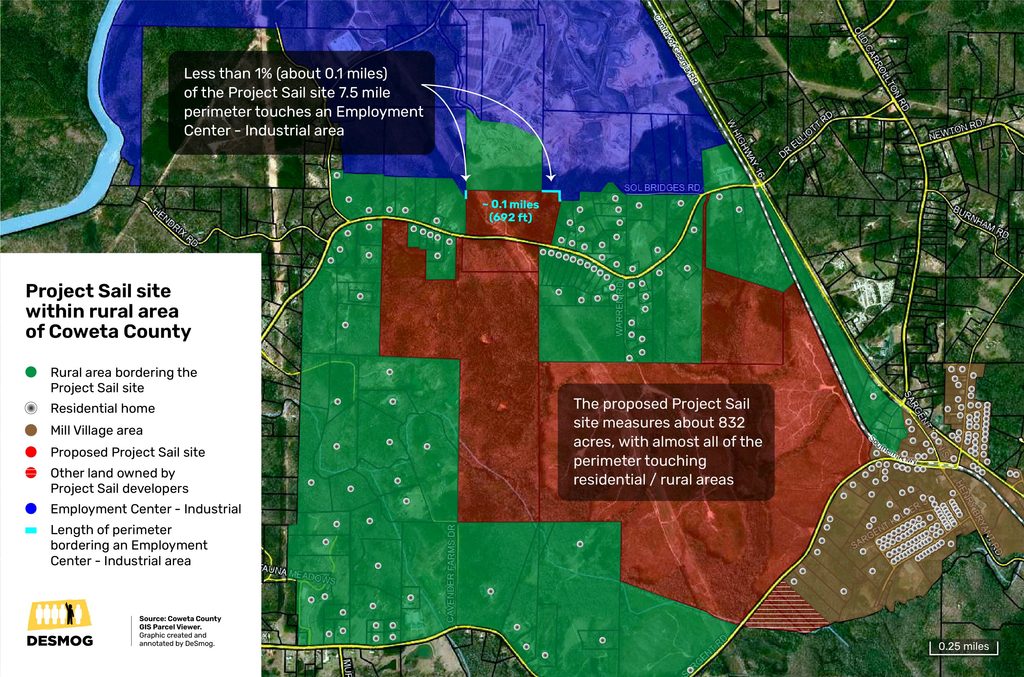
The referendum, scheduled on Jan. 12, 2027, will offer a choice to reverse Project Sail — a roughly 830-acre computing complex backed by San Francisco-based real estate giant Prologis and local developer Atlas Development, LLC — which is planned in a rural area about 40 miles southwest of downtown Atlanta. The ballot measure also includes a provision to completely ban data centers in Coweta County.
“This happened because people stood in parking lots, on sidewalks, and at local events collecting signatures in the summer heat,” Donna Boles, a Citizens for Rural Coweta volunteer, said in a statement. “This vote belongs to them.”

The reporting for this story was supported by the Fund for Investigative Journalism.
The Jan. 12 vote will come just over two years after Coweta County residents first learned about Project Sail via a land use application posted online — sparking a grassroots movement to stop the project. DeSmog revealed last September that Prologis had been holding confidential meetings with Coweta County officials six months before the company announced its involvement in the project in May 2025. Georgia Power, the state’s main utility company, also participated in at least one of these meetings.
The closed-door discussions reflected a nationwide pattern where smaller real estate developers and consulting firms such as Atlas Development do the groundwork,often hidden from the public, to obtain zoning approvals for multinational corporations invested in massive data center projects. Public records requests filed by DeSmog showed how developers subsequently sought to influence new Coweta County data center regulations, which were adopted in December 2025, and included several of the provisions pushed by project proponents.
In April of this year, Coweta County commissioners voted 3-2 to approve Atlas Development’s application to rezone about 830 acres of rural conservation land for Project Sail, despite the widespread local opposition. In early May, residents filed a lawsuit appealing the county’s zoning decision, which has yet to be decided. Later that month, the Citizens for Rural Coweta community group launched a petition campaign to reverse the decision via a referendum.
“This is what democracy’s about,” said Coweta County resident Steve Swope, who supported the petition campaign. “The people consistently said we didn’t want it, the commissioners voted for it anyway, and now we come back and say: We get the final word.”
Georgia law allows citizens of counties of more than 50,000 people to spark a referendum on county government decisions if at least 10 percent of registered county voters sign a petition in support of a vote. In the case of Coweta County, the threshold to meet for local opponents of Project Sail and other planned data center projects in the county was just under 11,000 signatures out of 109,730 registered voters from the 2025 general election.
Petition organizers submitted more than 14,000 signatures in October, with more than 11,000 verified — sparking the referendum, which was validated by the Coweta County Probate Court on November 23.
This is only the third referendum in Georgia’s history that aimed at overturning a county government decision. The first, held in 2022, saw residents in coastal Camden County reverse a county land sale to build a spaceport.
The second was by a Gullah Geechee community, founded by descendants of enslaved people in McIntosh County, also in coastal Georgia, who voted earlier this year to reverse a zoning change which would have allowed large vacation homes in the historic community. That referendum was backed by a ruling from the Georgia Supreme Court in 2025, which affirmed citizens’ right to vote on the zoning decision, after county officials delayed the vote through a lawsuit.
The Coweta County referendum approval follows Nov. 4 U.S. midterm elections where dozens of communities across several states voted for ballot measures restricting zoning for data centers or banning them entirely. The ballots reflected a growing nationwide backlash against the artificial intelligence (AI) industry, which is driving demand for increasingly larger data centers and power infrastructure to run them. The development rush is increasing demand for new natural gas power plants, threatening to generate tens of millions more tonnes of planet-heating carbon dioxide emissions each year by 2030.
Coweta County has become a nucleus of data center opposition on the outskirts of greater Atlanta, with residents there opposing several hyperscale data center complexes since early 2025, including Project Sail. Infrastructure expansion linked to new data centers across Georgia includes new high-voltage power lines planned by utility Georgia Power, with dozens of people losing their houses to eminent domain in Coweta and neighboring counties.
Many supporters of Citizens for Rural Coweta say that they are not against data centers, but do not want them built in rural areas. Prologis, the company backing Project Sail, says on a project-specific website that it, “will generate new tax revenue to support local priorities — like schools, safer roads and emergency services — while honoring the values that make Coweta County special.”
Some elected officials have taken steps to halt the data center construction rush. Earlier this year, the city of Palmetto in Coweta County became one of the first municipalities in Georgia to ban new data centers after local residents organized to oppose a planned data center called Project Peach in the town. Coweta County commissioners approved Project Peach in April 2025 — before the town’s ban — but the project lost its zoning status last month after it failed to secure a contract for electricity at the Palmetto site.
Project Peach opponents supported Citizens for Rural Coweta’s referendum petition campaign in Coweta County, which saw volunteers collecting signatures in public parks, inside small businesses, and at local events. Citizens for Rural Coweta submitted the referendum petition on Oct.16.
Atlas Development asked the Coweta County Probate Court on Oct. 23 to reject the petition to reverse Coweta County’s zoning decision, but the court denied the request, court filings show.
Atlas Development, Prologis, and Coweta County did not respond to requests for comment by the time of publication.