New NASA satellite map pinpoints worldwide sea level rise

authordefault
on

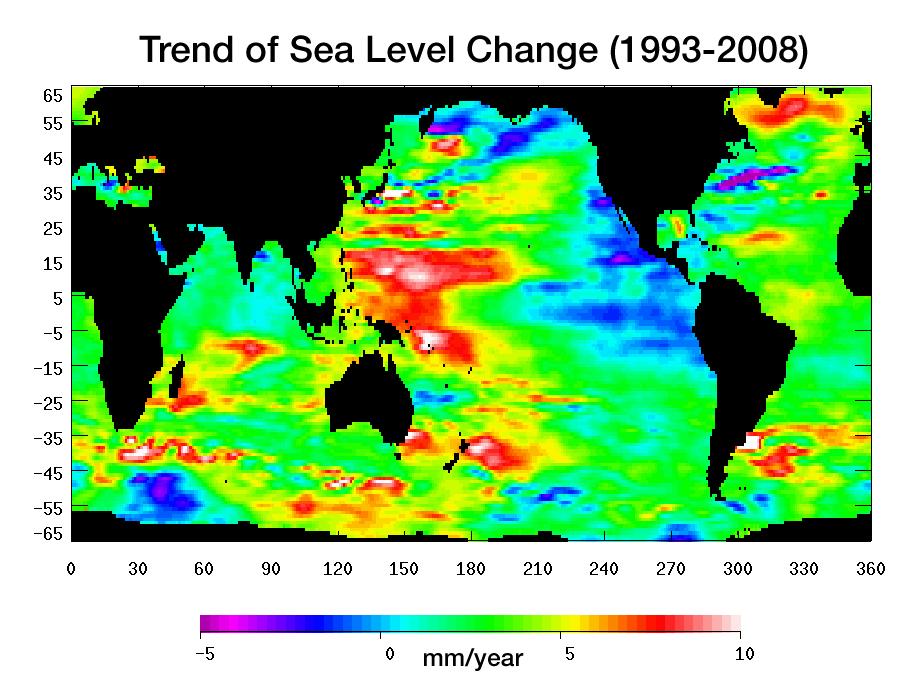
According to new data analysis from the Topex/Poseidon and Jason-1 satellites, NASA is reporting that โ€œwarming water and melting land ice have raised global mean sea level 4.5 centimeters (1.7 inches) from 1993 toย 2008.โ€

Here’s the image showing where and by how much the world’s oceans have changed over the last 15ย years.

Light blue indicates areas in which sea level has remained relatively constant since 1993. White, red, and yellow are regions where sea levels have risen the most rapidlyโ€“up to 10 millimeters per yearโ€“and which contain the most heat. Green areas have also risen, but more moderately. Purple and dark blue show where sea levels have dropped, due to coolerย water.

ย (Click image toย enlarge)

This image was made possible by the detailed record of sea surface height measurements begun by Topex/Poseidon and continued by Jason-1. The recently launched Ocean Surface Topography Mission on the Jason-2 satellite (OSTM/Jason-2) will soon take over this responsibility fromย Jason-1.

ย 


ย 

Want to do more? Here are few simple and quick things you can do to help fight climateย change:

Sign the petition to Save the Massive Canadian Borealย forest.

Calculate your carbon footprint and then work to reduceย it.

Stay informed. Sign up for DeSmog’s Weekly Climate Change newsletter (no spam, we promise!)

Related Posts

on

Federal lawsuit claiming local officials illegally pushed polluting industries into Black communities reaches new stage.

Federal lawsuit claiming local officials illegally pushed polluting industries into Black communities reaches new stage.
on

Record LNG exports to Europe pushing up prices for U.S. consumers even more than forecast.

Record LNG exports to Europe pushing up prices for U.S. consumers even more than forecast.
on

Off-shore industrial boats illegally harvest thousands of tonnes of small fish vital to the marine food web in Guinea-Bissau, a DeSmog investigation with The Guardian reveals.

Off-shore industrial boats illegally harvest thousands of tonnes of small fish vital to the marine food web in Guinea-Bissau, a DeSmog investigation with The Guardian reveals.
Analysis
on

First Nations are furious, environmentalists feel betrayed, oil companies are demanding more, and the clock is ticking.

First Nations are furious, environmentalists feel betrayed, oil companies are demanding more, and the clock is ticking.