
Senior figures in Reform UK have been developing close connections to the United Arab Emirates (UAE), an authoritarian, monarchic state with vast fossil fuel resources.
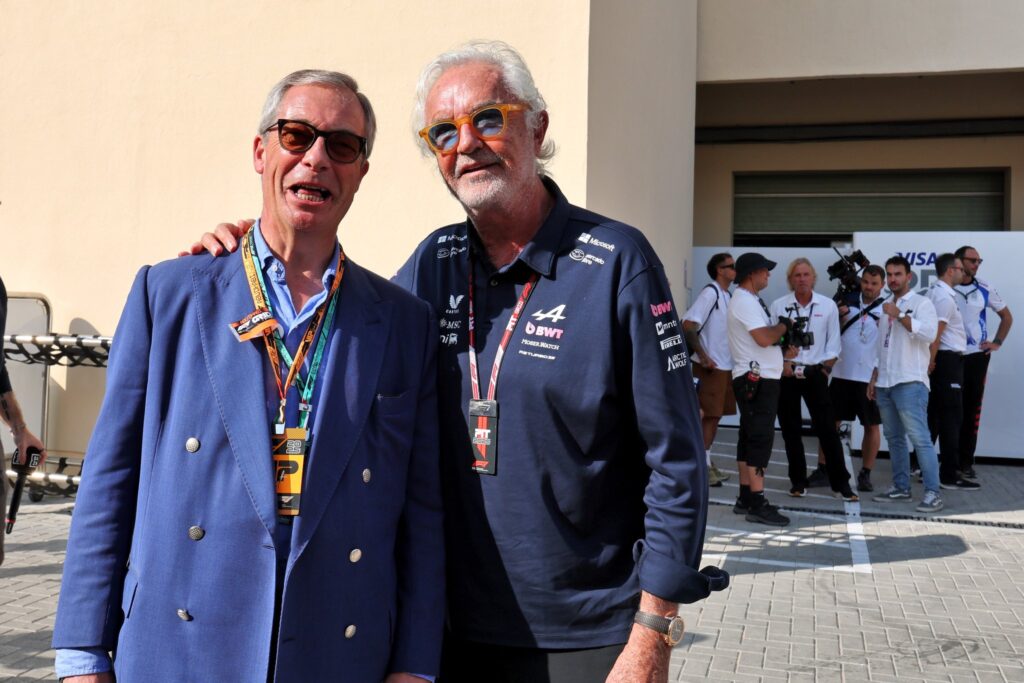
New records show that party leader Nigel Farage was funded to attend the Formula 1 Grand Prix in Abu Dhabi in December by the city’s government.
The trip, for Farage and a “non-staff member”, cost £10,000 and included meetings in the UAE capital, according to Farage’s register of interests.
The Financial Times has reported that these meetings took place with “senior Emirati officials” and were arranged by Reform donor and treasurer Nick Candy. The Abu Dhabi emirate – one of seven in the UAE – is led by UAE President Sheikh Mohamed bin Zayed Al Nahyan.
Candy, a billionaire luxury property developer and former Conservative Party backer, is in business with a real estate firm owned by Abu Dhabi that has ties to the UAE’s national oil company.
He has donated almost £1 million to Nigel Farage’s party in the past year, having been appointed as Reform treasurer in December 2024.
Just a few months earlier, in October 2024, his firm Candy Capital entered into a “strategic joint venture partnership” with Modon Holding, chaired by a board member of the Abu Dhabi National Oil Company (ADNOC).
Reform campaigns for new fossil fuel exploration, stating that the UK’s clean energy policies should be scrapped.
“Given the party’s growing traction, Reform cosying up to an authoritarian petrostate should worry us all,” said Jon Noronha-Gant, a senior investigator at Global Witness.
“The UAE has a huge vested interest in pushing planet-wrecking oil and gas – it sought $100 billion worth of fossil fuel deals the year it hosted COP [2023] – and that’s to say nothing of its dismal human rights record.
“This is not the state or the money that we want influencing our politicians.”
Last month, the Labour government launched an independent review into foreign financial interference in UK politics, following the jailing of Nathan Gill, Reform’s former leader in Wales, for taking bribes from an agent of the Russian state.
Modon Holding is 85 percent owned by L’imad Holding, a company owned by the Abu Dhabi government.
Modon’s chairman Jassem Mohammed Bu Ataba Al Zaabi has several official roles in the UAE, including serving as chairman of Abu Dhabi’s department of finance, and vice president of the UAE central bank.
He is also on the board of ADNOC, the UAE’s state oil company. Oil and gas accounts for 30 percent of the UAE economy and is its historic source of wealth.
Reform received 92 percent of its donations between the 2019 and 2024 UK elections from oil investors, major polluters, and climate science deniers, while Candy has claimed the party is actively raising money from oil executives.
The party has also praised U.S. President Donald Trump’s “drill baby drill” agenda. The Trump administration recently captured Venezuela’s President Nicolás Maduro and pledged that the U.S. oil industry will “go in, spend billions of dollars, fix the badly broken infrastructure and start making money for the country”.
Steve Goodrich, head of research and investigations at Transparency UK, told DeSmog: “Currently there are no limits on political contributions, with some parties heavily reliant on a small number of very wealthy donors. When those holding public office become dependent on just a few wealthy backers, it increases the risk they make decisions based on their benefactors’ private interests rather than the public good.
“The forthcoming Elections Bill is an opportunity for Parliament to take the corrupting influence of big money out of UK politics.”
Candy Capital declined to comment. Reform and Modon Holding did not respond.
Reform’s UAE Praise
Candy and other Reform figures have frequently praised the UAE, a monarchy and petrostate accused of human rights abuses at home and abroad.
In an article last January for the website Arabian Gulf Business Insight, Candy praised the UAE as an attractive place for “ultra high net worth” investors.
“Wealth mobility has reshaped the way the global elite think about where to live, work and invest – and all signs point to the Middle East, particularly Dubai and Abu Dhabi, as the new frontier,” he wrote. “Having invested in the UAE’s thriving property market, I see this as just the beginning of the Emirates’ transformation into a global epicentre for success.”
Candy praised the UAE’s crime prevention and “robust law enforcement”, adding: “Coupled with a high standard of living, excellent healthcare and top-tier schools, the UAE offers a lifestyle that few other locations can match.”
Candy also lauded “the wisdom and visionary nature of the UAE’s leadership”, writing that “the quality of government officials is mind-blowing”. By contrast, he said that Western countries are ruled by “second-tier individuals” who “allow political agendas to get in the way of what is best for the country”.
Reform deputy leader Richard Tice has said he travels to the UAE “every six to eight weeks” to visit his partner, Telegraph columnist Isabel Oakeshott, who moved to Dubai in January 2025.
In an interview with Arabian Business in October, Tice praised the UAE for its sense of national pride, work ethic, law and order, integration of migrants, and energy sector, while stating that the UK is “decadent” and “going bust”.
He failed to mention that migrant workers face “widespread abuses” in the UAE, according to Human Rights Watch, including wage theft and passport confiscation. Tice also told the BBC that the UK’s “basic values” are “not working”, when asked why he speaks so favourably about the UAE.
Senior Reform figures have frequently contrasted the UK with the UAE, portraying the latter as a booming economy and an aspirational place to live compared to Britain.
Farage has repeatedly said Labour’s latest budget will lead to an “exodus” to Dubai, while the party’s head of policy Zia Yusuf and Durham councillor Darren Grimes have called Labour Chancellor Rachel Reeves “Dubai real estate agent of the year” after she increased taxes on super-wealthy home-owners.
The UAE – an Arab Muslim dictatorship partly governed by Sharia law where the population is 90 percent migrant workers – doesn’t appear to conform with Reform’s policies and espoused beliefs.
The party has called for the mass deportation of immigrants and, before the 2024 election, Farage suggested young Muslims don’t share “British values”. Reform MP Sarah Pochin has called for a ban on the burqa, Islamic clothing worn by Muslim women.
And, while Farage has called for the UK to “take back control” of its democracy, the UAE doesn’t hold popular elections. There are no political parties, critics of the government are often jailed, women face unequal treatment, and its penal code allows for the arrest of lesbian, gay, bisexual, and transgender (LGBT) campaigners.
The UAE and the Right
The ties between the UAE and right-wing figures in the West are growing.
The UAE is home to investment firm Legatum Group, a co-owner of GB News, which has paid Farage £500,000 since he was elected to Parliament in July 2024.
GB News’s other co-owner, Paul Marshall, opened an Abu Dhabi office for his hedge fund Marshall Wace in December 2024.
This December, UAE government officials reportedly met with far-right activist Tommy Robinson, who led an anti-migrant march in London in September.
The UK government also intervened in 2024 to block attempts by a consortium backed by Abu Dhabi from buying the Telegraph Media Group.
However, successive governments – including the current Labour administration – have sought to strengthen ties with the UAE.
Prime Minister Keir Starmer hosted UAE president Sheikh Mohamed bin Zayed Al Nahyan in Downing Street in November. In the meeting, Starmer spoke of “the value of a closer relationship between the UK and the UAE”.
The UAE has pledged to invest £10 billion in “priority” UK industries.

A version of this article has been published by The New World