China registered double-digit growth for the fourth consequetive year in 2006, the London-based Financial Times says, causing tension between the drive for development and environmental protection.
Ma Kai, head of China’s National Development and Reform Commission, said although the growth rate had dropped to 10.5 per cent from more than 11 per cent a year earlier, it was “still too fast and the cost is too large.”
“The contradiction between the [exploitation of] resources and the environment is increasingly serious,” he said.
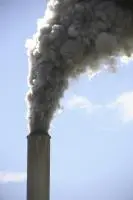
Just this week the State Environmental Protection Agency threatened to close scores of plants, some run by powerful state companies, unless they complied with pollution rules. SEPA is a relatively weak agency that struggles to enforce its writ in large parts of the country but has in the past used publicity to publicise offenders to bring them to heel.
The Financial Times said SEPA’s campaign may already be having an impact; Datang International Power Generation, one of the country’s largest power producers, announced yesterday it would begin to close five 50 megawatt coal-fired stations in Tangshan, a steelmaking centre near Beijing.
Until recently, local officials have had little incentive to enforce pollution laws as their performance has been judged on how fast their district’s economy grows.
But the Communist party is trying to institute a system for judging officials that takes into account water and air quality.