
Are you sick and tired of the greenwashing efforts by the Alberta government and the Canadian Association of Petroleum Producers (CAPP) to paint Canada’s toxic tar sands as ‘clean’?
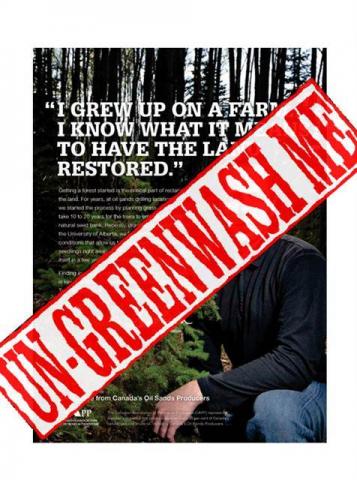
Greenpeace Canada is launching an ad-jamming contest to combat the greenwashing campaign launched by CAPP in a series of print and video ads.
“It is time to show CAPP that any attempt to greenwash the tar sands will not go unchecked,” say Greenpeace organizers, who have set up a Facebook group to “Put a CAPP on Tar Sands Greenwashing.”
Participants in the contest are urged to “construct the funniest or edgiest mash-ups, image swaps, collages, rewrites, or remixes you can think of… It is time to turn these gross distortions of the tar sands destructive reality against themselves.”
Greenpeace Canada climate and energy campaigner Mike Hudema told me:
“Tailings are not yogurt, and a manufactured forest is not the diverse wetland ecosystem that was there before tar sands giants carved up the earth. It’s time that CAPP comes clean and starts addressing tar sands destruction rather than greenwashing it. Hopefully this contest and some creative entries will show the true toxic reality of the tar sands.”
It will be interesting to see what ideas people come up with to counter the spin of CAPP’s tar sands greenwashing efforts. Stay tuned.