By Megan Darby, Climate Home News
Oil companies are under more pressure than ever to reckon with their climate impact, this AGM season.
Supermajor Exxon Mobil has published its first assessment of what holding global warming to 2C means for its business, prompted by a shareholder revolt in 2017.
Shareholder activists have moved on to target second-tier companies, winning resolutions to make Kinder Morgan and Anadarko follow suit. Several firms pre-empted a vote by agreeing to their demands.
In Europe, where most oil majors have already produced 2C scenarios, the conversation is turning from disclosure to action.
“We have seen a significant uptick in the number of reports this year,” Robert Schuwerk of Carbon Tracker told Climate Home News.
Analysing the implications of 2C, the upper warming limit in the Paris Agreement, is “becoming normalised as a concept”, he said. There is not yet a standardised approach, though, making it hard to compare companies: “I think that is going to become a focus.”
By each choosing methods to flatter their business plans, firms are perpetuating collective denial.
Globally, the vast majority of oil and gas reserves need to stay in the ground to limit temperature rise to 2C. That implies some producers will lose out. But, as a Carbon Tracker report this week highlighted, corporate scenario analyses show everyone winning.
“The primary risk is over-investment in a resource base, bringing on a supply-demand imbalance, lower prices and therefore lower returns for shareholders,” said Schuwerk. In other words, they waste money on unburnable fuel and profits dive.
Price assumptions are key. As climate regulations and clean technology take hold, they dampen oil demand. Other things being equal, that means low prices.
The proof oil companies are taking climate risk seriously will come when they cancel expensive exploration projects, which cannot pay off in a 2C world.
French major Total was one of the earliest to grasp this, ruling out Arctic oil drilling in 2016. But most still see their role as following government policy rather than driving the shift to cleaner energy.
They emphasise the growing energy needs of the developing world and plan to meet them the traditional way – with fossil fuels.
“We will not be tied to an approach that requires us to move too quickly, or too slowly, through this transition,” was chief executive Ben van Beurden’s reaction to calls to align Shell’s portfolio with the 2C limit.
Some are avoiding the conversation. Ahead of its AGM in Dallas next Wednesday, Exxon Mobil got the regulator to block a shareholder proposal to expand its renewable energy portfolio.
In an open letter, shareholder pressure group As You Sow wrote to the Exxon board: “It hurts us to see how you’re putting all your eggs in a basket with a massive hole in it, because we’re invested (literally) in your future.”
If Exxon refuses to answer these questions, they threatened, “shareholders may choose to no longer stand by you”.
Since Donald Trump made dismissal of climate risks official White House policy, investor pressure has become more important than ever, as a bulwark against US backsliding.
In a further sign the industry is feeling the heat, this week former Trump advisor George David Banks launched a counter-revolution. Under the banner Main Street Investors, Axios reported, Banks will lobby major asset managers to ease off.
In response, Blackrock and Vanguard said they backed climate resolutions for no other reason than to protect shareholder value.
The gains of the shareholder climate movement are incremental, set against the urgency of tackling climate change, but the logic is inescapable.
This article originally appeared on Climate Home News.
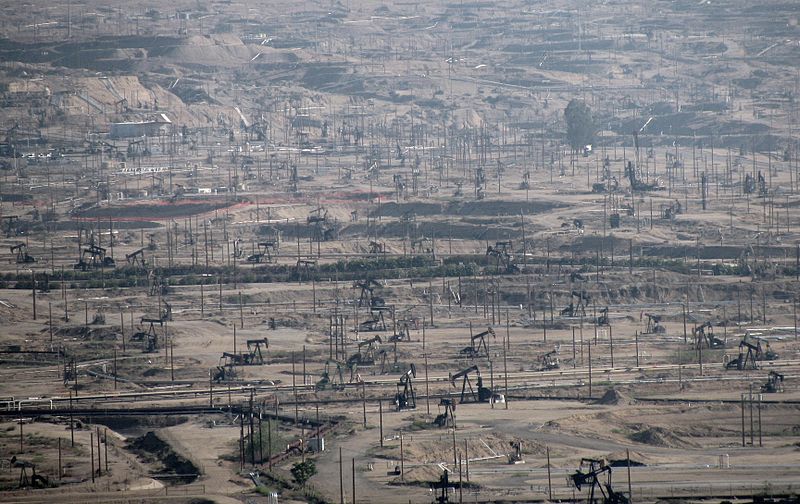
Image: Creative Commons Attribution-Share Alike 3.0 Unported/Antandrus