
Polluting food and agriculture companies are present in large numbers at this year’s UN COP31 climate talks, with a total of 260 lobbyists on the ground in Turkey’s southern city of Antalya, new analysis shows.
The meat and dairy sector, which produces over 14 percent of global emissions, brought 71 delegates, the highest number of all food and agriculture sectors. Its representatives outnumber delegates from Honduras, where millions of people currently face severe drought.
Fertiliser lobbyists showed the biggest jump in delegates year on year, with a 45 percent increase. The CEOs of several powerful trade groups representing the meat, fertiliser, pesticides and biofuels sectors are also present in Antalya.
Some of the world’s largest agribusiness firms, including meat company JBS and dairy multinationals Nestlé and Danone, as well as pesticides firm Bayer and food giant Unilever, also travelled to Turkey for the talks, which run from 9-20 November.
The analysis shows the power and influence enjoyed by the sector, with more than a hundred lobbyists participating as part of their country governments, lending them privileged access to negotiations. More than 44 percent of food and agriculture delegates travelled on country badges, up from 5 percent at COP27 five years ago.
For fertiliser firms, the share of delegates on party badges rises to 90 percent. Russia’s party included 12 delegates from two fertiliser companies linked to sanctioned individuals, DeSmog found.

A version of this article was published by franceinfo.
DeSmog’s revelations come as disappointment sets in for advocates hoping for action to reform food systems, which account for a third of global emissions. Agriculture negotiations have broken down after four years of discussion, with some observers pointing to the contributing “role of vested interests” in their collapse.
At the time of going to press, all references to food and farming are missing from the draft cover text, which informs the basis of a final deal at the talks. And a high-level initiative to spur government action on methane is languishing on seven signatories.
Both meat and fertiliser groups are keen to make their voices heard at a summit where the Turkish presidency has made curbing the short-lived “superpollutant gases” emitted by agricultural sectors – such as nitrous oxide and methane – a top priority.
DeSmog has witnessed meat industry groups lobbying to weaken the accounting metrics for methane at side events while observers describe the high fertiliser sector turnout as “a big PR campaign” to be recognised as vital to food security.
The UN’s leading science body, the IPCC, says the world must make urgent and deep cuts to greenhouse gas emissions to avoid catastrophic climate change. Global heating is already set to breach 1.5C, with each additional degree of warming increasing deadly impacts from droughts, floods, and cyclones.
“This is a direct affront to billions of people who are suffering from the climate emergency,” said Million Belay, co-founder and general coordinator of the Alliance for Food Sovereignty in Africa (AFSA). “They have created the crisis that we all live in. And they are here to influence the whole process through lobbying, thwarting a real discussion and action against emissions, and flooding pavilions with empty talk.”
Farmers are facing unprecedented losses from droughts, floods, and tropical cyclones – 49 million more people could face acute hunger in 2026-27 due to the El Niño weather system that has been turbo-charged by climate breakdown.
“We need to talk about the impact that lobbying is having on our democracy,” Nusa Urbancic from advocacy group Changing Markets Foundation told DeSmog. “The number of agribusiness lobbyists is shocking and shows why agriculture has not yet made it into any official documents.”
A spokesperson from Bayer said: “Global challenges need places where the world still comes together”. They added: “Combating climate change requires governments, civil society, local communities and the private sector to work together on effective solutions. This is particularly important for agriculture, which is severely affected by climate change”.
Nestlé told DeSmog: “COP31 is a major global gathering and an important opportunity to engage with governments, civil society, farmers and other stakeholders to accelerate climate action. Our engagement is focused on advancing practical solutions.”
Fertiliser “PR campaign”
DeSmog analysed the provisional list of 68,374 in-person delegates published by the United Nations Framework Convention on Climate Change (UNFCCC) for representatives from the largest corporations and trade groups in major food sectors. (More information on the methodology can be found at the article’s end.)
The number of food lobbyists has dropped by 18 percent year-on-year compared to COP30, but they stand 40 percent higher than COP27 five years ago, showing an enduring industry interest in influencing the climate conversation.
Climate summits offer delegates many routes to influence – from sponsoring pavilions to promoting unproven solutions or greenwashing at side events – putting lobby groups in prime position to sideline meaningful climate action.
This year’s summit includes 45 lobbyists from fertiliser companies, a three-fold increase since the COP27 summit in Sharm el-Sheikh five years ago.
Fertilisers are a leading driver of nitrous oxide emissions, which cause around 270 times more warming than CO2. Its chemical inputs emit more greenhouse gases than commercial aviation.
DeSmog’s analysis shows the $230-billion industry wields significant influence. Nearly all fertiliser representatives (40 of 45) travelled inside their country delegations, and the International Fertiliser Association (IFA), the leading lobby group for the world’s biggest fertiliser producers, brought four delegates to the summit.
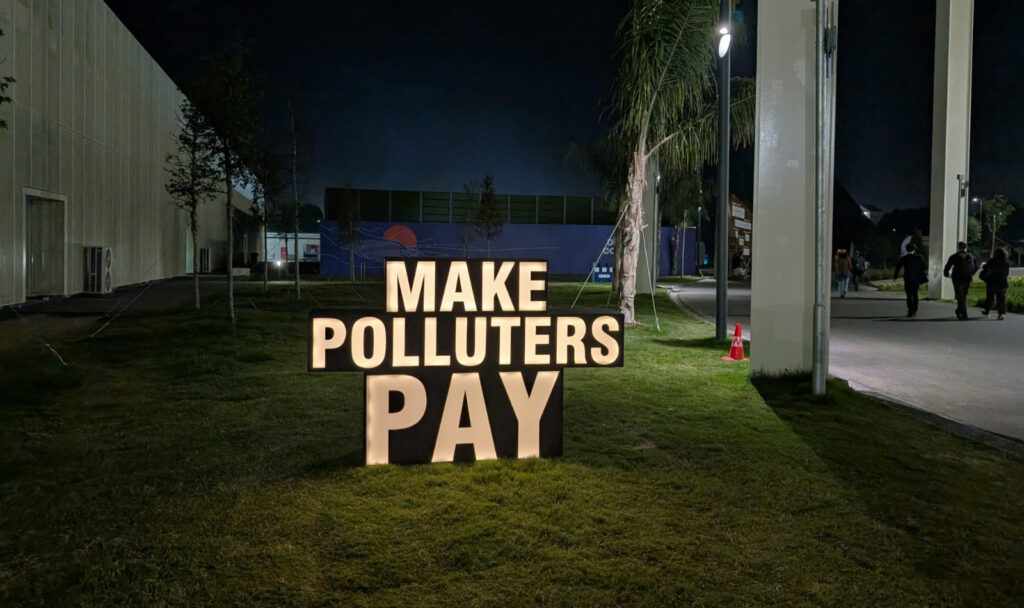
Credit: DeSmog
In the run-up to COP31 the IFA has promoted chemical inputs as indispensable to food security – an argument frequently used by industry to oppose any moves to reduce fertiliser use. It has also called for the sector to be given a “stronger voice” in multilateral negotiations and for it to be recognised as a “national security asset”.
Food systems experts at the IPES food thinktank take the opposite view. They have argued that farming must break its dependency on synthetic fertilisers, 99 percent of which are made from fossil fuels, and encourage governments to fund climate-friendly alternatives, as extreme weather and conflict disrupt global supply chains, causing widespread hunger and food price spikes.
But long-running civil society attempts to insert references to greener farming practises into the agriculture negotiations at COP31 ran aground on Friday (13 November). Sources close to the talks told DeSmog that anger from the Arab negotiating group at the impact of EU climate legislation on its fertiliser firms was a key factor in negotiations ending with no agreement.
Arab group members Oman and Morocco brought in 10 delegates between them from the Oman India Fertiliser Company and OCP Group. The latter, which had a turnover of more than $12 billion last year, also sponsored Morocco’s pavilion.
In an emailed statement OCP Group told DeSmog it “plays an important role in global food security as a global leader in plant nutrition and phosphate-based solutions”. It added that its “participation provides an opportunity to bring an industry perspective and share our expertise in how customised fertilisers and better agricultural practices can help farmers improve productivity, protect soil health and reduce environmental impacts.”
Indonesia and Russia’s guestlists likewise included dozens of representatives from fertiliser firms, with Russia bringing 11 representatives from PhosAgro and one from Uralchem.
Both companies are part-owned by their respective founders Andrey Gurvey and Dmitry Mazepin or their families, billionaire Russians who have been sanctioned by the European Union and the UK. Their delegation outsized the climate vulnerable states of Trinidad and Tobago, Eritrea, and Nicaragua combined.
Countries at the summit used the event to cut deals for fertiliser expansion. Oman and Nepal both seek investment for plants that will produce fertiliser from renewable power – products that groups like the International Fertiliser Association argue can decarbonise the sector, and enable it to grow.
Independent climate expert Lili Fuhr accused the sector of “selling the world a greenwashed fantasy”. Campaigners say the ‘clean’ production techniques touted by the sector are often unfeasible, too costly at scale, and fail to cancel out nitrous oxide, a superpollutant 270 times more potent than CO2, which is emitted in large quantities once fertilisers are used on the field.
“The fertiliser presence is clearly linked to the Strait of Hormuz crisis. It’s part of this big PR exercise, where they say we are the solution to the climate crisis and food security,” says Marie Cosquer from Action Against Hunger, who is following the talks on the ground.
“They are afraid that countries would agree to more agroecology, phase out chemical outputs, and help farmers break dependency on polluting outputs,” she said.
Meat Targets Methane
Brazil brought seven representatives of the world’s largest meat company JBS, including its CEO, Gilberto Tomazoni. In July, the highest-emitting livestock firm abandoned its target to be net-zero by 2040 and dropped commitments to tackle deforestation.
Elodie Guilon of advocacy group World Animal Protection told DeSmog that JBS, a regular at COPs, often attends as part of country delegations to ensure climate action does not “get in the way” of its expansion.
“In the last couple of years, JBS expanded rapidly in Africa and Asia, risking displacing communities and driving deforestation, threatening the livelihoods of pastoralists and small producers,” she said.
At past climate summits, the meat sector – and industry-aligned states – have repeatedly pushed to delay or block climate actions targeting its sector. At COP26, US beef lobbyists celebrated weak voluntary commitments for agriculture in the Global Methane Pledge. The lobby watered down targets in the reports of the UN’s leading climate science body the IPCC, and it has also run pro-meat PR campaigns to present agriculture as the “solution” to climate change.
This year, trade groups lobbying on behalf of the meat industry at the talks include Australia’s National Farmers Federation (NFF), Beef+Lamb New Zealand, and the Global Roundtable for Sustainable Beef.
All three groups are pushing for changes to the way that international agreements calculate methane emissions, which critics say could leave pollution unchecked for a sector that accounts for around 32 percent of the global total.
Methane reduction offers one of the fastest opportunities to slow global warming, as a short-lived superpollutant that causes over 80 times more warming than carbon dioxide over a 20-year timeframe.
During an event at the UN climate summit on Monday (16 November), Macaulay Jones from the Beef+Lamb NZ trade group called for governments “to look at the use of alternative warming-based metrics” – an apparent reference to the metric GWP*, which has been dubbed a methane “accounting trick”.
Jones went on to mention an upcoming “review of metrics” at the UNFCCC. He said his group would be asking countries to support their bid to have “alternative warming-based metrics” accepted for calculating nationally determined contributions, every signatory state’s action plan to meet its commitments under the Paris Agreement.
When New Zealand became the first country to adopt the GWP* metric into its domestic climate goals in 2025, it cut its methane reduction targets down to 14-24 percent by 2050 from 24-47 percent.
The drop in ambition lends credence to researchers’ warnings that adopting GWP* will allow big polluters to claim “climate neutrality” without cutting herd sizes, or methane output.
A 2024 study that surveyed more than 200 climate experts said that livestock emissions must be reduced by 61 percent globally by 2036 in order to meet the targets set by the 2015 Paris Agreement.
“We know we are going to overshoot 1.5C warming. The question is how long and at what level,” Urbancic of Changing Markets said. “If you suddenly magically wish methane away, it changes the accounting but not the impact on the atmosphere. Super pollutants like methane have to be part of the discussion.”
Voluntary Pledges
Agribusiness trade groups at COP31 have also lobbied countries hard to keep action on methane voluntary – and even to undermine already-voluntary pledges.
In the wake of pressure from the country’s National Farmers’ Federation, COP co-host Australia announced last week that it would not sign the new Global Methane Pledge Ministerial Declaration – a commitment by countries including Germany and the UK to strengthen a pledge agreed in Glasgow at COP26.
The NFF, which thanked the government “for responding quickly” to its concerns, received funding from Australia to travel to the summit, as did trade group Dairy Australia – both of which are attending as part of the country’s delegation.
U.S. meat trade groups were notably absent from Turkey, following the lead of the Trump administration, which boycotted talks for the second year in a row.
The dairy sector, however, maintained its presence year-on-year, using the event to promote its efforts to cut methane. Dairy giants Yili and Mengniu brought seven delegates between them, as part of China’s delegation, while the Netherlands brought one representative from FrieslandCampina, and France brought four representatives from Danone.
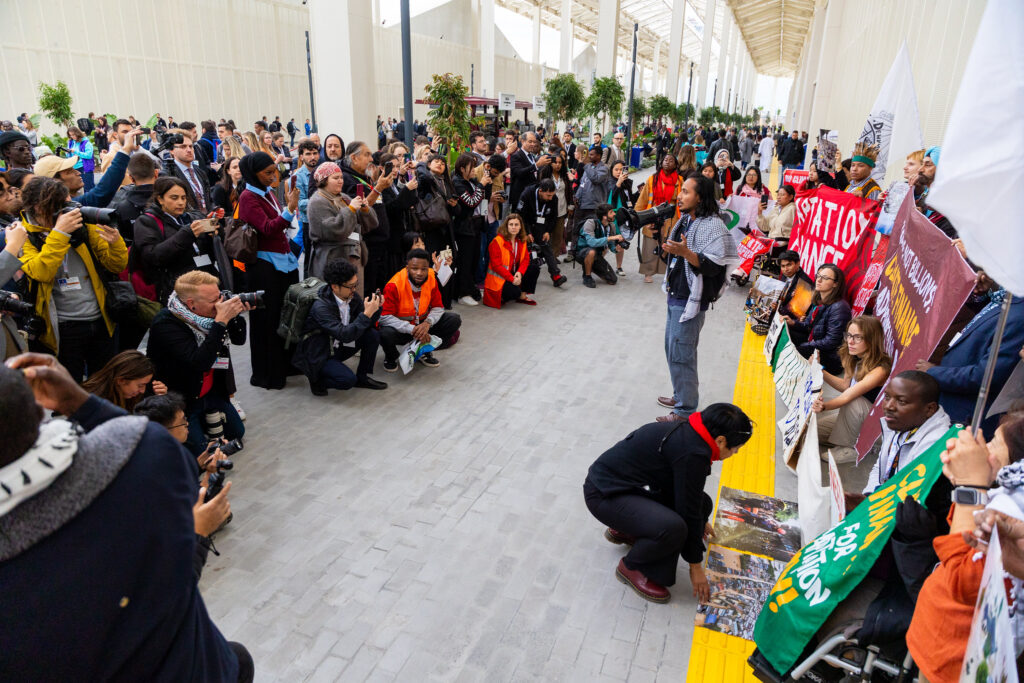
Credit:
UN Climate Change – Kubilay Ciftci (CC BY-NC-SA 4.0)
Along with the largest meat companies, the dairy industry is responsible for as much methane as the UK and EU combined. The sector is projected to grow at a steady 2 percent per year over the next decade.
Danone is one of few companies at the summit that has significantly cut its methane footprint, reducing it by almost 30 percent since 2020. The company told DeSmog that it had “contributed to discussions on methane reduction, climate resilience and mobilizing private investment in nature” during the summit.
In an emailed statement, dairy giant Nestlé said: “Our advocacy is guided by a clear objective: supporting the implementation of the Paris Agreement and accelerating the transition to a more sustainable and resilient food system.” It added that it was “proud to be recognised by InfluenceMap as a leader in responsible and transparent climate lobbying.”
Dutch dairy company FrieslandCampina stated that it had “attended COP31 to contribute constructively to climate action and to help accelerate practical implementation”. It added: “Our aim was to listen, learn, share practical experience and explore partnerships that can deliver impact on farms and throughout supply chains. We engaged with stakeholders on methane reduction, regenerative and climate-smart agriculture, climate adaptation and biodiversity.”
Bioeconomy
Building on its success at COP30 – where host Brazil called for major expansion of the use of food crops for fuel – the $155 billion bioenergy industry also sent a substantial delegation with 30 representatives on the ground.
These outnumbered delegates from Sri Lanka, which is bracing for the impacts of a climate-charged El Niño this year and has set aside millions to fight severe drought and deliver water to families.
Critics say the term ‘bioeconomy’ has been hijacked to put a green spin on the expansion of highly destructive monoculture grain crops. It now operates as a byword for controversial “biofuels” – liquid fuels produced from organic materials, such as corn-based ethanol or biodiesel made from soybean oil – which studies have labelled a “false solution” to climate change.
Companies and trade groups from the U.S. and Brazil, the world’s top two biofuels producers, brought over a third of the bioenergy representatives to COP31.
They include the Corn Refiners Association (CRA), whose members include two of the world’s biggest grain companies: Cargill, the largest privately held agribusiness in the world, and Archer Daniels Midland. The CRA is a co-sponsor of a summit event titled: “Scaling the circular bioeconomy: agricultural solutions to climate change”.
Cian Delaney, biofuels campaigner at Transport & Environment has described biofuels as “a terrible climate solution, and a staggering waste of land, food and millions in subsidies” in a 2025 report.
Criticisms levelled at the biofuels sector include: the clearance of huge tracts of land; harm to Amazonian communities; water pollution and poisoned ecosystems, and jeopardising endangered wildlife.
Countries at the frontline of these impacts are clear that the time has come for action on agriculture and food, as the UN warns that climate change will cause at least 250,000 additional deaths per year between 2030 and 2050.
“The message is still going out that agriculture is not a worthy consideration because of politics,” prime minister of Barbados Mia Mottley told world leaders on Thursday (12 November), the day before agriculture talks broke down.
“We can’t leave it as a topic we cannot touch.”
All companies and countries named in this article were contacted for comment.
Additional research by Brigitte Wear and Rachel Sherrington
Methodology note
DeSmog analysed the provisional list of UNFCCC COP31 delegates, with assistance from a large language model. The list was checked for the largest corporations in major food sectors which wield significant control in a highly concentrated food chain, and account for the majority of trade, of the following type: meat and dairy, pesticide and fertiliser firms, food processors, commodity and seed traders, (agricultural) bioenergy, grocery retail, commodity trader and shipping, and food packaging. Large national companies were included only when they are known to be high-emitting firms and/or have a track record of lobbying against environmental and climate policy.
DeSmog also included global and regional industry trade groups, some of which brought their own delegations to Antalya, along with national farmer unions and institutes that have corporate affiliations and/or a history of lobbying aligned with industry demands.