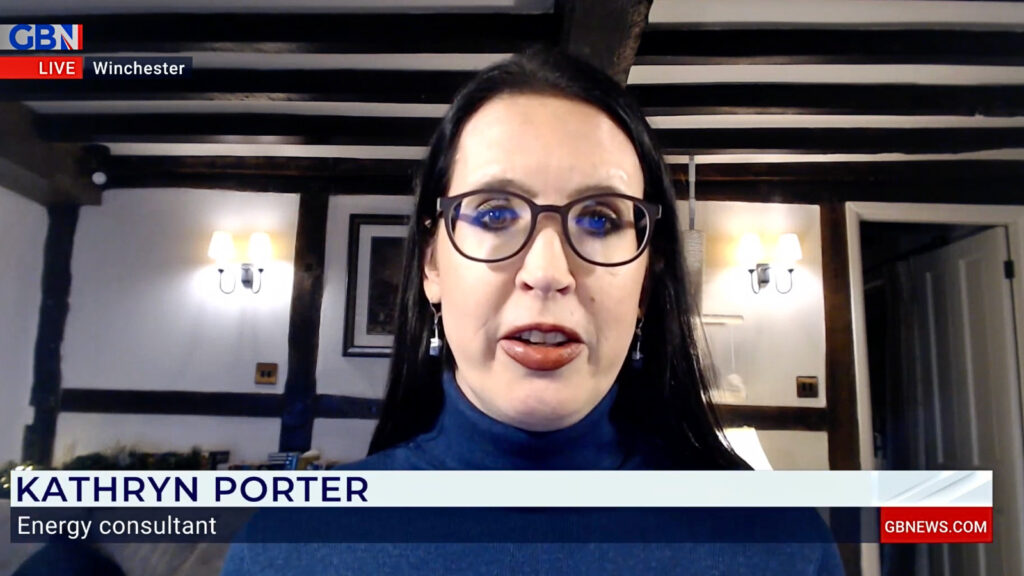
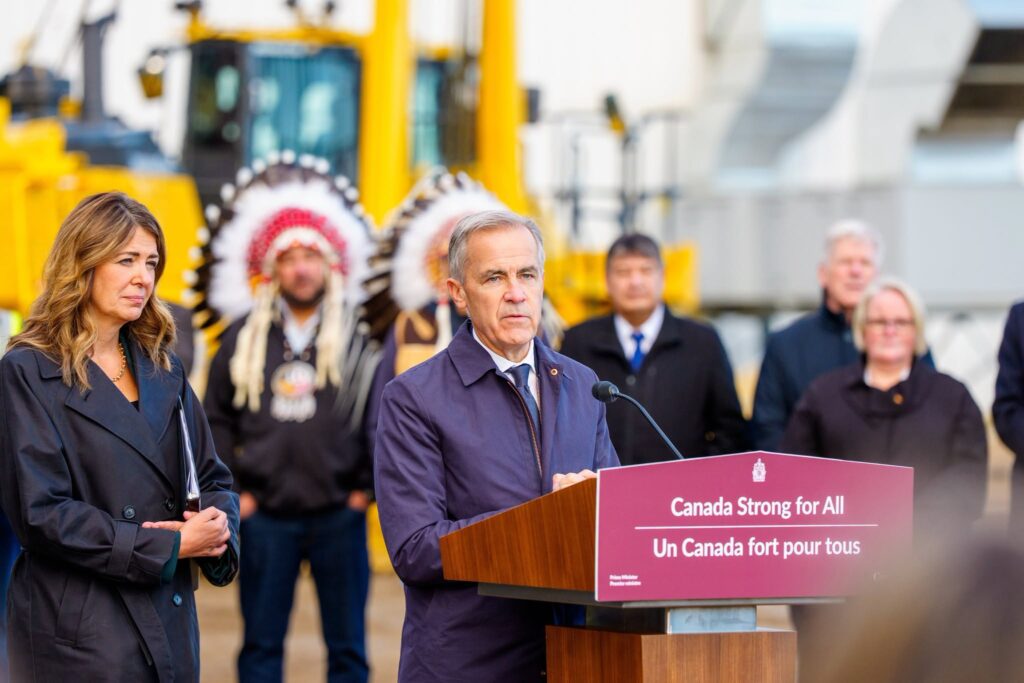
Gitanyow Hereditary Chiefs are using every tool at their disposal to fight a $6 billion fracked gas pipeline known as the Prince Rupert Gas Transmission line (PRGT) that would cross territory their people have lived on for thousands of years.
The organization, which is composed of Gitanyow leaders who’ve inherited their title and position from the Indigenous peoples of the Gitanyow First Nation in Northwest B.C., launched a blockade against the pipeline this summer.
They filed a legal challenge in October. And in late November, the chiefs announced plans for a new Indigenous Protected Area, effectively a conservation area governed by Indigenous nations and laws, to block new fossil fuel infrastructure from their territory.
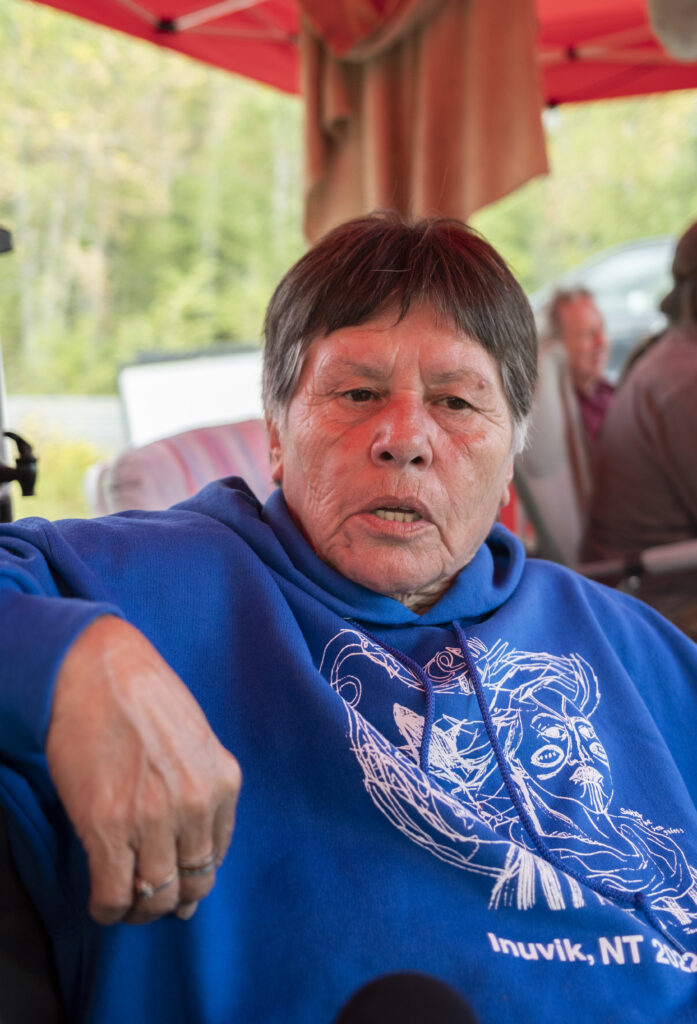
“We will continue our on the ground presence,” said Simooget Watakhayetsxw, Deborah Good of the Gitanyow Nation, whose territory straddles the planned right-of-way for the PRGT. She’s stood on the blockade since August.
But this isn’t only a story of local Indigenous people standing up to a distant oil and gas corporation. The Prince Rupert Gas Transmission line (PRGT), which would carry fracked gas from the North Montney shale gas deposit in Northeast B.C., is being built by the Calgary-based pipeline builder TC Energy.
Yet the gas would be sent to a proposed LNG export terminal known as Ksi Lisims on B.C.’s north coast that is owned in part by the Nisga’a First Nation. In this remote part of Canada, they are essentially neighbours with the Gitanyow.
DeSmog traveled around the region this November, speaking with members of both the Nisga’a and Gitanyow, as well as the provincial minister who could decide the project’s fate.
What was clear from these conversations, and from being on the ground in an area that’s ground zero for a potentially massive LNG export boom, was that local Indigenous and non-Indigenous opinion on gas development is much more nuanced and divided than faraway industry proponents are making it appear.
“In the Northwest, we have people who are non-Indigenous who have spent generations here and have a tie to this place, we have Indigenous people who are very much concerned about the environment,” said Tara Marsden, Wilp Sustainability Director for the Gitanyow Hereditary Chiefs. “And then we have Indigenous people who are all about business and don’t really believe that climate change is real. So we’ve got this huge mix of people.”
DeSmog reached out to the Ksi Lisims project for this story, as well as its oil and gas backer Western LNG, but didn’t receive a response.
Public face of the project
LNG projects in B.C. have been a major point of contention and conflict over the past decade. In 2014, under the former BC Liberal government’s rule, there were at least 10 different pipeline proposals to transport hydrocarbons from Alberta to B.C.’s coast for export to Asian markets.
At this point, only one is nearing completion, Shell Canada’s LNG Canada project in Kitimat, B.C., with the support of the local Haisla First Nation. That nation is now developing its own LNG port, Cedar LNG, which will be a fraction of the size of LNG Canada just down the road.
But the Nisga’a’s proposed Ksi Lisims LNG project on Pearce Island, near the mouth of the Nass River, is a much larger, more complicated endeavour that is quickly becoming the next flash point in northern B.C. for Indigenous rights, economic development, and the climate crisis.
For starters, Ksi Lisims LNG is a relatively new idea for the Nisga’a. Proposed in 2021, the project would consist of a processing plant and floating export terminal to ship 12 million tonnes of LNG per year to Asian markets, the second largest LNG port of its kind, next to LNG Canada in Kitimat.
It is also proposed on contested lands on Pearce Island, with the Nine Allied Tsimshian Tribes and the nearby community of Lax Kw’alaams stanchly against the project, citing inadequate consultation and arguing that it would interfere with their rights to unitize the land and waters which they claim as their own.
The Nisga’a Lisims Government has partnered with Rockies LNG Limited Partnership, a group of non-Indigenous gas producers including top oil sands company Canadian Natural Resources Limited, as well as Western LNG, a Houston-based gas company formed in 2015.
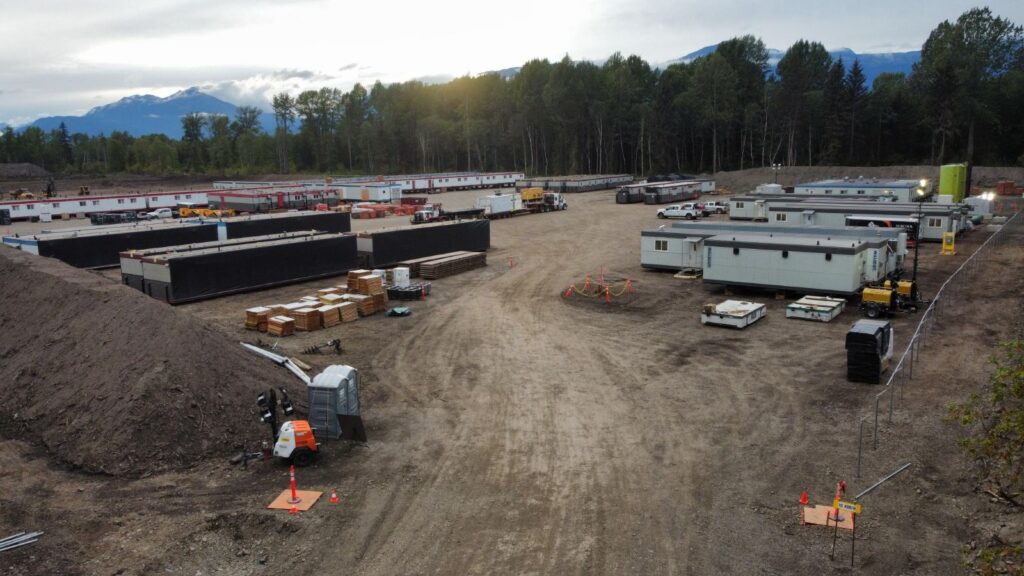
In June, the Nisga’a Nation announced it would be proceeding with construction of a work camp and right-of-way clearing for the PRGT on Nisga’a lands following its purchase of the pipeline from TC Energy.
TC Energy is the parent company of the Coastal GasLink pipeline, a project whose original cost doubled from $6 billion to $14.5 billion while also facing construction delays and ongoing opposition from several Wet’suwet’en clans. It was completed early this year through northern B.C.
Yet despite the backing of oil and gas heavyweights from Texas and Alberta, the Nisga’a are foregrounded in marketing and promotional materials as the face of the Ksi Lisims LNG project.
“Ksi Lisims LNG will be one of the most significant Indigenous-supported industrial developments in Canadian history,” reads an unsigned statement on the Ksi Lisims website, which was then amplified by the industry group Resource Works. “It is expected to create thousands of direct and indirect jobs, and provide substantial financial benefits to the Nisga’a Nation, and to Indigenous nations across BC’s northwest.”
However, not all Nisga’a agree on the path forward.
We ‘will take this to court’
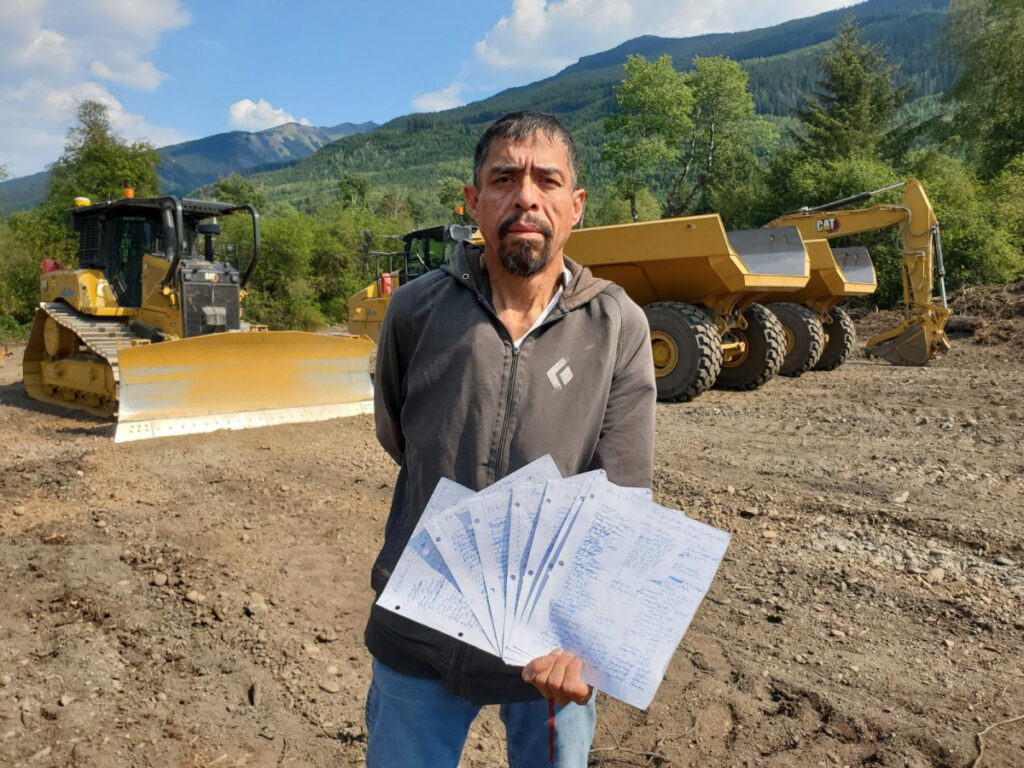
Richard Mercer, a Nisga’a member who lives in the community of New Aiyansh (Gitlax̱t’aamiks), home to the Nisga’a Lisims Government, is adamant that many Nisga’a feel left out of the consultation and decision-making process. That pushed Mercer and other Nisga’a members to form the Nass Valley Tribal Protectors Alliance Society, which has already gained 200 plus signatures on a petition calling for a halt to both projects.
“We want to know why this project is happening without really consulting us,” Mercer said. “We need better information about the project. They need to be transparent about the pipeline too. So we’re working with other nations now and have a legal team together and will take this to court.”
Mercer and the Nass Valley Tribal Protectors are preparing to file a lawsuit in the BC Supreme Court seeking an injunction against the Ksi Lisims LNG and the PRGT pipeline project. Several members from the Nisga’a communities of Gingolx, Laxgalts’ap, Gitwinksihlkw and Gitlakdamix, have already raised more than $17,000 for legal fees.
‘Not like the Nisga’a are leading this project’
Tara Marsden, Wilp Sustainability Director for the Gitanyow Hereditary Chiefs has been following the development of the Ksi Lisims and PRGT projects for years. In October, the Gitanyow launched a legal challenge of Ksi Lisims LNG after the B.C. Environmental Assessment Office denied them participation status during the early stages of the review process.
The Gitanyow had asked the government body to be included as a Participating Indigenous Nation because they believe that Nass salmon, a critical source of food and economic support for the Gitanyow, will be impacted by the development of Ksi Lisims LNG, as the facility and associated tanker traffic will overlap with salmon migration routes.
“We are only seeking a duty of consultation as it pertains to Nass salmon,” Marsden said.
Through the Gitanyow Hereditary Chiefs office, communication with both the Ksi Lisims LNG project and PRGT has all gone through one person, Tom Syer.
Syer, who’s held senior positions in the previous BC Liberal governments of Christy Clark and Gordon Campbell, has also worked for TC Energy and most recently became part of the team at Western LNG. Although Marden and others have tried to speak directly to the Nisga’a with concerns about both projects, they claim that Syer seems to be the gatekeeper.
“So, you know, it’s not like the Nisga’a are leading this project,” argued Marsden. “In my experience so far, all the communications are with their vice president [of Climate Policy and External Affairs], Tom Syer and a couple others. So, it does appear to be that some in the Nisga’a are really backing this, but it’s not like it was a community driven effort.”
Part of the company’s strategy has been to paint the project as “net-zero” by using electricity to reduce emissions, essentially “greenwashing” the project as it would take the entire output of the Site-C dam in Northeast, B.C. to power the facility, not to mention the tens of thousands of new fracking wells needed to supply the gas.
Marsden says that another prong of the project’s marketing strategy is to make it appear that all Nisga’a citizens, as well as adjacent First Nations, are fully behind the project. Indeed, that’s even evident in the name of the project, Ksi Lisims, which the project page describes as meaning “‘from the Nass River’ in the Nisga’a language.”
Project’s fate up in the air
Whether the project will be actually built, or languish like so many other LNG proposals in B.C., is right now an open question. Permits for the $6 billion Prince Rupert Gas Transmission line expired on November 25, after 10 years on the books.
On the same day, Gitanyow hereditary leaders, along with their supporters, dismantled a blockade at the Cranberry Junction, a dirt crossroad 200 kilometres north of Terrace, B.C. along Highway 37 north, which had been in place for more than three months to protest early construction on the pipeline and to stop LNG work trucks.
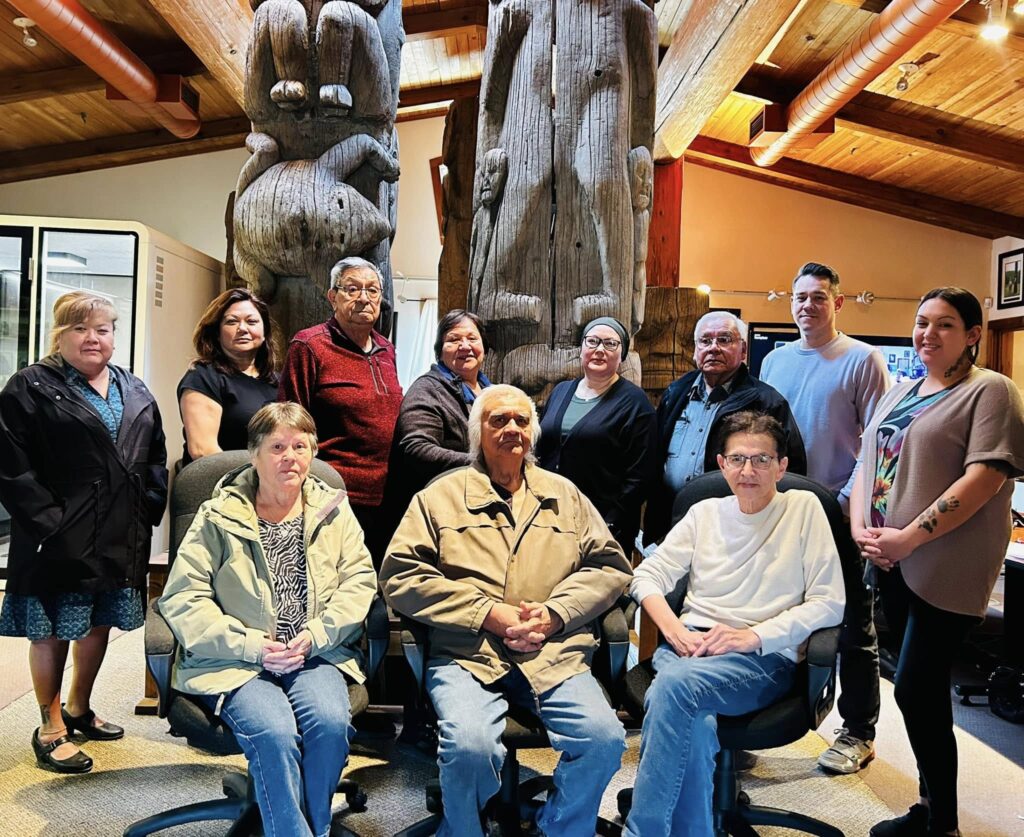
On November 27, Gitanyow hereditary chiefs announced plans for a new Indigenous Protected Area in the Cranberry and Kiteen watersheds, which the PRGT would cross. This area, outlined in a press release, is a critical tributary of the Nass River and was originally assessed in the 2013 review of PRGT to be an, “extremely valuable area for fish, wildlife and cultural use.”
“With climate change rampant in the area, the pipeline now poses too significant a risk to migrating and spawning salmon and the protected area will ensure salmon are protected from cumulative industrial and climate impacts,” according to the release.
If the Gitanyow follows through with its conservation plan, it will surely impede the PRGT’s plans further, making the area off limits to development.
In this context, the project’s fate has fallen squarely on the newly minted B.C. Environment Minister Tamara Davidson – only she can revive the expired permits.
Although the current NDP government in B.C. has been supportive of LNG development, it is not yet clear if Davidson will approve the pipeline. She pointed out that Indigenous rights will need to be considered for any project approval she oversees.
“I think that having such a strong foundation and understanding of Indigenous rights is going to be a good thing for the government and for the cabinet, looking at different projects and then working with communities and working with industry,” said Davidson. “I’m really looking forward to being briefed on that project, but right now, it’s too early for me to discuss it.”
Back at the blockade in September, surrounded by supporters, Deborah Good was reminded that Gitanyow resistance to unwanted incursions on their territory has long been a part of their history here.
“So many First Nations have lost their lands and their rights, and we haven’t yet,” Good said. “My great grandmother stood at the boundary, and she stopped surveyors. 97 years later, now I’m standing here blocking PRGT.”
Although the Nisga’a Lisims Government has bet its economic dreams on a future with LNG, nations across the northwest are not as enthused. Good says the support from the Wet’suwet’en, the Tsimshian, the Gitxsan and from those in the Kispiox Valley, has been overwhelming.
“So, what’s PRGT going to do? They can’t do a damn thing. Because when the time comes and those pipes start being laid on the ground, under our ocean floors, under our rivers, these are the people that will be there. We won’t be alone. I sit here, I can see my great grandmothers standing here at the boundary. So, anyone who says that we’re not united, better think again.”