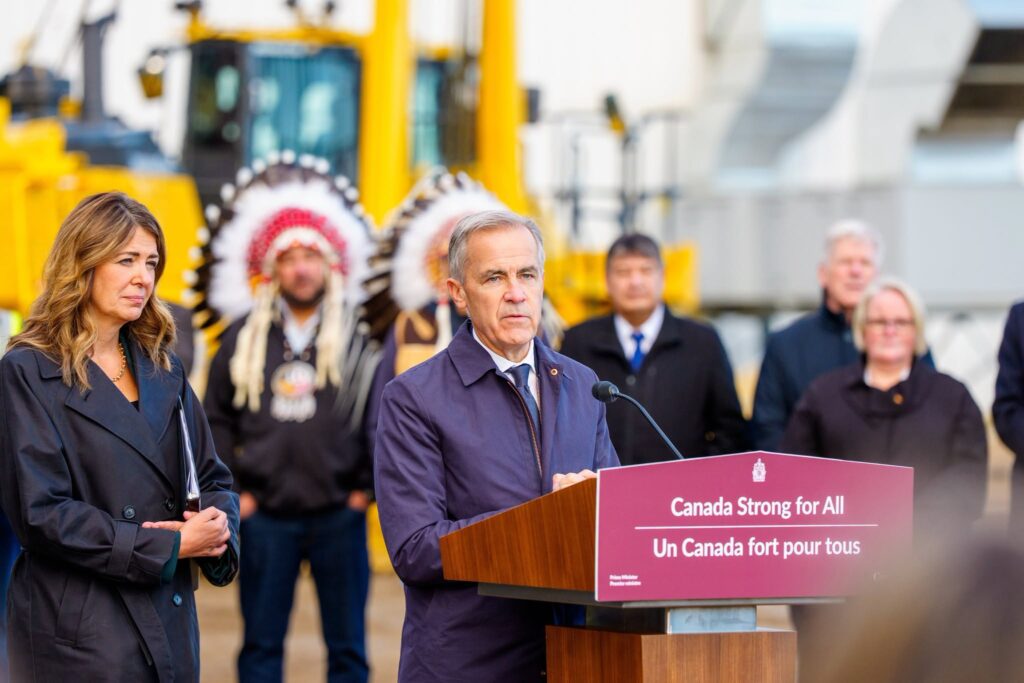

In April, Prime Minister Mark Carney announced the “Canada Strong Fund,” ostensibly meaning Canada is joining countries like Norway in creating a sovereign wealth fund. That sounds impressive but this pot of money will be a sovereign wealth fund in name only.
To understand the vast gulf between what Carney announced and what Norway has achieved, we need to unpack the story of how this small Nordic nation amassed its $2 trillion oil-based nest egg. In contrast, Canada has salted away virtually nothing from our vast resource wealth, and sadly seems constitutionally and culturally incapable of doing so.
Canada is almost unique among developed democracies in granting provinces exclusive control over natural resource policy and rent collection.
This means that Ottawa, unlike Norway, has essentially zero resource revenue with which to start a sovereign wealth fund. Hence the only money in the new Canada Strong Fund fund is $25 billion that the federal government borrowed.
Carney also announced in April that future contributions will come largely from individual Canadians. “If you have a bit of extra money, we’ll make it easy for you to invest in the fund to help build Canada strong for all,” said the prime minister apparently, papering over the fact that the federal government has essentially no royalty revenue to replicate the Norwegian success story.
Under Canadian constitutional rules dating back to the founding of the country, the federal government plays almost no role in managing resources or collecting rents on extractive industries such as forestry, mining, oil and gas, as well as electricity generation.
Ottawa briefly oversaw resource management for western provinces after they entered confederation but ceded those powers in 1930, 17 years before oil was discovered in Alberta. The patriation of the constitution in 1982 further strengthened provincial resource rights as a concession to Alberta due to political blowback from the National Energy Program brought in two years earlier.
Provincial premiers now jealously guard their resource fiefdoms with predictable results around national unity and regulatory capture. Alberta is an obvious case in point where the Alberta Energy Regulator (AER) is 100 percent funded by the oil and gas industry it allegedly oversees. Orphan wells almost doubled in 2026 and some landowners frustrated by years of AER inaction are now resorting to evicting “deadbeat” oil companies from their properties themselves.
Under lax provincial oversight Alberta has racked up massive unfunded environmental oil and gas liabilities estimated to be as high as $260 billion. The results of such provincial incompetence are often eventually foisted on the federal government, like what happened with the Sydney tar ponds in Nova Scotia or the Giant Mine in the Northwest Territories where the cleanups were largely paid for by the Canadian taxpayer.
Provincial economy dependency on a single extractive industry also leads to company town cowardice around public policy. Alberta Premier Danielle Smith inexplicably knee-capped the province’s once-thriving renewable energy sector, presumably to benefit her overlords in the oil and gas sector. Alberta also collects less than one seventh the revenue per barrel produced compared to the so-called socialists in Norway. In 2023, Norway produced around 1.4 billion barrels of oil equivalent (BOE), and collected about $123 billion CAN in revenues while Alberta’s BOE totaled about 2.4 billion BOE with $25.2 billion in public royalties.
Premiers blaming their own mismanagement of extractive industries on Ottawa has become a storied political tradition in Canada and now manifests as a dangerously ignorant secessionist effort in Alberta.
In contrast, the Nordic cultural determination to play like a team and think like an owner seems to be the secret sauce to that country’s success. When Norway discovered its offshore petroleum bounty in the late 1960’s, it knew virtually nothing of the oil industry.
This did not dissuade Norwegians from demanding a leadership role in their resource development and driving arguably the hardest bargain in history with the world’s most powerful industrial sector. Norway taxes oil profits at 80 percent, compared to the paltry public take in Alberta. How did they do it?
While Norway has strong regional governments, they have no taxation role around resources. Norway’s central government defiantly raised taxes on oil profits in 1974 despite howls of outrage from major international companies that threatened to abandon their leases (they did not). Unfazed by such attempted bullying, Norway even made a point of taxing oil that spilled during a drilling accident in 1977 to demonstrate to foreign companies that they must pay for Norwegian resources whether they used them or not.
I traveled to Norway in 2012 to research a series on their oil industry where I met with Rolf Wiborg, the former head of the Norwegian Petroleum Directorate. To illustrate how Norway prevailed in resource management, Wiborg recounted a meeting in which he reminded the then-head of ExxonMobil that he could be thrown in jail and company oil concessions could be removed if he was found to be “bullshitting” a Norwegian official. Can you imagine a Canadian bureaucrat having a similar interaction with Big Oil?
Ironically, Norway modeled their now massive sovereign wealth fund on the Alberta Heritage Trust Fund, which was started 14 years earlier in 1976, but has since withered with zero resource revenue additions since 1987. In contrast, Norway has deposited 100 percent of oil revenue into their fund since 1990, and even hired a staff philosopher to consider issues of intergenerational equity around their resource wealth. In what world would a Canadian provincial government seek resource advice from a professional ethicist? The current Alberta government exudes more of a truck nuts kind of vibe.
Decades after Canada’s last constitutional surgery, the federal government continues to throw concessions at Alberta, and Alberta responds with additional demands. British Columbia Premier David Eby has been excluded from several direct discussions between Smith and Carney regarding a pipeline through his province and is justifiably furious with Ottawa’s ongoing indulgence with the biggest crybaby in confederation.
Canada is endowed with vast natural wealth and should, like Norway, have a massive nest egg to secure our financial future. Sadly, provinces will never cede control over resources that they have mismanaged so badly while ably demonstrating they are culturally incapable of recreating Norway’s success story. Carney can call his comparatively puny pot of borrowed money a sovereign wealth fund, but its biggest utility might be drawing attention to Canada’s kryptonite: leaving critical resource management to compromised and captured local governments.