
The destructive impacts of our fossil fuel economy are plain to see for many Canadians.
With hundreds of wildfires burning across the country, forcing evacuations and polluting people’s air, this is set to be the fourth-worst fire season on record. It’s an accelerating tragedy made twice as likely due to burning fossil fuels, according to scientists. Cash-strapped Canadians are also dealing with eye-watering prices at the gas pump that is a leading cause of inflation. Almost two-thirds of those polled in July listed the cost of living as one of their top three concerns.
But not everyone is suffering.
DeSmog analyzed publicly available financial filings and mandatory disclosure documents showing that corporate leadership at Canada’s largest oil sands companies are booking millions in windfall paper profits from ballooning stock prices.
These online documents include management information circulars filed in advance of annual corporate meetings detailing executive compensation and stock holdings for senior management. Companies are also required to publicly disclose share transactions involving senior management.
The unrealized value of personal stock holdings of just three executives increased to more than $1 billion from January 1 to August 21, 2026, a period that saw a substantial increase in global oil prices due to the ongoing war in Iran.
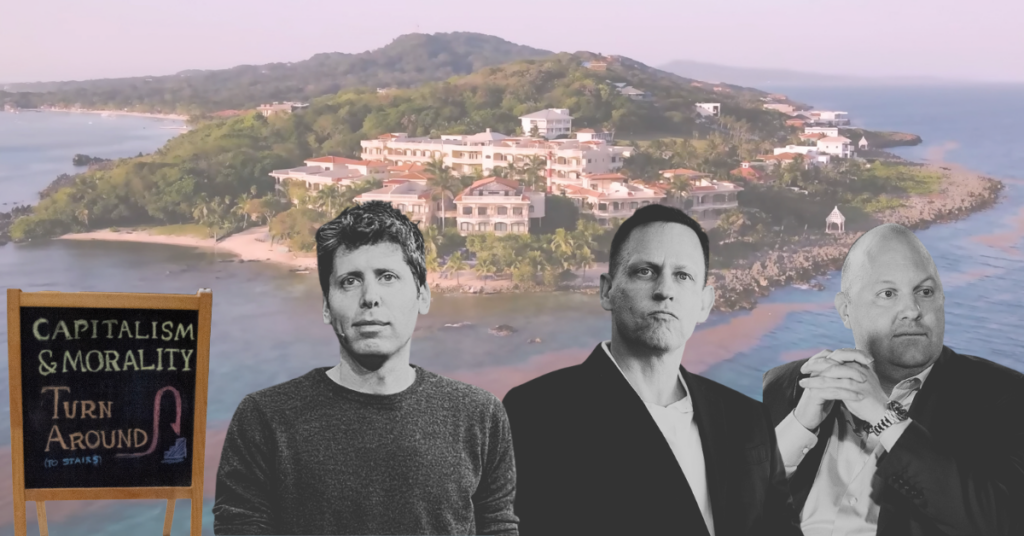
The leader by far is Murray Edwards, the founder and Executive Chairman of Canadian Natural Resources Limited (CNRL). The CNRL information circular dated March 18th stated that Edwards had 42.9 million shares worth $1.9 billion at the end of 2025 when the stock price was $46.49. That many CNRL shares would balloon in value to $3 billion by August 21, 2026 as the share price grew to $70.81.
This adds up to a war-related windfall of over $1 billion in unrealized gains over an eight-month period. Whatever his actual holdings are today, we know Edwards sold 500,000 shares worth $33 million on March 13, 2026. This was on top of Edwards’ total compensation in 2025 of $20.6 million. Edwards, who is often portrayed as a champion of Alberta fossil fuel expansion, is enjoying his winnings in St. Moritz, Switzerland, where he resides, according to CNRL filings.
Rich Kruger, the CEO of Suncor, held about 375,000 shares and options that were valued at almost $23 million on December 31 2025 when the share price was $61, according a recent management proxy circular. By the third week of August 2026, Suncor stock was trading at $94, meaning that Kruger’s personal holdings would be worth over $35 million – an unrealized windfall of more than $12 million.
Kruger’s salary in 2025 was $1.3 million, yet his total compensation that year including shares and options was valued at $15.4 million, showing how share price may be the primary financial incentive provided to oil executives. In the short period since January, the value of Kruger’s stock holdings ballooned from 17 to 26 times the size of his salary.
Interestingly, Suncor also includes executive bonuses specifically for emissions reductions in addition to those rewarding profitability. So how does Suncor choose to weight incentives for climate performance compared to jacking its share price? Climate performance share units represent only five percent of this long-term incentive program, indicating that maximizing the bottom line seems twenty times as important to Suncor as reducing emissions now contributing to devasting wildfires around the world.
Imperial Oil president John Whelan also enjoyed a substantial war-related payday. His total holdings in Imperial Oil shares and options had a market value of $17 million on February 11, 2026, according to the company’s proxy circular. He also held another 110,000 shares and restricted stock in Exxon valued at $23 million. By August 21, these holdings had increased by $4.7 million. These market value gains are $14.5 million if we instead measure share price increases from December 31, 2025 to August 21, 2026 based on the share prices of Imperial Oil and Exxon stock prices over that period.
It is important to note that stock values regularly rise and fall and until holdings are sold, such unrealized gains exist only on paper. However, the scale of these paper profits seems grotesque given the direct and indirect suffering caused by the war.
“Edwards and Kruger … got richer this year because of a war that shocked global markets”, Thomas Green, economist and senior manager of climate solutions at the David Suzuki Foundation told DeSmog. Noting the devastating wildfires across the world and punishing price paid by consumers at the pumps, Green observed, “that is the real balance sheet of the oil and gas sector: soaring executive wealth on one side, and a double hit to affordability, health and safety on the other.”
Jim Stanford, economist and director of the Centre for Future Work was likewise outraged by DeSmog’s findings.“It is unconscionable that the petroleum industry and its insiders are profiting so mightily from yet another oil shock, even as thousands die in the Middle East and millions in Canada see their living standards further eroded by oil-fueled inflation”, Stanford told DeSmog. “Their war profits come straight from the pockets of consumers who are paying far above the costs of production for petroleum profits, simply because of a policy choice to tie Canadian petroleum prices to this pointless global roller coaster.”
With no apparent irony, even Donald Trump took time this month to criticize the obscene profits being raked in by oil companies. “They’re making too much money based on a shortage,” he told reporters according to the Guardian. “I don’t like it.” The oil “shortage” the president referenced is due directly to the disastrous war he started with Israel against Iran in February, that has left the Strait of Hormuz still largely closed and has no end in sight.
Oil companies are perhaps the only winners from the ongoing conflict and related spike in global oil prices. ExxonMobil’s profits doubled in the last financial quarter as the company gorged on high prices that brought in a staggering $160 million per day. Chevron pulled in over $12 billion of net revenue in the three months ending in June, a five-fold increase over the same period last year.
Oil sands companies are likewise rolling in dough, making $13.3 billion in profits in the second quarter of 2026 alone. While wildfire-displaced Canadians huddle with their families in emergency shelters, the leading industry worsening the climate crisis is shovelling record dividends and buybacks at its shareholders and senior management. According to a recent article in Nature, oil sands companies release an equivalent amount of climate-destabilizing emissions as “the rest of Canada’s human-based sources combined”.
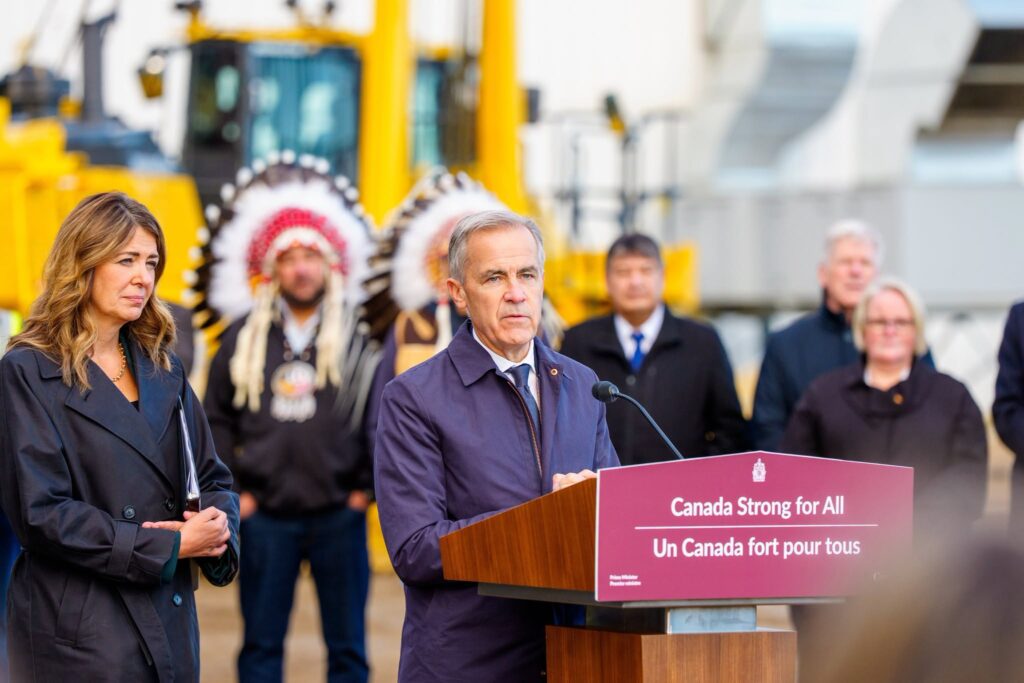
With such vast profits, it is small wonder why this privileged sector is investing so many resources in arm-twisting our elected leaders. A recent report from Environmental Defence showed that oil industry lobbyists booked over 1,300 meetings with Mark Carney’s government in his first year in office. That works out to more than more than five fossil fuel lobbying sessions per working day.
These efforts are obviously bearing fruit. Carney’s government has essentially caved on almost every single item on the oil industry wish list. That includes scrapping consumer carbon pricing ; exempting major projects from environmental laws; scrapping a proposed emissions cap on oil and gas producers; weakening rules on methane pollution; watering down clean electricity regulations; cutting funding to Environment and Climate Change Canada; scrapping greenwashing rules; repealing the EV Availability Standard; and of course, billions in fossil fuel subsidies.
Canadians can take comfort in knowing that the federal government just announced a $34 million resilience fund to help communities cope with fossil fuel driven climate change. How much is that?
It’s less than four percent of the recent personal windfall Murray Edwards will enjoy from the comfort of St. Moritz.
Angry yet?