

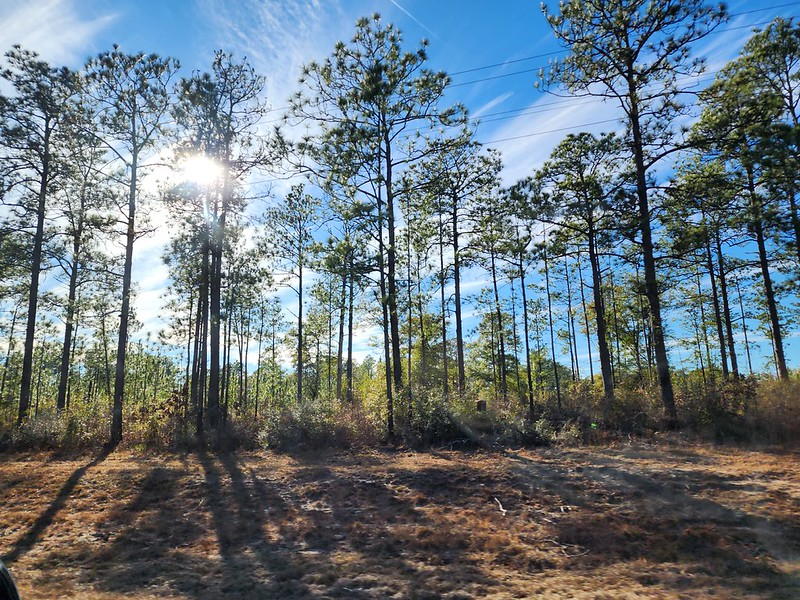
In southern Alabama, a major underground carbon capture and storage (CCS) project, the Pine Hills Storage Hub, is slated for the woods of Covington County.
Laurie Lundy, who lives in the nearby Conecuh National Forest on land that once belonged to her husband’s great-grandparents, is among those worried about the project’s impacts. She said the lack of community input has been “a huge problem.”
Proposed by Reliant CCS, the Pine Hills project plans to store carbon dioxide (CO2) beneath roughly 104,000 acres owned by a timberlands real estate investment trust. Covington County spans about 660,000 acres in total.
Following the outcry from residents, the Covington County Commission unanimously adopted a resolution opposing the project. State officials also introduced legislation that would let residents vote whether to ban CCS wells in the county — but the bill was delayed by a state committee in February, with its chairman, Andy Whitt, citing concerns about how the legislation impacted other counties and property owners’ rights. Whitt did not respond to a request for comment.
Lundy is concerned that voters still aren’t being heard in her state, or in others that are welcoming CCS projects, despite dissent from the communities where they plan to build.
“If my vote is good enough when I go to the poll to vote someone in,” she asked, “why is my vote being suppressed on this topic, on CCS?”
As billions of dollars pour into an influx of CCS projects across the U.S., often to help store emissions generated by the fossil fuel plants powering data centers, the government officials responsible for regulating that underground carbon are changing.
The U.S. Environmental Protection Agency (EPA) regulates the injection of fluids, including oil and gas drilling wastewater to CO2, into subsurface storage wells to protect drinking water that comes from underground sources.
But just as the CCS industry is rapidly expanding, its regulation is being decentralized as more states seek to take over the EPA’s regulatory authority, a move that is being encouraged by both the federal government and fossil fuel interests.
The shift comes at a pivotal moment for CCS. The EPA has approved just 19 Class VI carbon-storage well permits to date, but is reviewing another 142 applications, a third of them submitted within the past year. That figure doesn’t include dozens of applications in the states that already oversee CCS projects themselves.
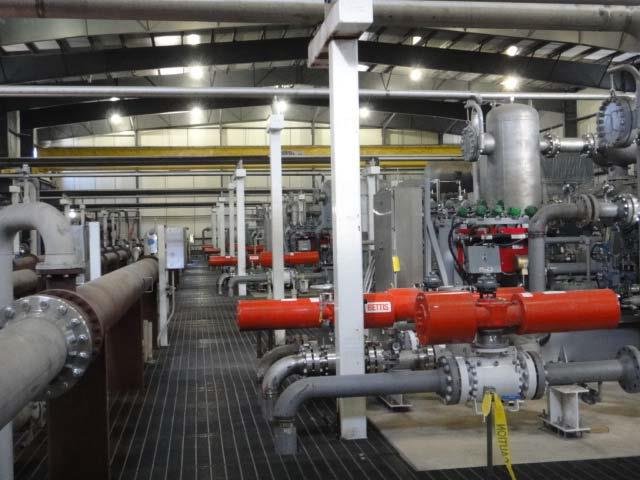
Unlike older well types that focus on squeezing more oil out of declining wells, Class VI wells are built strictly for permanent storage of carbon — which needs to stay buried for 10,000 years to avoid climate impacts, according to research led by the University of Cambridge. But the category of wells is so new that some of the long-term risks are still emerging.
“We don’t really know where a lot of the pratfalls are gonna end up being,” Forrest Smith, a petroleum engineer and director of engineering at TAQ Energy, told DeSmog.
Smith, who specializes in well plugging, abandonment, and regulation — and whose current projects include a pair of Class VI wells in the early planning stages — said that the new well designation came with an engineering and review process that is, for the most part, “a lot stricter” than requirements for oil and gas wells, which he’s happy to see, though he hopes the projects “would have a very extensive review” before being used.
In terms of states’ abilities to take over that process, Smith, who previously worked for the National Park Service, said it depends on “how the state is managed,” but that large states with a lot of revenue would probably do fine, while others, which “don’t have the resources available to work on oil and gas wells,” may also have difficulty regulating CCS projects. He said he’d like to see a “melding” in which the EPA keeps more authority while still involving states in the process.
The EPA has been eager to hand over regulatory authority, as evidenced by documents the research organization Fieldnotes shared with DeSmog.
CCS project proposals are also being spurred on by sizable federal subsidies. IEEFA estimated that the tax credits offered could cost taxpayers more than $835 billion, or $5,200 per federal taxpayer, over an 18-year period. Meanwhile, using CCS at gas plants — which has yet to be done at commercial scale — could double power generation costs.
In addition to questions about CCS’ effectiveness and upfront costs, researchers, advocacy groups, and communities near CCS projects, like Lundy’s, are worried about the environmental, public health, and long-term financial risks involved — and the ability of regulatory agencies, whether state or federal, to prevent those problems from happening.
Early warnings
The nation’s first active permanent carbon storage well, located in Decatur, Illinois, offers an example of the problems regulators could face as the industry expands, and that states need to be prepared to deal with as oversight increasingly shifts away from the EPA.
The project, which is owned by multinational food processing and commodities giant Archer Daniels Midland (ADM), was awarded $281 million in federal funding, and began storing CO2 from ADM’s adjacent ethanol plant in 2017.
Then, in March 2024, ADM discovered a CO2 leak. The company, which had already reported smaller leaks in 2021 and 2022, waited until July to notify the EPA, which alleged that the company “violated its permit when it failed to monitor the injection well.” The public, and some local and state officials, wouldn’t learn of the leak until E&E News and other media, including DeSmog, reported on it that September.
In the months between the leak’s detection and the notifications, the City of Decatur finalized an easement for ADM to sequester CO2 under Lake Decatur, and Governor J.B. Pritzker signed Illinois’ SAFE CCS Act into law. Councilmember David Horn said in a statement that earlier knowledge of the leak may have influenced the terms of those agreements.
The episode occurred under EPA oversight, rather than a state-run Class VI program. But that makes Decatur particularly relevant as the federal government encourages more states to take responsibility for these wells. If significant monitoring and disclosure problems can occur under direct federal oversight, what safeguards will be in place as hundreds of proposed wells move through a regulatory system increasingly administered by states — some of which environmental groups and others say have poor records overseeing existing oil and gas wells?
CO2 injections at the Decatur facility ceased for about a year after the leak, which ADM said involved several thousand metric tons of fluid, according to E&E News.
Even so, last year, Google announced “a first-of-its kind corporate agreement to support a gas power plant with CCS.” The plant, Broadwing Energy Center, will help power Google’s data centers and use ADM’s facility to store CO2.
“Once fully operational, more than 90 percent of the carbon dioxide (CO2) produced by the plant is expected to be captured,” according to Broadwing’s website, which says the project “will serve as a model for reducing carbon emissions across the globe.”
Project developer Low Carbon Infrastructure and Google’s press office did not respond to several questions.
Compared to other wells, Class VI wells have a “dramatically increased” risk of leakage and structural issues, according to a study published in the Journal of Rock Mechanics and Geotechnical Engineering last month. It found that traditional guidelines “are insufficient for ensuring long-term well integrity under aggressive injection conditions, especially injecting into depleted oil and gas reservoirs.”
In addition to the possibility of leaks that contaminate the environment and groundwater, due to the pressure and concentration of CO2, there’s also concern that a sudden rupture could release a low-hanging cloud that poisons those in the vicinity. Such an incident occurred in Mississippi in 2020, when exposure to CO2 from an exploded pipeline hospitalized at least 45 people. The pipeline operator was accused of multiple violations by the U.S. Department of Transportation’s Pipeline and Hazardous Materials Safety Administration.
CCS facilities will also need more pipelines to transport the CO2. The U.S. had about 5,000 miles’ worth of CO2 pipelines as of 2022, according to a congressional report, but could have some 66,000 miles by 2050. New federal requirements for CO2 pipelines were proposed in January 2025, but withdrawn in accordance with one of Trump’s executive orders.
Offloading Liability to State Regulators
In spite of ongoing regulatory challenges, many states want to take over. Proponents argue that states can review projects faster than the EPA, and the process benefits from local geological expertise.
Last year, the EPA gave three more states oversight authority, bringing the total to six: Arizona, Louisiana, North Dakota, Texas, West Virginia, and Wyoming. It also proposed that Colorado’s application be approved in March. About a dozen other states, territories, and tribes are applying for Class VI primacy, or plan to.
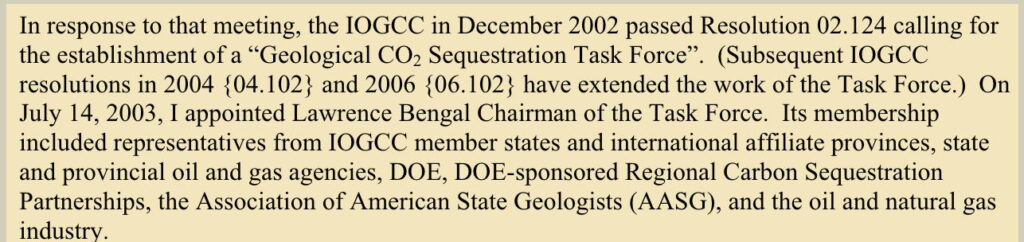
The EPA is encouraging handing over regulatory authority to states, according to the Fieldnotes documents. Talking points prepared for EPA Administrator Lee Zeldin ahead of a data center coalition event noted that “the Trump EPA is continuing to support natural gas generation” to power data centers by streamlining the Class VI permitting process; and Bill Bates, another EPA official, said at an Interstate Oil and Gas Compact Commission (IOGCC) meeting last year that Zeldin had directed the agency “to fast-track” approvals for permitting Class VI wells and for states to take over authority.
The EPA said in a statement that it “thoroughly reviews each application in close coordination with the state to ensure the primacy program will properly meet all requirements of the Safe Drinking Water Act,” but didn’t directly answer a question about what changes, if any, the fast-tracking has entailed.
Many members and appointees of IOGCC, a quasi-governmental agency focused on informing oil and gas regulations, are industry lobbyists, attorneys, and executives. Julia Kane, a Fieldnotes researcher, described it as being “completely co-opted by oil and gas interests.”
The agency’s promotion of CCS projects and the idea that states should regulate them began in the 2000s, the the documents show. So did the suggestion that operators should be able to use eminent domain to claim private land for CCS use, an aspect of Louisiana’s Class VI program that has sparked outrage.
Environmental groups in Louisiana filed a lawsuit challenging the EPA’s decision to grant the state oversight authority, which was dismissed. Louisiana Gov. Jeff Landry later placed a moratorium on new CCS project applications.
Other states’ approval for regulating the carbon-storing wells have generated similar pushback.
In theory, state Class VI regulations must be “at least as stringent” as the EPA’s, according to Congress, but some critics say that isn’t happening, and their states’ track records suggest they can’t be trusted to adequately monitor CCS projects.
A lawsuit filed by groups in West Virginia is arguing that the EPA “failed to grapple with record evidence that West Virginia had failed to effectively implement at least three similar federal environmental programs,” and that the state’s Class VI regulations aren’t as strict as the EPA’s.
Before Texas started regulating CCS wells in 2025, several environmental groups sent a petition to the EPA that outlined problems with Texas’ existing well programs, and requested that the state’s authority be revoked. The EPA said it would evaluate the issues, and later denied the petition, stating that it “does not demonstrate” that Texas isn’t meeting requirements.
The EPA also received a letter from the Environmental Integrity Project, an environmental watchdog group, calling attention to thousands of other wells in Texas with CO2 permits that had significant non-compliance violations. Seven congressmembers also wrote to the EPA that the Texas Railroad Commission (RRC), which would oversee the state’s CCS projects, “has a sorry history of lax regulations and enforcement that prioritizes fossil fuel executives over the well-being of our communities.”
Texas’ Class VI application tracker currently lists 18 projects. Occidental Petroleum’s Brown Pelican Project, the first to be approved — which the EPA reviewed before Texas gained oversight — has already attracted concern. IEEFA says that the draft permits had “inadequate emergency and remediation measures and insufficient financial assurances.”
RRC did not respond to a request for comment.
After the well issues in Illinois and Texas were publicized, more than 150 groups urged the EPA to halt CO2 injections into existing wells, and stop approving new applications. U.S. Reps. Sean Casten (D-Ill.) and Jared Huffman (D-Calif.) sent Zeldin a letter last year with similar requests, which included a list of questions about how the EPA reviews and monitors underground injection well applications and projects.
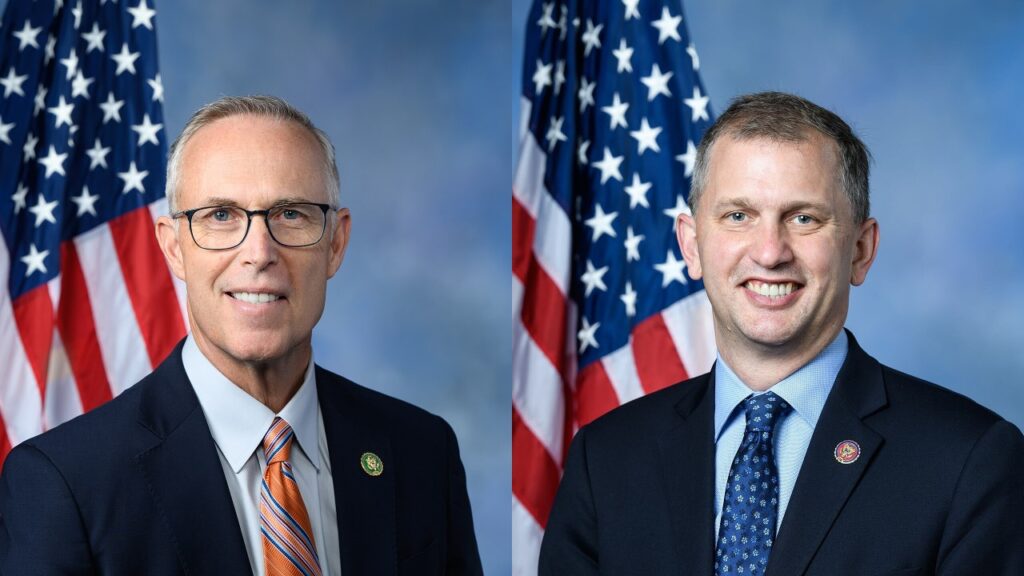
Jacob Vurpillat, Casten’s senior advisor and communications director, shared the EPA’s response, which said, in part, that, “to Power the Great American Comeback, EPA is working to advance energy production in the United States while protecting human health and the environment; this endeavor requires cooperative federalism and targeted permitting reform.” It also said that having states take over regulation of CO2 wells “is a priority for EPA.”
Vurpillat said the letter “does not really answer the questions posed by Rep. Casten,” who “remains concerned with EPA’s oversight and review of the well projects.”
Questions of future accountability
Beneath the concerns about CCS projects’ safety and effectiveness is the question of who will pay the price if things go wrong in years to come.
Some states already face billions of dollars’ worth of cleanup and plugging costs for abandoned and orphaned oil and gas wells, and regulators have struggled to enforce compliance from oil and gas companies, which have little incentive to pay for cleanups after the fact. There’s concern that the same will be true for CO2 wells.
“I would like to see more of the future of these [CCS] projects laid out,” said Smith, the engineer, who sees long-term liability and financial assurance being the biggest issue for these wells.
“You get companies that [say] ‘we’re gonna be here til the sun burns out,’ and then, you know, next week, they’re gone,” he said.
Parts of the industry have already planned to avoid long-term liability. Without a mechanism to transfer “the long-term liability” of CO2 storage wells to states, the “onerous implications” might prevent the projects from happening at all, an IOGCC report from 2007 noted.
“The vast majority of lobbying dollars on CCS have come from the oil and gas industry,” according to Fieldnotes’ Kane, who wrote an investigation that highlighted coordinated efforts by major companies to profit from CCS projects and shift oversight from the EPA to states.
“They really are trying to offload the risk onto the taxpayers,” she said.
After a Class VI well stops receiving CO2 injections, the company retains responsibility for some length of time. The EPA established a default 50-year post-injection period, but states with regulation authority can set a different time frame. Wyoming, for example, requires the firm operating the wells to remain liable for leak monitoring and other issues for only 10 years.
Alabama, where Lundy and others in her community are pushing back against the proposed CCS project, is still applying for authority over Class VI wells. Like Wyoming, it passed legislation in 2024 allowing companies to offload liability after a decade; the law also allows operators to pool underground storage areas with the consent of two-thirds of affected landowners and to “use commercially reasonable efforts to limit the adverse surface-use impact” on non-consenting landowners’ properties. Reliant, the Colorado-based CCS development and policy firm that owns the Pine Hills project, said in a release that it “played a pivotal role” in the legislation and “spearheaded the drafting.” The company did not respond to a request for comment.
In response to a question from DeSmog about post-injection liability for CO2 wells, an EPA statement said that operators or owners must monitor a site “until the appropriate agency determines that the project no longer poses a risk to underground sources of drinking water” and approves its closure.
The varying requirements that companies provide future financial assurances for oil and gas well operations, often through bonds, have historically been set far below the actual costs of cleanup and plugging efforts. Nationwide, available bonds would cover an estimated 1 percent of the $280 billion cleanup tab for abandoned wells.
Now some of the same oil and gas firms, which sometimes have thousands of idle wells awaiting cleanup, are rushing to build CCS projects.
“This whole thing is just a total boondoggle,” Liza Tucker, a staff energy advocate at the nonprofit Consumer Watchdog, told DeSmog. She just published a reportexamining the risks arising from CCS projects, particularly in California, where the California Resources Corporation (CRC), its biggest oil and gas producer, recently completed the state’s first Class VI well as part of its Carbon TerraVault project. The EPA regulates California’s carbon storage wells, but the state has its own carbon capture program.
“This whole thing is just a total boondoggle.”
— Liza Tucker, Consumer Watchdog
California has tens of thousands of unplugged wells, which could ultimately cost at least $13 billion to plug, but oil and gas companies have provided just a fraction of that amount in bonding.
Meanwhile, Tucker said, state regulators haven’t enforced current bonding laws.
“We don’t want Californians to be left holding the bag on billions of dollars,” she told DeSmog.
Jacob Roper, California Department of Conservation’s assistant director, said in a statement that “capture-based carbon sequestration is already a goal for many of our conservation programs,” and that his department and others were continuing to create a CCS framework.
He said the department “requires bonding at the rates and amounts specified in the state’s public resources code,” and that, ultimately, “we want to ensure that each well is plugged and sealed at the end of its life in order to protect public health, public safety and the environment.”
In response to questions from DeSmog, CRC Senior Director of External Affairs Hailey Bonus provided a link to an FAQ about Carbon Terravault.
Smith said he thinks the “long-term success” of Class VI wells will come down to continuous monitoring, and “making sure that there’s a clear path of liability that goes down that doesn’t end up dumped on the taxpayer.”
When asked about the wells’ ability to store CO2 permanently, he said he thinks they’ll generally be O.K. “as long as you’re doing due diligence,” which includes monitoring and maintaining any nearby wells that stored CO2 could seep to, something he said can be difficult and expensive.
As for the “long, long, term,” he said, “we don’t really know.”
Meanwhile, in Alabama, Lundy and others wait to see what becomes of the Pine Hills CCS project — and the legislation that would give them a say in whether companies can pump CO2 into their county.
Some people are saying the project is “already a done deal,” and there’s nothing to be done about it, Lundy said. But she’s staying involved because of the legacy the land has for families like hers.
“It’s about our water, it’s about our property, it’s about the national forest,” she said.“There’s not going to be any compromise when it comes to businesses with billions of dollars; that includes our government,” she added. Even so, she said, “people need to be able to know what’s happening. The issue isn’t going to go away.”