As House Republicans crafted President Trump’s domestic policy bill last spring, the oil and gas industry watched closely, eyes trained on the fate of one policy in particular: a fee on excess methane emissions for major emitters in the oil and gas industry. Even though Congress had previously repealed the rule implementing the methane tax via the Congressional Review Act, industry wanted the tax itself off the books entirely. In May 2025, as the bill moved out of committee, American Petroleum Institute President and CEO Mike Sommers said in a statement, we “are hopeful that the final package includes the permanent repeal of the punitive ‘methane fee.’”
One problem? Despite their disdain for this piece of Biden-era climate pollution regulation, Republicans needed its revenue to pay for the tax cuts at the heart of what they would brand the One Big Beautiful Bill, which also made sweeping cuts to federal food assistance and healthcare programs. While broader public concerns about affordability were rising alongside global temperatures, oil and gas groups leaned on Congress in the hopes of getting what they wanted from the EPA.
According to a new report, this is part of a pattern that the oil and gas industry has used to target several Biden-era federal methane pollution regulations. The investigation released last week by the oil and gas watchdog group Fieldnotes, based on hundreds of pages of internal trade association materials, public records, and public statements by industry leaders, reveals how the oil and gas industry has voiced public support for federal methane rules while covertly working to, as Fieldnotes says, “eviscerate” them during the second Trump administration. Some scientists and policy experts say reducing methane, a potent but short-lived greenhouse gas, could help act as “pulling the emergency brake” for climate change. These intertwined industry and political efforts come during a time of extreme climate, health, and economic vulnerability and massive industry profits.
Since President Trump took office again, the U.S. Environmental Protection Agency (EPA) has met with oil and gas industry representatives at least three dozen times in his administration’s first year to discuss a suite of its methane rules, according to the report, which is based on public records. As an industry trade group described in an email to its members, it viewed reconsideration of a targeted methane rule, rather than outright repeal, as a way to achieving alterations leading to dramatic enough changes as to “essentially gut” it (In its report, Fieldnotes is withholding certain details to protect source identity; DeSmog has reviewed all of those original materials referenced in this article). Reconsideration ended up being the route EPA Administrator Lee Zeldin has pursued in rollback after rollback, including for a reporting rule known as Subpart W, which is part of the similarly threatened Greenhouse Gas Reporting Program. In its report, Fieldnotes quotes one oil lobbyist who privately described industry as now possessing “the keys to the kingdom.”
In response to questions about its meetings with oil and gas interests about the methane rules, an EPA spokesperson told DeSmog via email, “EPA meets with a wide variety of stakeholders when developing common-sense regulations.” They added, “We heard consistently from American oil and natural gas producers (shocker that we meet with stakeholders) that the Biden-Harris Administration’s oil and gas methane regulations were unworkable and unnecessarily restricted American energy dominance.”
Sommers, API’s head, said at an energy summit last year, “We also support the full federal regulation of methane,” a sentiment echoed in his public comments submitted on behalf of API to the Biden EPA as it finalized these rules. Those comments also expressed some concerns, especially around timelines.
The American Exploration and Production Council (AXPC), a trade group representing independent oil and gas companies like ConocoPhillips, Hess, and Hilcorp, stated in January 2021 that its members “are focused on reducing methane emissions” and “support effective and reasonable regulation of methane that balances the essential value of US oil and natural gas production with the global challenge of addressing climate change.”
Jacquelyn Kellar-Davis, Environmental Defense Fund Midcontinent Communications Specialist, told DeSmog via email that oil and gas companies that previously voiced public support for federal methane measures aimed at reducing waste and pollution now should “stand up and make their voices heard in support of clear, comprehensive methane standards.”
On Thursday, top Senate Democrats released the results of an investigation into President Trump’s 2024 request for $1 billion in campaign donations from oil and gas executives. Among Democrats’ findings, the report found that after donating $201 million to re-elect Trump and his allies, oil and gas companies will now collect an estimated $190 billion in tax breaks and subsidies over the next decade, thanks to the One Big Beautiful Bill and existing subsidies.
“Instead of using the presidency to address the affordability crisis, lower costs, and protect Americans’ health and safety, Trump has used his power to deliver for his billionaire buddies in the fossil fuel industry,” Senate Democratic Leader Chuck Schumer (D-NY) said in a statement. “The message from this administration is clear: Big Oil gets the profits, and American families get the bill.”
These reports arrive as Americans from Spokane, Washington to Pensacola, Florida experience rising climate-linked disasters and extreme weather, ranging from worsening wildfires and dangerous levels of heat and humidity to flooding and drought. At the same time, they may face high expenses while coping with the cost of extreme weather, whether from increased air conditioning or seeking shelter after a wildfire evacuation. This reality is now colliding with the increasing costs of basic necessities like housing, food, and transportation as the Trump administration and Congress simultaneously have been reducing many federal assistance programs and staffing at agencies that support those who are facing disasters. Since March, the U.S. and Israel war in Iran, which has scrambled oil and gas markets, has further exacerbated the squeeze on consumer prices, yet allowed the world’s 100 biggest oil and gas companies to rake in an extra $23 billion during just the first month of the war.
Jess Ralston, the head of energy at the Energy and Climate Intelligence Unit, told the Guardian: “This oil and gas crisis is illustrating yet again the cost of our dependence on volatile fossil fuels,” adding, “Calls to increase fossil fuel production and row back on net zero measures in the face of this new crisis would simply undermine our energy security and increase our exposure to damaging climate impacts.”
The United Nations (UN) recently warned that global warming likely will soon pass the 1.5 degree Celsius (2.7 degree Fahrenheit) target of the Paris Agreement, “pushing climate risks and impacts to increasingly dangerous heights.” To avoid the worst effects of climate change on human health, security, nature, and economy, the UN recommended “immediate and sustained cuts” to methane emissions, among its suggestions for a pathway to returning to a safer climate.
Industry-commissioned research and internal company documents show that the oil and gas industry has known for decades, and later downplayed, the climate risks of methane. Rather than share what it learned with the public, the industry instead tried to spin natural gas as a “clean” climate solution, according to a report from the Center for Climate Integrity and reported by DeSmog.
Now, as oil and gas firms in the U.S., which releases more methane from this sector than any other nation on earth, are faced with the prospect of addressing these emissions under Biden-era rules, they have used powerful trade groups to reshape the regulatory environment under Trump, says Julia Kane, the Fieldnotes report author. “They want to avoid accountability, whether it’s through eliminating third-party monitoring like the Super Emitter Program, or killing financial penalties like the methane fee,” she says, “Ultimately, they want to keep the veneer of regulation, but not much more.”
The Methane Fee: ‘Eliminate the tax altogether’
Not long after the 2024 presidential election, oil and gas industry leaders set their sights on taking out the methane fee, formally known as the Waste Emissions Charge. Passed under the Inflation Reduction Act in 2022, the methane fee applied to “the least efficient and most wasteful of oil and gas facilities” per the EPA, and marked the first time the U.S. government imposed a tax on greenhouse gas emissions.
Finalized in 2024 and incorporated under Biden’s larger Methane Emissions Reduction Program, this legislated update to the Clean Air Act would have required oil and gas facilities releasing more than 25,000 metric tons of carbon dioxide equivalent to pay a fee on an additional subset of methane emissions over a certain threshold. For excess emissions in 2024, qualifying companies would have had to pay $900 per ton, ratcheting up to $1,500 a ton this year.
Still, it had many exemptions, says Kane, with EPA estimating just a few hundred facilities that would be subject to the fee.
Anne Bradbury, President and CEO of AXPC, spelled out the group’s preferred political strategy for the methane fee in late 2024. “Our, you know, perspective is that we should hopefully undo the implementing rules via CRA [Congressional Review Act] and then through the reconciliation process, eliminate the tax altogether,” she told her peers at an industry gathering.
Shortly after the rule was finalized and just before President Trump retook office, independent oil and gas trade groups (although not AXPC) along with Republican-led states sued to prevent the EPA from enforcing the methane fee. In February 2025, Republicans passed a Congressional Review Act resolution killing the rule that implemented the tax.
Although the methane tax was effectively gutted, industry continued to push Congress to remove the fee through the budget reconciliation process, which required only a simple Republican majority to pass. The charge to emitters technically still existed under the Inflation Reduction Act, and a future administration could write a new rule to enforce the fee.
“The promise was to eliminate that thing. They need to get a little creative about figuring out how to get this done.”
Oil lobbyist on GOP efforts to repeal the methane fee
“We’re trying to totally kill it,” Senate Environment and Public Works Committee Chair Shelley Moore Capito (R-W.Va.) told Bloomberg Law in March 2025. She maintained that cutting the methane fee’s revenue wouldn’t affect Republicans’ ability to offset Trump’s tax cuts in the reconciliation bill. Further decreasing revenue in these budget negotiations risked alienating critical votes from fiscal conservatives worried about the deficit.
But the oil and gas industry was concerned about what it said would impose high costs on energy producers. In November 2024, Bradbury of AXPC had said in a statement, “This methane tax would disadvantage American producers and increase Americans’ energy costs, cause 90,000 jobs lost across the country, and an additional $9 billion lost from our country’s GDP.”
Now, Republicans debated what programs to slash or keep to pay for Trump’s domestic policy bill. In public, API’s Sommers urged the House committee to “repeal…the punitive ‘methane fee,’” while in private, an executive from another trade association was more direct about the industry’s expectations from Congress. “The desire, I think, on the part of most Republicans — and in some cases, the promise — was to eliminate that thing,” they said on an internal call, according to Fieldnotes. “They need to get a little creative about figuring out how to get this done.”
What ensued, according to a lobbyist quoted in the Fieldnotes report, was a series of “backchannel” conversations between top brass in the EPA’s Office of Air and Radiation (now led by Aaron Szabo, a former registered lobbyist for an AXPC member, according to ProPublica) and the Senate Environment and Public Works Committee. This campaign of influence and coordination, the report asserts, would help fudge the estimated costs of slashing the methane fee, making them now appear lower and justify fitting them into Trump’s tax cuts.
That same lobbyist, described these efforts, saying of EPA’s senior political appointees: “They’re working to generate enough data from EPA to sort of help make the case the cost of repeal would be less than the Congressional Budget office thinks it would be,” the lobbyist explained. “That’s really central for us in the Senate.”
Embed from Getty ImagesAaron Szabo, now EPA Office of Air and Radiation Assistant Administrator, during his Senate EPW Committee confirmation hearing. Credit: Allison Robbert/Bloomberg via Getty Images
The Senate EPW did not return a request for comment.
In February 2025, the Congressional Budget Office estimated the lost revenue from revoking the rule enforcing the methane fee at more than $7.4 billion over just a decade. After the One Big Beautiful Bill passed that July, the Congressional Budget Office estimates showed that cutting the funding for the methane fee program would reduce revenue by $1.5 billion and save $330 million between 2025 and 2034.
Ultimately, Congress opted to delay the methane fee from applying to emissions until starting in 2034. However, EPA no longer has any rule in place to enforce. The agency said in a statement, “EPA is currently evaluating options and obligations for implementing” the methane fee “and will provide additional information to the regulated community at an appropriate time.”
API had encouraged the House to pass the One Big Beautiful Bill with the methane fee delay in May, with Sommers writing in a statement, that the bill was “beginning to reverse a punitive ‘methane fee.’” In a statement following its passage, AXPC called the delay a “functional repeal” that “restores certainty and supports continued emissions reductions through innovation, not penalization.”
API, AXPC, and the Independent Petroleum Producers of America did not respond to a request for comment.
Routinely Flaring Gas: ‘You don’t really have a business model’
A 1966 Shell document revealed the company was aware that at some of its global drilling operations, “natural gas is liberated in embarrassingly large quantity at oilfields,” with few attractive options for dealing with it, including being “burned in huge flares.”
Over 50 years later, venting, flaring, and leaking methane remains a problem for the oil and gas industry. In an internal 2020 email obtained through a congressional investigation, a Shell employee wrote, “We can’t say it so bluntly, but if you need to vent methane and routinely flare gas, then you don’t really have a business model that works in a world striving to achieve the goals of the Paris Agreement.”
“We’re just flaring a tremendous amount of gas,” Ron Ness, North Dakota Petroleum Council president said during a private industry gathering in 2019. “This pesky natural gas,” he said. “The value of it is very minimal,” especially for the companies primarily drilling for oil, which draws a higher price. (A drilled well can tap a mixture of oil and gas in varying amounts depending on the geology.)
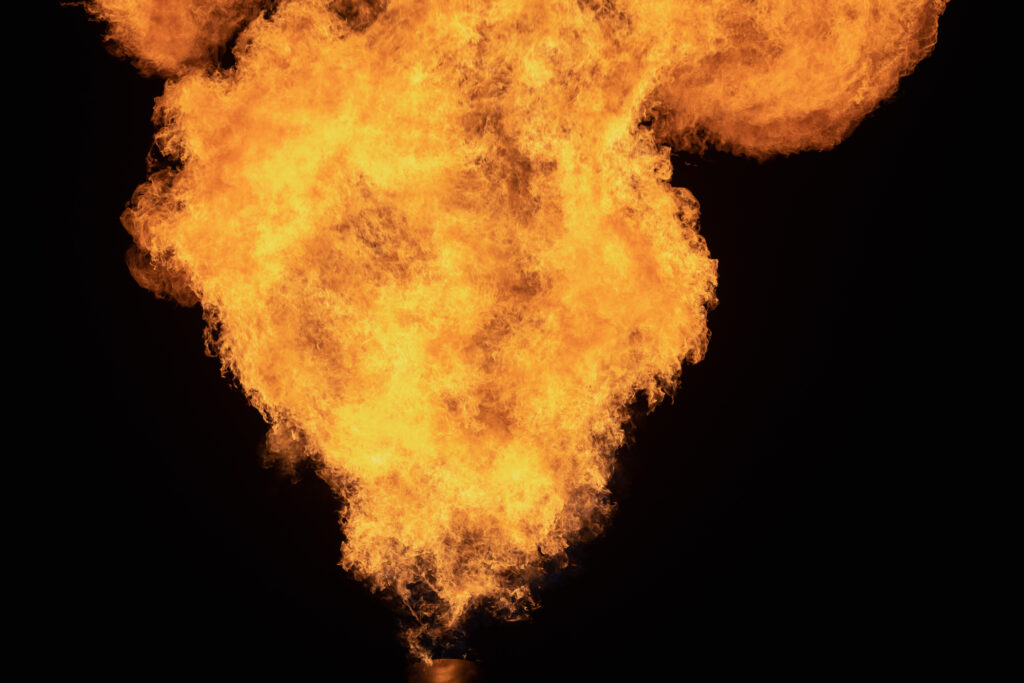
Under President Biden, the EPA finalized rules on oil and gas facilities to report and cut down on methane waste — including a rule targeting leaking, venting, and flaring. Known as OOOOb/c, this rule regulated methane both from new oil and gas operations, and for the first time, existing facilities too — and would ban routine flaring. It also established the Super Emitter Program, a third party monitoring system to report major leaks and blowouts.
At the time, the EPA estimated this rule would prevent the release of 58 million tons of methane and 16 million tons of volatile organic compounds, a class of potentially harmful chemicals associated with burning fossil fuels, leading to significant public health and climate benefits. For the applicable facilities, the OOOOb/c rule would lead to a 79 percent drop in methane emissions.
Republican-led states and industry groups filed a legal challenge againstthe Biden EPA in March 2024 after it finalized this rule.
Under President Trump, a year later, as part of Administrator Zeldin’s broad push reversing many environmental regulations, the EPA proposed overhauling the OOOOb/c rule, which it said was “strangling American energy producers.” Since then, the EPA began making changes to the rule, for instance, that delay some compliance deadlines until 2027.
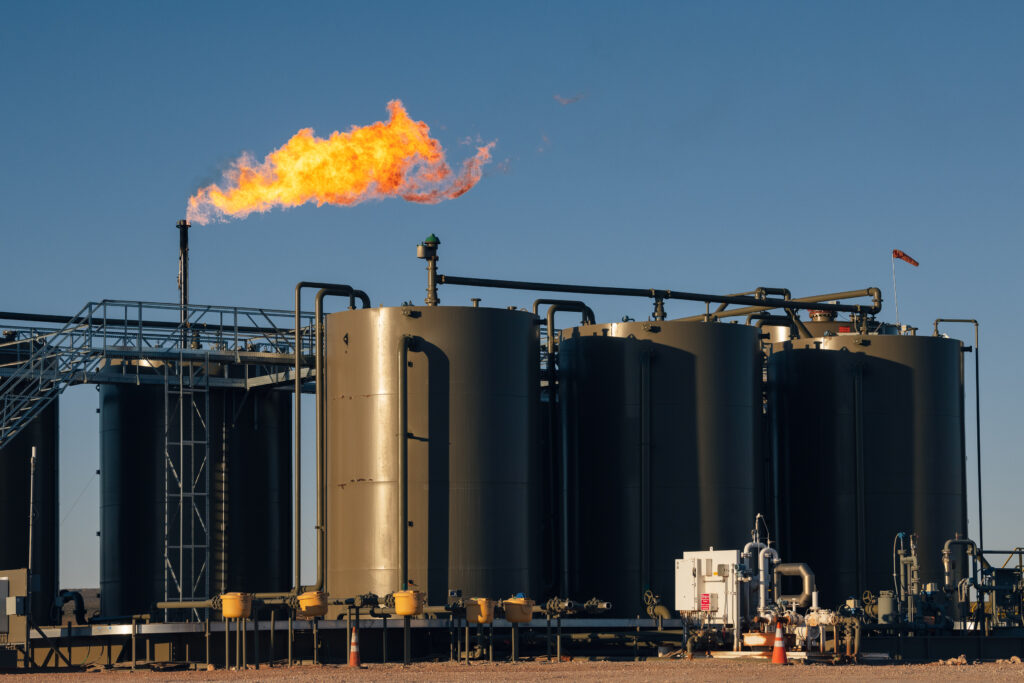
However, one deadline loomed: May 7, 2026. This marked the permitted end of flaring, or intentionally burning natural gas — which is mostly methane — at new wells during normal operations. In the weeks before this deadline (“a narrow regulatory cliff,” as one trade group called it), independent oil and gas companies with substantial operations in North Dakota and Montana’s Williston Basin and Texas’ Permian Basin began sending letters to the EPA. The requests all hit similar points. These companies, Continental Resources (founded by fracking tycoon Harold Hamm, a major Trump donor), Chord Energy, and Kraken Oil and Gas Partners LLC, asked the EPA to remove the deadline and allow routine flaring in some circumstances.
They argued that some places like the Williston Basin did not have enough pipeline capacity, that “gas quality” issues from toxic hydrogen sulfide could prevent natural gas use, and even the weather could cause outages requiring routine flaring. Continental’s letter cited 630 cases of routine flaring over a two year period, with 65 percent “caused by events or conditions outside Continental’s control.” Taken together, Continental wrote, the rule should be changed to “allow the consideration of economic feasibility.”
Further, the companies warned, the end of routine flaring threatened oil production. “Reducing flaring to zero would have resulted in an estimated loss of 225,000 barrels of crude oil over four years,” wrote Kraken’s general counsel.
The letters, sent within days of each other, came on the heels of an April 14 meeting between the EPA Office of Air and Radiation (OAR) and Continental Resources and other operators, according to Continental’s letter. The companies either cc’ed EPA OAR deputy assistant administrator Abigale Tardif or were addressed to EPA OAR head Szabo, both of whom previously served as oil lobbyists.
On April 30, Szabo issued a memo stating that the EPA believes there are existing “flexibilities” in current regulations to allow for routine flaring and that “insufficient pipeline capacity” could qualify as a “temporary interruption in service.” The memo specifically cites “economic reasons” such as “having too much gas in a certain area,” which can “result in negative gas prices.” That effectively creates a “significant loophole” for operators to continue routine flaring, says Kane of Fieldnotes, and is allowed for up to 30 days.
Jarrod Agen, executive director of the National Energy Dominance Council, later described the exception as a “flaring waiver we just announced that can help with production.”
Chord, Continental, and Kraken did not respond to a request for comment by deadline.
What’s Next for Controlling Methane Pollution in the U.S.?
The U.S. EPA currently is not enforcing any of the remaining methane regulations still on the books, Kane is quick to emphasize. The government is expected to publish a proposed revision of the OOOOb/c rule, along with the loosening of other methane rules, like Subpart W, any day.
What exactly that will look like remains to be seen.
“We have to see what [the Trump administration] finalizes with regard to methane,” said Carrie Jenks, the executive director of Harvard Law School’s Environmental and Energy Law Program. “It’s probably going to miss the opportunity that exists to leverage the technology to give companies the options to reduce methane in an effective way.”
Regardless of the administration’s future actions, current methane pollution impacts on the global climate and American pocketbooks are already being felt in various forms.
A 2025 Brookings Institution report found that climate change is inflating costs for American households each year by an average of $400 to $900, mostly from extreme weather. The costs are not equitably distributed and “imply important caution for the future,” the authors warn.
“While some industry trade groups work behind closed doors with the Trump Administration to water down common-sense methane standards, more than $6 billion in methane has been wasted,” Kellar-Davis with EDF said. “This is gas that could have heated our homes and powered electricity as energy bills for consumers skyrocket.”
Ashley Braun contributed reporting.