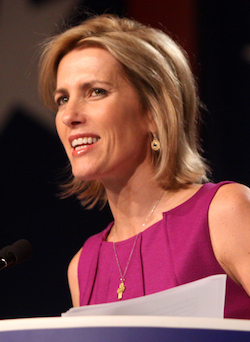
Laura Jones
Credentials
- M.A. in Economics from Simon Fraser University in British Columbia (1992–1996).1“Table of Contents: Global Warming: The Science and the Politics,” Fraser Institute, 1997. Archived .pdf on file at DeSmog. 2“Laura Jones,” LinkedIn. Accessed February 2024. Archived .pdf on file at DeSmog.
- B.A. in Economics from Mount Holyoke College in Massachusetts (1988–1992).3“Table of Contents: Global Warming: The Science and the Politics,” Fraser Institute, 1997. Archived .pdf on file at DeSmog. 4“Laura Jones,” LinkedIn. Accessed February 2024. Archived .pdf on file at DeSmog.
Background
The Business Council of British Columbia (BCBC) announced in May 2023 that Laura Jones would become the group’s president and CEO.5(Press Release). “Business Council appoints new President & CEO,” Business Council of British Columbia, May 18, 2023. Archived February 7, 2024. Archive URL: https://archive.ph/Ybslq The Office of the Commissioner of Lobbying of Canada also lists Laura Jones among registered lobbyists for BCBC.6“Registration – In-house Organization: BUSINESS COUNCIL OF BRITISH COLUMBIA,” Office of the Commissioner of Lobbying of Canada. Archived February 7, 2024. Archive URL: https://archive.ph/2Yhmr
Before joining BCBC held executive positions at the Canadian Federation of Independent Business (CFIB), including chief strategic officer and executive vice president. Her profile at the Fraser Institute still lists her CFIB affiliation as current. 7“Laura Jones,” Fraser Institute. Archived February 7, 2024. Archive URL: https://archive.ph/ihHZo Jones’ LinkedIn account lists her position at CFIB as ending in June 2023. That profile lists her role as director of the Fraser Institute’s Centre for Risk and Regulation from 1999 to 2003, and her prior role as an economist and senior economist beginning in 1996.8“Laura Jones,” LinkedIn. Accessed February 2024. Archived .pdf on file at DeSmog.
DeSmog reported Jones once called climate change an “untested proposition.” She began her career at the Fraser Institute, where she edited a book containing essays by Willie Soon and Patrick Michaels, among others known for spreading doubt about climate science.9Geoff Dembicki. “Former Climate Change Denier Now Leading BC’s Top Business Lobby Group,” DeSmog, June 29, 2023.
The Fraser Institute is a longtime partner of Atlas Network, a group that has helped create and fund new free-market think tanks worldwide.10Geoff Dembicki. “Former Climate Change Denier Now Leading BC’s Top Business Lobby Group,” DeSmog, June 29, 2023.
Jones is a board member of the Macdonald Laurier Institute and the CFIB.11“Laura Jones,” Macdonald-Laurier Institute. Archived February 7, 2024. Archive URL: https://archive.ph/6uhSa She has been a member of the Red Tape Advisory Committee for the Government of Canada.12“External Advisory Committee Member Biographies,” Government of Canada. Archived February 7, 2024. Archive URL: https://archive.ph/ybx7u
Stance on Climate Change
July 2025
Power & Politics hosted Laura Jones and Adam Legge from BCBC, as well as Adam Legge for a segment to discuss natural resources and the economy. Jones proposed technology investments such as carbon capture for meeting climate targets:13“Canada is on a path that must be changed and Western Canada can help lead the way […]” LinkedIn post by Business Council of British Columbia, July 2025. Archived .mp4 on file at DeSmog.
“I think we have to shift our frame from thinking about domestic emissions to thinking about global emissions. So if you look at, for example, LNG from British Columbia, that’s displacing more emissions-intensive coal, for examples, and that’s good for the global climate.
“So we have, I think, to be realistic about our timeframes around change and also create the money that businesses can then invest in the technology like carbon capture that will help us see this over a longer term.”
December 1, 1997
“The papers in this volume make it clear that global warming is not a settled issue,” Jones wrote in the introduction of Global Warming: The Science and the Politics by the Fraser Institute. “The scientists raise important questions about the validity of the hysteria over global-warming. [sic] It is time to revisit these questions.”14“Introduction: Global Warming The Science and the Politics,” Fraser Institute, 1997. Archived .pdf on file at DeSmog.
October 29, 1997
“… do greenhouse gasses [sic] really need controlling? Contrary to many reports, there is no scientific consensus on this issue,” Jones commented in her introduction to a Fraser Institute conference, “The Science and Politics of Global Warming.”15Archival video of conference on file at DeSmog.
Key Quotes
2002
Jones is a co-author of a Fraser Institute publication on “Environmental Indicators.” The 5th edition of Environmental Indicators offers the following in its introduction:16Laura Jones, Liv Fredricksen, and Tracy. Wates. “Environmental Indicators (5th Edition)” (PDF), Critical Issues Bulletin (The Fraser Institute), 2002. Archived .pdf on file at DeSmog.
“Our heavy reliance on the Media for environmental information leads us to rely more than we might think on environmental activists for environmental information.”
The authors add, “bluntly: there is nothing like an environmental catastrophe (real or imagined) to raise dough for environmental organizations. Future predictions of crisis are convenient in this regard as the news does not have to be bad today. Since no one really knows what the future has in store, gloomy predictions are also harder to challenge than claims of current or past environmental degradation.”
In the following section titled “how to be a smarter environmentalist,” they add: “Many of us are less critical of environmental activists than we should be.”
1999
Discussing endangered species protections, a 1999 Fraser Institute publication Jones co-wrote offered the following description:17Laura Jones and Liv Fredricksen. “Crying Wolf? Public Policy on Endangered Species in Canada,” Critical Issues Bulletin (Fraser Institute), 1999. Archived .pdf on file at DeSmog.
“Besides these extreme environmental groups’ ‘crying wolf,’ the media that get more attention when they report a crisis, politicians and corporations anxious to appear ‘green,’ and bureaucrats with incentives to expand their empires increase the support for more command-and-control-style regulation. Unfortunately, the command-and-control approach to wildlife protection fails to be a reasonable solution,” it adds.
Key Actions
May 20, 2025
The Western Business Coalition—comprised of the Business Council of British Columbia, Business Council of Alberta, Saskatchewan Chamber of Commerce, and Business Council of Manitoba—submitted a joint letter calling on Members of Parliament to “Abandon the proposed oil and gas emissions cap,” and to “Streamline regulatory processes,” among other suggestions.18(Press Release). “Western Business Coalition Urges New Parliament to Prioritize Private Sector Growth and Economic Renewal,” Business Council of British Columbia, May 20, 2025. Archived July 24, 2025. Archive URL: https://archive.ph/TpC2K
“On a per-capita basis, the country has been in a recession for more than two years. To reverse this trend, we must adopt policies that attract investment and support rising living standards for Canadians,” the press release quoted Laura Jones.19(Press Release). “Western Business Coalition Urges New Parliament to Prioritize Private Sector Growth and Economic Renewal,” Business Council of British Columbia, May 20, 2025. Archived July 24, 2025. Archive URL: https://archive.ph/TpC2K
August 30, 2023
British Columbia lobbying records showed that Laura Jones and Ken Peacock, acting as in-house lobbyists for the Business Council of British Columbia, lobbied Kevin Jardine, Deputy Minister of Environment and Climate Change Strategy, on the topics of a climate tax, LNG exports, and a Low Carbon Industrial Strategy.20“Lobbying Activity Report: 628-28895: Business Council of British Columbia,” Office of the Registrar of Lobbyists, British Columbia. Accessed August 2025. Achived URL: https://archive.ph/U21mC
April 12, 2018
Representing the CFIB, Jones spoke at a Vancouver event urging the federal government to save the Trans Mountain pipeline project. Other groups represented at the event included the B.C. Business Council, the Council of Forest Industries, the Mining Association of B.C., and the Canadian Association of Petroleum Producers.21Tom Fletcher. “Business groups gather for action on Trans Mountain pipeline,” Chemainus Valley Courier, April 12, 2018. Archived February 7, 2024. Archive URL: https://archive.ph/X1XD3
2015
DeSmog reported, with reference to The Red Tape Reduction Act of 2015 in Canada and similar proposed Koch-backed bills in the United States: “through a key node in the Koch network, Jones has led the intellectual charge in the U.S. — pointing to the Red Tape Reduction Act as an exemplar — for passage of a similar ‘one-for-one’ regulations bill.”22Steve Horn. “Pass a Regulation, Repeal Another: House Approves Provision Tied to Koch Industries,” DeSmog, January 6, 2017.
The Koch-funded Mercatus Center commissioned Jones to write a report titled “Cutting Red Tape in Canada: A Regulatory Reform Model for the United States?”23Steve Horn. “Pass a Regulation, Repeal Another: House Approves Provision Tied to Koch Industries,” DeSmog, January 6, 2017.
DeSmog summarized how the report called for the voice of “small business” to lead the way in pushing for deregulation:
“Canada’s experience with regulatory reform offers some very practical lessons for U.S. governments,” wrote Jones. “The essential ingredients of effective reform include political leadership from the top, public reporting of clear metrics, and constraints on regulators. It is also very helpful to have a credible group outside government pushing for less red tape. In Canada’s case, that group was and continues to be small business.”
In Canada, Jones led CFIB‘s annual Red Tape Awareness Week campaign and served on the country’s Red Tape Advisory Committee.24“Members of the Committee,” Government of Canada. Archived July 30, 2016. Archive URL: https://archive.ph/ZuhsN
May 31, 2001
In her capacity as director of environmental studies at the Fraser Institute, Jones testified before the House of Commons Standing Committee on Environment and Sustainable Development about Bill C-5, or the Species at Risk Act (SARA).25“Evidence – ENVI (37-1) – No. 28: ENVI COMMITTEE MEETING,” Parliament of Canada: House of Commons, May 31, 2001. Archived February 7, 2024. Archive URL: https://archive.ph/3Ie2B
“First, I believe we need to refine the definition of species used in Bill C-5,” Jones said in her testimony.
“This definition is too subjective. A narrower definition of species is the group that can breed and produce fertile offspring. This is the definition I believe should be used if we are not to repeat the mistakes of the United States in this regard, where commentators complain there that the ranks of the federal endangered species program continue to swell with slight variations of otherwise abundant species, well beyond the ability of any agency to effectively manage them,” she claimed, adding:
“Those who would invoke the act for other than its ostensible purpose are afforded a convenient tool in that the subjectivity of determining subspecies and distinct populations allows one to find some plant or animal with which to oppose virtually anything.”
“Any economic impacts must be compensated,” she also noted.
Jones concluded with a petition that the Act not extend species protections to private land:
“Finally, the bill should apply only to federal land. Bill C-5 as currently written can apply to federal, provincial, and private land. It should not apply to either provincial or private land. Federal intrusion into areas of provincial jurisdiction is simply unwarranted in this case.”
1999
Jones co-wrote a Fraser Institute study that urged people to “avoid ‘crying wolf'” about the state of endangered species in Canada, while advocating to “abandon the legislative approach” to species protection.26Laura Jones and Liv Fredricksen. “Crying Wolf? Public Policy on Endangered Species in Canada,” Critical Issues Bulletin (Fraser Institute), 1999. Archived .pdf on file at DeSmog.
“There are those environmental groups, however, who let emotion overwhelm reality. They ‘cry wolf’ to get attention for their cause and paint a bleak picture of the condition of wildlife in Canada and of Canadians’ commitment toward protecting that wildlife,” the report claimed.
“Besides these extreme environmental groups’ ‘crying wolf,’ the media that get more attention when they report a crisis, politicians and corporations anxious to appear ‘green,’ and bureaucrats with incentives to expand their empires increase the support for more command-and-control-style regulation. Unfortunately, the command-and-control approach to wildlife protection fails to be a reasonable solution,” it adds.
1999
Jones was a co-editor of Facts, Not Fear, a book published by the Fraser Institute and inspired by the Alabama Family Alliance. In the book’s foreword, Patrick Moore decried the “amount of misinformation conveyed to our young people through the school system and the media.”27“Facts, Not Fear: Teaching Children about the Environment (Canadian Edition),” The Fraser Institute, 1999. Archived .pdf on file at DeSmog.
Moore wrote:
“How can we help our children reach informed and balanced opinions on the multitude of issues and ideas that are collectively called ‘environmentalism’? This book is a good starting point as it calls into question many of the assumptions that have seeped into popular culture through constant repetition. From endangered species to forests to climate change there is often a feeling that all the trends are negative and that nothing can be done about them. Both these attitudes are entirely incorrect.”28“Facts, Not Fear: Teaching Children about the Environment (Canadian Edition),” The Fraser Institute, 1999. Archived .pdf on file at DeSmog.
December 1, 1997
Jones edited Global Warming: The Science and the Politics, a book the Fraser Institute published on December 1, 1997, that included essays by Willie Soon and Patrick Michaels, among others known for spreading doubt about climate science.29Geoff Dembicki. “Former Climate Change Denier Now Leading BC’s Top Business Lobby Group,” DeSmog, June 29, 2023. 30“Global Warming: The Science and the Politics,” Fraser Institute, December 1, 1997. Archived February 7, 2024. Archive URL: https://archive.ph/Qs2jP
Chapters linked below, with related DeSmog profiles linked to author names beneath chapters:
- Table of Contents
- Introduction
- Chapter – The Decline and Fall of Global Warming
- Chapter – Oceanography and Inferences from Time-Series
- Roger Pocklington –
- Chapter – Evidence from the Satellite Record
- Chapter – Solar Variability and Global Climatic Change
- Chapter – Real-World Constraints on Global Warming
- Chapter – Extreme Weather, Atmospheric Circulation, and Global Warming
- Chapter – The Spin on Greenhouse Hurricanes
- Chapter – Biological Consequences of Increased Concentrations of Atmospheric CO2
October 29, 1997
Jones introduced the Fraser Institute’s conference titled “The Science and Politics of Global Warming” in Vancouver, Canada. The conference description on the Fraser Institute website read as follows:31“Calendar of Events,” The Fraser Institute, September 12, 1997. Archived October 21, 1997. Archive URL: https://archive.ph/6iarl
“The public has been barraged with apocalyptic predictions of global warming. This campaign has been so successful that global warming is now reported as fact. Many are convinced that unless stringent policy measures are adopted to curb the use of fossil fuels, the world will face major climatic disasters.
“The evidence, however, does not support the predictions. […]”
DeSmog reviewed archival video of the conference. Some of Laura Jones’s comments below:32Archived video on file at DeSmog.
“The powerful coalition of interests promoting apocalyptic visions of global warming have been helped by those in the media who continue to report global warming as if it were fact rather than a theory. As a result, many remain unaware of the amount of bad scientific reporting, bad economics, and indeed bad judgment involved in any commitment to cure global warming.
“In particular, they remain unaware that there is a fundamental question that is being leapfrogged in the public discussion of greenhouse gas emissions. This question is, do greenhouse gasses really need controlling? Contrary to many reports, there is no scientific consensus on this issue, and I believe that the scientists that we have brought together today will convince you of that.”
[…]
“[…] we have chosen to focus our efforts on educating people about the scientific debate as well as helping them understand why global warming is widely reported and accepted as fact, despite the amount of scientific uncertainty that remains.”
Speakers and their sessions included:
- Robert Balling, Jr. — “Overview of the Science and Politics of Global Warming” and “The Spin on Greenhouse Hurricanes”
- John Christy — “Evidence From the Satellite Record”
- Robert Davis — “Extreme Weather, Atmospheric Circulation and Global Warming”
- Sallie Baliunas — “Natural Factors in Climate Change: Variability of the Sun”
- Roger Pocklington — “Oceanography and Global Warming”
- Patrick Michaels — “Global Warming: Science and Political Science”
- Keith Idso — “Biology and Global Warming”
- Thomas Gale Moore — “A Historical Perspective on Warming”
- Chris Cragg — “One Minute and No Long Words, Professor!”
- Tim Ball — “Understanding the Candadian [sic] Position on Global Warming”
Affiliations
- British Columbia Business Council (BCBC) — President and CEO.33“Meet the BCBC Team,” Business Council of British Columbia. Archived July 16, 2025. Archive URL: https://archive.ph/GN1ds
- The Fraser Institute — former director of environmental studies.34“Table of Contents: Global Warming The Science and the Politics,” Fraser Institute, 1997. Archived .pdf on file at DeSmog.
- Macdonald-Laurier Institute — Board member.35“Laura Jones,” Macdonald-Laurier Institute. Archived February 7, 2024. Archive URL: https://archive.ph/6uhSa
- Canadian Federation of Independent Business (CFIB) — Board member36“Laura Jones,” Macdonald-Laurier Institute. Archived February 7, 2024. Archive URL: https://archive.ph/6uhSa and former its chief strategic officer and executive vice president.37“Laura Jones,” Fraser Institute. Archived February 7, 2024. Archive URL: https://archive.ph/ihHZo
- Canada Strong and Free Network — Profiled on a “speakers” page.38“LAURA JONES,” Canada Strong and Free Network. Archived February 7, 2024. Archive URL: https://archive.ph/T2fXI
Social Media
- Laura Jones on LinkedIn
- @BCBCLaura on Twitter/X
Publications
Fraser Institute
Laura Jones’s Fraser Institute profile notes she “has authored a number [of] studies on regulation, including papers for the Organisation of Economic Co-operation and Development (OECD), the Mercatus Centre, and CFIB.”39“Laura Jones,” Fraser Institute. Archived February 7, 2024. Archive URL: https://archive.ph/ihHZo The Mercatus Centre is closely tied to the Koch Brothers, and has received more than $1.4 million from Koch foundations.
Her “author library” of Fraser Institute publications is as follows:40“Author Library,” Fraser Institute. Archived February 7, 2024. Archive URL: https://archive.ph/beg2H
Jones’s profile in the 1999 Fraser Institute publication Facts, Not Fear offered the following summary:”41“Facts, Not Fear: Teaching Children about the Environment (Canadian Edition),” The Fraser Institute, 1999. Archived .pdf on file at DeSmog.
“During 1997, she edited Fish or Cut Bait! The Case for Individual Transferable Quotas in the Salmon Fishery of British Columbia and Global Warming: The Science and the Politics. Ms Jones has also published articles in Fraser Forum, The Vancouver Sun, the Ottawa Citizen, and the Financial Post, and was co-author of the Fraser Institute Critical Issues Bulletins Environmental Indicators for Canada and the United States (1997, 1998) and Environmental Indicators for North American and the United King-
dom (1999).”
Vancouver Sun
- “Why B.C. needs to be pragmatic about resource development and the resulting opportunities,” Vancouver Sun, October 25, 2024.
- “Laura Jones: Trudeau must act forcefully to ensure pipeline can be completed,” Vancouver Sun, April 09, 2018.
- “Laura Jones: B.C. plays dangerous game in pipeline ploy,” Vancouver Sun, February 16, 2018.
- “Laura Jones: Order Of The Bear forms against red tape,” Vancouver Sun, October 24, 2016.
- “Laura Jones: CPP payroll tax increase would hurt affordability,” Vancouver Sun, June 19, 2016.
- “Laura Jones: WorkSafeBC rebate for business owners is overdue,” Vancouver Sun, May 30, 2016.
- “B.C. cities could learn from small business on credit card fees,” Vancouver Sun, May 16, 2016.
- “Laura Jones: Lack of affordability hampers small business,” Vancouver Sun, May 02, 2016.
- “Laura Jones: Good leaders project their values and passions,” Vancouver Sun, April 18, 2016.
- “Laura Jones: It’s time to reform municipal sick day policies,” Vancouver Sun, April 04, 2016.
- “Laura Jones: Be proactive to combat small business fraud,” Vancouver Sun, March 21, 2016.
- “Laura Jones: How to get past the PST,” Vancouver Sun, February 23, 2016.
- “Laura Jones: Be prepared for a boring B.C. budget,” Vancouver Sun, January 26, 2016.
- “Laura Jones: B.C. businesses want unequal tax bills cut,” Vancouver Sun, January 13, 2016.
- “Laura Jones: How to work better with others,” Vancouver Sun, December 29, 2015.
- “Laura Jones: WorkSafeBC rates high, but lessons still to be learned,” Vancouver Sun, December 15, 2015.
- “Laura Jones: Some tips on hiring new employees,” Vancouver Sun, December 01, 2015.
- “Laura Jones: Province’s red tape reduction efforts worthwhile,” Vancouver Sun, November 17, 2015.
- “Laura Jones: Liberal majority a mixed bag for small business,” Vancouver Sun, November 03, 2015.
Other Resources
- “Laura Jones (economist),” Wikipedia.
Profile image via Government of Canada.
Resources
- 1“Table of Contents: Global Warming: The Science and the Politics,” Fraser Institute, 1997. Archived .pdf on file at DeSmog.
- 2“Laura Jones,” LinkedIn. Accessed February 2024. Archived .pdf on file at DeSmog.
- 3“Table of Contents: Global Warming: The Science and the Politics,” Fraser Institute, 1997. Archived .pdf on file at DeSmog.
- 4“Laura Jones,” LinkedIn. Accessed February 2024. Archived .pdf on file at DeSmog.
- 5(Press Release). “Business Council appoints new President & CEO,” Business Council of British Columbia, May 18, 2023. Archived February 7, 2024. Archive URL: https://archive.ph/Ybslq
- 6“Registration – In-house Organization: BUSINESS COUNCIL OF BRITISH COLUMBIA,” Office of the Commissioner of Lobbying of Canada. Archived February 7, 2024. Archive URL: https://archive.ph/2Yhmr
- 7“Laura Jones,” Fraser Institute. Archived February 7, 2024. Archive URL: https://archive.ph/ihHZo
- 8“Laura Jones,” LinkedIn. Accessed February 2024. Archived .pdf on file at DeSmog.
- 9Geoff Dembicki. “Former Climate Change Denier Now Leading BC’s Top Business Lobby Group,” DeSmog, June 29, 2023.
- 10Geoff Dembicki. “Former Climate Change Denier Now Leading BC’s Top Business Lobby Group,” DeSmog, June 29, 2023.
- 11“Laura Jones,” Macdonald-Laurier Institute. Archived February 7, 2024. Archive URL: https://archive.ph/6uhSa
- 12“External Advisory Committee Member Biographies,” Government of Canada. Archived February 7, 2024. Archive URL: https://archive.ph/ybx7u
- 13“Canada is on a path that must be changed and Western Canada can help lead the way […]” LinkedIn post by Business Council of British Columbia, July 2025. Archived .mp4 on file at DeSmog.
- 14“Introduction: Global Warming The Science and the Politics,” Fraser Institute, 1997. Archived .pdf on file at DeSmog.
- 15Archival video of conference on file at DeSmog.
- 16Laura Jones, Liv Fredricksen, and Tracy. Wates. “Environmental Indicators (5th Edition)” (PDF), Critical Issues Bulletin (The Fraser Institute), 2002. Archived .pdf on file at DeSmog.
- 17Laura Jones and Liv Fredricksen. “Crying Wolf? Public Policy on Endangered Species in Canada,” Critical Issues Bulletin (Fraser Institute), 1999. Archived .pdf on file at DeSmog.
- 18(Press Release). “Western Business Coalition Urges New Parliament to Prioritize Private Sector Growth and Economic Renewal,” Business Council of British Columbia, May 20, 2025. Archived July 24, 2025. Archive URL: https://archive.ph/TpC2K
- 19(Press Release). “Western Business Coalition Urges New Parliament to Prioritize Private Sector Growth and Economic Renewal,” Business Council of British Columbia, May 20, 2025. Archived July 24, 2025. Archive URL: https://archive.ph/TpC2K
- 20“Lobbying Activity Report: 628-28895: Business Council of British Columbia,” Office of the Registrar of Lobbyists, British Columbia. Accessed August 2025. Achived URL: https://archive.ph/U21mC
- 21Tom Fletcher. “Business groups gather for action on Trans Mountain pipeline,” Chemainus Valley Courier, April 12, 2018. Archived February 7, 2024. Archive URL: https://archive.ph/X1XD3
- 22Steve Horn. “Pass a Regulation, Repeal Another: House Approves Provision Tied to Koch Industries,” DeSmog, January 6, 2017.
- 23Steve Horn. “Pass a Regulation, Repeal Another: House Approves Provision Tied to Koch Industries,” DeSmog, January 6, 2017.
- 24“Members of the Committee,” Government of Canada. Archived July 30, 2016. Archive URL: https://archive.ph/ZuhsN
- 25“Evidence – ENVI (37-1) – No. 28: ENVI COMMITTEE MEETING,” Parliament of Canada: House of Commons, May 31, 2001. Archived February 7, 2024. Archive URL: https://archive.ph/3Ie2B
- 26Laura Jones and Liv Fredricksen. “Crying Wolf? Public Policy on Endangered Species in Canada,” Critical Issues Bulletin (Fraser Institute), 1999. Archived .pdf on file at DeSmog.
- 27“Facts, Not Fear: Teaching Children about the Environment (Canadian Edition),” The Fraser Institute, 1999. Archived .pdf on file at DeSmog.
- 28“Facts, Not Fear: Teaching Children about the Environment (Canadian Edition),” The Fraser Institute, 1999. Archived .pdf on file at DeSmog.
- 29Geoff Dembicki. “Former Climate Change Denier Now Leading BC’s Top Business Lobby Group,” DeSmog, June 29, 2023.
- 30“Global Warming: The Science and the Politics,” Fraser Institute, December 1, 1997. Archived February 7, 2024. Archive URL: https://archive.ph/Qs2jP
- 31“Calendar of Events,” The Fraser Institute, September 12, 1997. Archived October 21, 1997. Archive URL: https://archive.ph/6iarl
- 32Archived video on file at DeSmog.
- 33“Meet the BCBC Team,” Business Council of British Columbia. Archived July 16, 2025. Archive URL: https://archive.ph/GN1ds
- 34“Table of Contents: Global Warming The Science and the Politics,” Fraser Institute, 1997. Archived .pdf on file at DeSmog.
- 35“Laura Jones,” Macdonald-Laurier Institute. Archived February 7, 2024. Archive URL: https://archive.ph/6uhSa
- 36“Laura Jones,” Macdonald-Laurier Institute. Archived February 7, 2024. Archive URL: https://archive.ph/6uhSa
- 37“Laura Jones,” Fraser Institute. Archived February 7, 2024. Archive URL: https://archive.ph/ihHZo
- 38“LAURA JONES,” Canada Strong and Free Network. Archived February 7, 2024. Archive URL: https://archive.ph/T2fXI
- 39“Laura Jones,” Fraser Institute. Archived February 7, 2024. Archive URL: https://archive.ph/ihHZo
- 40“Author Library,” Fraser Institute. Archived February 7, 2024. Archive URL: https://archive.ph/beg2H
- 41“Facts, Not Fear: Teaching Children about the Environment (Canadian Edition),” The Fraser Institute, 1999. Archived .pdf on file at DeSmog.